"How do we combat lies and disinformation?" Generated with Adobe Firefly. | | | | | Taking irrational voters seriously With this week's presidential debate, election season officially kicked off in the US, so prepare for months of analysis about the many varied constituencies and the way they'll vote. (New for 2024: "double haters" who don't like either candidate.) This year voters should know exactly what to expect—we've lived through both Biden and Trump presidencies after all—and most voters presumably already have a preference for one or the other. Of course, it doesn't follow that those preferences are rational. People vote against their interests all the time. The question is, Why? A month ago, Matthew Yglesias wrote a post in response to the question, "What would it look like to take voters' irrational preferences and non-evidence-based perceptions seriously? " To find the answer, Yglesias explains, we first have to understand what's actually motivating these voters' preferences. He proposes that "irrational" voters fall into three categories: those taking antagonistic "symbolic positions," those whose preferences are just different, and those who are confused about the issues. This last one is the stickiest because, as Yglesias points out, it often hinges on nostalgia: the thought—or more accurately, the feeling—that things were better in the past. And that's a tricky needle for a politician to thread, particularly when doing so necessitates countering disinformation: On the one hand, it would be really bad to start making policy on the basis of the idea that American living standards were higher in the 1980s than in the 2020s—it's completely false, and if you start making decisions based on false premises you'll get terrible results. On the other hand, you can't take the politics out of politics, and it's extremely hard to win an election by telling people that they're wrong. | | | | | Has the media forgotten its role? The media should play a role in correcting misinformation, but a common complaint throughout Biden's presidency has been that the media has ignored the administration's many accomplishments while at the same time promulgating any perceived failures. As Brad DeLong recently asked about a Financial Times editorial he found particularly galling, What do we do when a major media outlet " neither tells it straight nor plays its proper position"? DeLong pushes back on the editorial board's claim that "'America's economy is booming' but somehow only 'on the surface'"—and against the implications of this framing: namely, that Biden should "soft-pedal his good policy and good luck in improving the American economy as a whole, and thus improving the real on-the-ground life circumstances of Americans." As DeLong points out, Biden can only "focus on the things that are today going wrong with the American economy and on his plans to fix them" if major media outlets like the Financial Times "play their position" and report on the administration's successes. + In Slate, Zachary Carter rounds up the many articles written by editorial boards and opinion writers trying to account for Biden's bad polling. + Here's some of that good news, courtesy of Bloomberg: "Biden Is Giving Red Districts an Inconvenient Gift—Green Jobs." + Media should discredit misinformation, but a more effective way to combat it may be to cut it off at the source. From The Washington Post: "After Jan. 6, Twitter Banned 70,000 Right-Wing Accounts. Lies Plummeted." | | | | | Immigration could power $7 trillion in growth through 2033 One unexpected reason the economy has stayed so hot: immigration. Until recently, we've been wildly undercounting the number of immigrants participating in the labor force. However, as Bloomberg reports, new CBO research estimates that "the boost to population numbers from immigration would power growth to the tune of $7 trillion through 2033—and would lift government revenue by about $1 trillion—as new workers fill shortages and stoke demand." Immigration is always a contentious issue in US politics, and that's especially true during election years. But the CBO's illuminating (and nonpartisan) research underscores just how much immigrants contribute to our national economy—and the risks of overly punitive measures to keep them out. | | | | | Deeper reading: The Lie Detectives 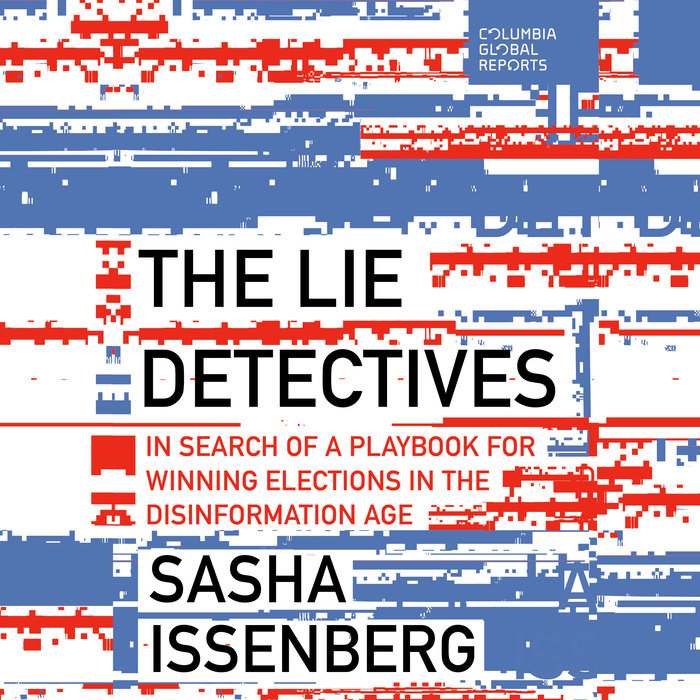 It all comes down to "good" information. In a perfect world, voters would weigh facts and figures presented fairly when making their decisions. . .but that's not the world we live in. Our world of fake news calls for a new script, says Sasha Issenberg, author of The Lie Detectives: In Search of a Playbook for Winning Elections in the Disinformation Age. Issenberg's book examines the 2020 presidential election, which was fraught with lies propagated by social media, profiling the operatives trying to counter those waves of disinformation. As he explained to The Markup 's Aaron Sankin, "It's about the people who really believed they have the ability to control and shape public opinion realizing that that's no longer the case." Here's Issenberg in conversation with MSNBC's Chris Hayes, Puck's Peter Hamby, and Semafor's David Weigel . And you can listen to his interviews with CNN's David Chalian and with Impossible Tradeoffs' Katie Harbath. In her review of The Lie Detectives in The Washington Post , disinformation expert Nina Jankowicz suggests that the history Issenberg traces—the "coordinated campaign against the truth"—is unfinished, and that "since these books went to print, the stakes have gotten higher." The 2024 election, she argues, will be a referendum on "American morals and values" as well as "our nation's singular, shared reality, online and off." Issenberg's insightful book offers a guide to the tactics that may ensure our nation remains grounded in "truth." | | | | | AI alignment and human governance We're learning that 20th century institutions are no match for 21st century problems. And so the search for new, more capable institutions is underway. Once you start looking, you see the search everywhere, not just in the rising appeal of populist leaders. What's most striking to us is that commonalities are beginning to emerge between various efforts in deliberative democracy, such as citizen assemblies and deliberative polling, and the most recent work on aligning AI with human values. I saw this at the recent CHAI conference , where talks on human value alignment and generative social choice were strikingly reminiscent of the talks I'd heard at a Harvard workshop on rethinking democracy. When AI researchers start writing papers on the connection between pluralism and value alignment, a new game is definitely afoot. + "A Roadmap to Pluralistic Alignment" + ICYMI: "Durably Reducing Conspiracy Beliefs Through Dialogues with AI" + "Ten Ways AI Will Change Democracy," by Harvard Kennedy School's Bruce Schneier + Plurality: The Future of Collaborative Technology and Democracy, by E. Glen Weyl, Audrey Tang, and Community | | | | | | —Tim O’Reilly and Peyton Joyce | | | |





Комментариев нет:
Отправить комментарий
Примечание. Отправлять комментарии могут только участники этого блога.