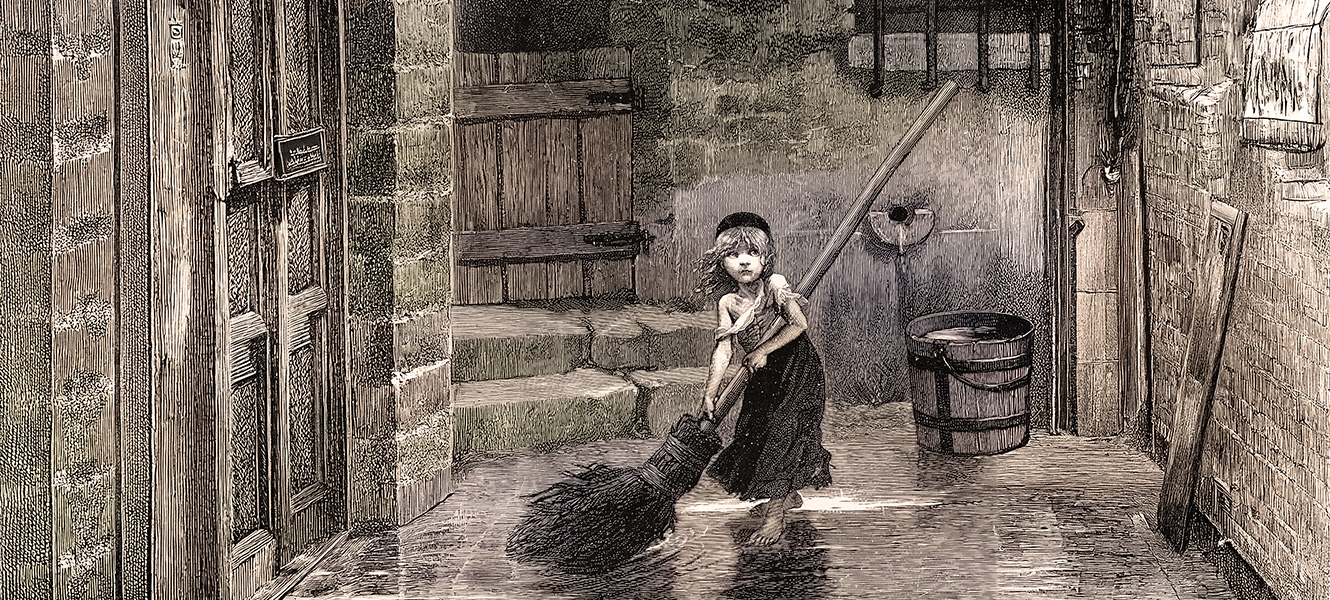
| | What's after neoliberalism? "The challenges America faces aren't really logistical. . . .They are metaphysical. And the sooner we understand the unspooling of identity and meaning that is happening in America today, the sooner we can come up with practical policies to address this crisis," argues Connecticut Senator Chris Murphy. The "metaphysical crisis" in question? The "fall of American neoliberalism." James Pogue recently spent a few thousand words in The New York Times in dialogue with Murphy, thinking through the breakdown of the "neoliberal consensus" in Washington that's held for the past 45 years or so. Though there are many, many definitions of neoliberalism , the one Murphy espouses is that "barrier-free international markets, rapidly advancing communications technology and automation, decreased regulation and empowered citizen-consumers would be the keys to prosperity, happiness and strong democracy." Or as Pogue boils it down, "It's a shared assumption that what's good for markets is good for society." But the "massive concentration of corporate power" that has resulted (focused, as American Affairs founder Julius Krein explains to Pogue, "on extracting rents. . .rather than building things") has shown this to be a lie, says Murphy. We need a new philosophy—Murphy likens it to a new spiritualism. But what he's really talking about is a new narrative that challenges decades' worth of stagnant neoliberal policy. He explains: We have to tell a story about what makes America different. To make people proud of being American. And make them believe that that identity is more important than their individual political identity. + Murphy argues that the "postwar neoliberal economic project is nearing its end." But what comes next? Here are a handful of takes from Mehrsa Baradaran, Anne Krueger, Mariana Mazzucato, Dani Rodrik, Joseph Stiglitz, and Michael Strain at Project Syndicate, American Prospect's Robert Kuttner, Nobel-winning economist Joseph Stiglitz (again), and Peterson Institute for International Economics fellow Arvind Subramanian. + And Matthew Yglesias published a four-part series a couple months ago that attempted to rehabilitate neoliberalism as a valuable political project, eliciting responses from Henry Farrell and Noah Smith. + Deeper reading: The Rise and Fall of the Neoliberal Order by University of Cambridge historian Gary Gerstle. In particular, I find Gerstle's definition of a political order as a "set of ideas that become so pervasive they transcend the differences between political parties" to be very useful. For instance, in a chapter in Saul Griffith's Quarterly Essay issue, The Wires That Bind , I employ Gerstle's concept to explain why climate change may become the basis of a new political order. | | | | | Stories matter The stories we tell are just as important as the ideologies that they support or refute. In Murphy's telling above, a collective feeling of hopelessness—that is both an effect of and reaction to an economic system that's privileged profit over people—explains why, for example, Americans' opinions on an otherwise glowing economy have trended so negative. This is why the contest over the narrative of what's gone wrong in our economy and what we need to do to get it right is so consequential. Take vice presidential candidate JD Vance's memoir, Hillbilly Elegy , for example. Despite the book's popularity, many have criticized it for presenting a limited perspective that blames individuals for the harms caused by systemic economic, social, and cultural challenges in the troubled Appalachian region. However, as NPR's Clayton Kincade reports, Appalachian academics and artists like novelist Barbara Kingsolver have been pushing back, offering nuanced rebuttals to Vance's diagnoses that suggest more structural remedies. As Western Kentucky University history professor Anthony Harkins puts it to Kincade: You can't speak about the experience of Appalachia in the last hundred years without thinking about the massive effects that economic change have brought to it, in a place that is often the product of extractive industry, whether it's lumbering or coal or fracking. . . .One of the concerns I have with seeing it through the prism of Hillbilly Elegy is often that most of that stuff is not part of the story. | | | | | Old tales still have value I had a very interesting conversation on idealism, thinking long-term, and creating more value than you capture with entrepreneur Eric Ries for the latest episode of his podcast, The Eric Ries Show; you can listen now (and I hope you do). We also talked about the narratives that rule our thinking about business and about value, and why we needn't be beholden to modes that have outlived their usefulness. We can imagine new stories to tell—or in the case of the wonderful passage in Victor Hugo's incredibly humane novel Les Misérables I brought up in our conversation, we can revisit old stories that are still worth listening to. Here's Hugo's description of Monsieur Madeleine (a.k.a. protagonist Jean Valjean), which epitomizes how a business can benefit its employees and the wider community, if it only prioritizes those values: Thanks to the rapid progress of the industry which he had so admirably reconstructed, M. sur M. had become a rather important centre of trade. . . .Father Madeleine's profits were such, that at the end of the second year he was able to erect a large factory, in which there were two vast workrooms, one for the men, and the other for women. Any one who was hungry could present himself there, and was sure of finding employment and bread. . . .[H]is coming had been a boon, and his presence was a godsend. Before Father Madeleine's arrival, everything had languished in the country; now everything lived with a healthy life of toil. A strong circulation warmed everything and penetrated everywhere. Slack seasons and wretchedness were unknown. There was no pocket so obscure that it had not a little money in it; no dwelling so lowly that there was not some little joy within it. As I mentioned to Eric, while "there were always the avaricious," there used to be a "notion that [business] was an engine of prosperity. And we still have that—even in the 21st century or 20th century [of] neoliberal economics, it's still positioned as an engine of prosperity." But we have to ensure that everyone gets their share. | | | | | A theory of class warfare. . .and boots Speaking of, here's a great bit from Adam Tooze, with a remarkable 2006 quote from Warren Buffett: There's class warfare, all right. . . .But it's my class, the rich class, that's making war, and we're winning. + From Hamilton Nolan: "We Have a Distribution Problem." + From The American Prospect: "A Ponzi Scheme of Promises" + Socio-economics in a nutshell, by the late great fantasy novelist Terry Pratchett: The reason that the rich were so rich, Vimes reasoned, was because they managed to spend less money. Take boots, for example. He earned thirty-eight dollars a month plus allowances. A really good pair of leather boots cost fifty dollars. But an affordable pair of boots, which were sort of OK for a season or two and then leaked like hell when the cardboard gave out, cost about ten dollars. Those were the kind of boots Vimes always bought, and wore until the soles were so thin that he could tell where he was in Ankh-Morpork on a foggy night by the feel of the cobbles. But the thing was that good boots lasted for years and years. A man who could afford fifty dollars had a pair of boots that'd still be keeping his feet dry in ten years' time, while the poor man who could only afford cheap boots would have spent a hundred dollars on boots in the same time AND WOULD STILL HAVE WET FEET. This was the Captain Samuel Vimes 'Boots' theory of socio-economic unfairness. | | | | | | —Tim O’Reilly and Peyton Joyce | | | |




Комментариев нет:
Отправить комментарий
Примечание. Отправлять комментарии могут только участники этого блога.