Two more weeks of creative tech news! Yay! Upgrade your sub to get the media recs posts with details, plus the news section mid-month, including the special esoteric & weird links section. I’m afraid this is both late and has no intro article, since I had drama on Thursday and Friday (someone hit my parked car, and handling it is all in French with a side of French bureaucracy). This issue still covers a lot of ground, since we got a bunch of releases in the past 2 weeks, including a new Claude who is very good at three.js generation (earning an extra section with examples), a couple new video models, and a whole boatload of interesting games stuff that caught my eye. I hope it’s fun reading anway! And in other news, you’ll have noted that I moved the media recs entirely out of this end of the month issue, into a separate mailing. It seemed cleaner. Feel free to drop me a note if you have an opinion on that. I’m keeping the poem here though. TOC (will be links on the substack web page):
AI CreativityVideo NewsWan 2.1 (repo) — open source, high quality. Also supports image2video and many other things, really versatile. Can be used in Comfyui and via Fal and Replicate among others! Very good at pixel art animation (fofr X link). Here’s me animating the flying saucer image from the post on UFO data 2 weeks ago:
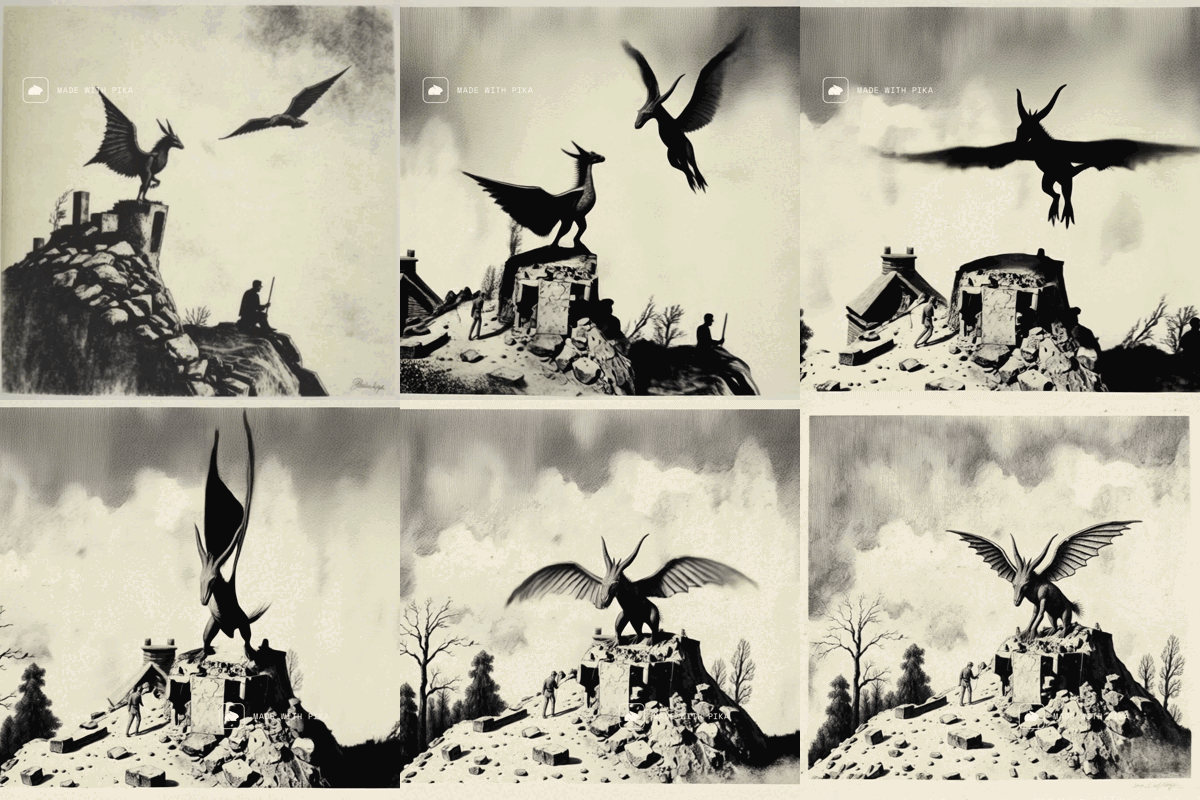
Pika keeps killing it… they’ve versioned to 2.2, and added more editing and mixing tools, including frame to frame transitions, swaps and additions for editing content. Here’s my first shot at joining two images from my experiments with Splicer 2 last time:
Google’s Veo 2 is in limited release via API on vertexai (Google) and via Fal API and a few others. Looking forward to this code: Mobius: Text to Seamless Looping Video Generation via Latent Shift. Image Gen / ToolsInstance Segmentation of Scene Sketches Using Natural Image Priors - via Dreaming Tulpa newsletter. Code coming, and wow:
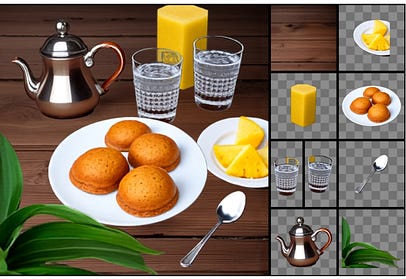
Microsoft’s graphic design generation project, “ART” for multiple layer generation with transparency, has code:
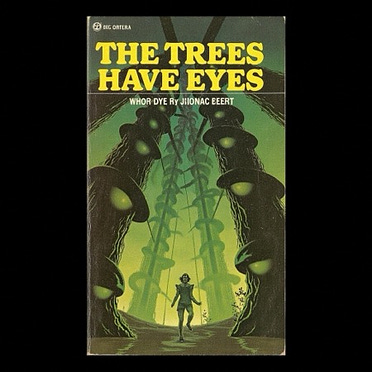
A glif to generate 1970ies style scifi book covers, by Fabian. Here’s mine:
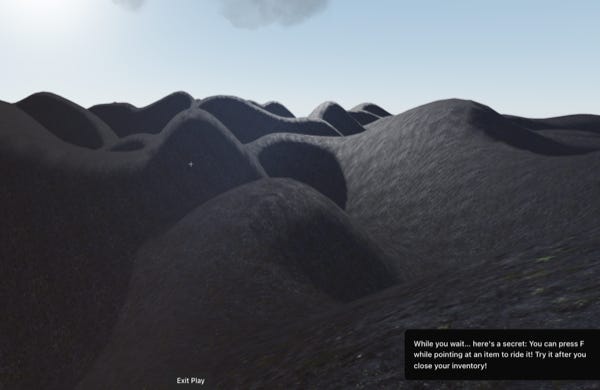
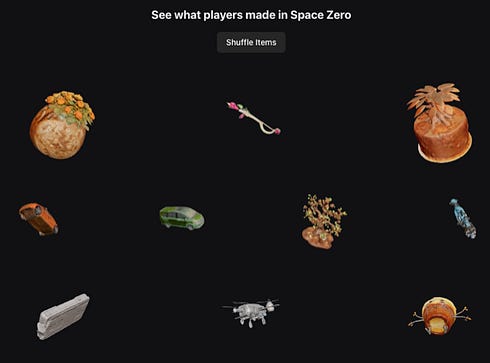
In the space of tooling, we got FLORA, the new node-based Krea-like multi-tool editor environment. 3D AI StuffCommon Sense Machine’s Cube model is #1 on the 3D leaderboard for the moment, beating Trellis. Sutro Tower in 3D in the browser, via a lot of splats. Fun to explore! Space 0. Deeply weird. As in, wtf level (maybe I could’ve waited till next weird issue). I wandered over a bunch of stony hills, found a molecule and an animal, and picked them up. Then I crafted, combining “4K realistic gazelle” and “zinc.” The result was a galvanized gazelle. I couldn’t figure out what to do with it, though. I was told during this that I could ride anything I made. Ok.
I’m working in combining asparagus, a galvanized gazelle, and a carrot right now (ok, it made a “veggie sentinel” but I can’t figure out how to use these monsters I’ve made).
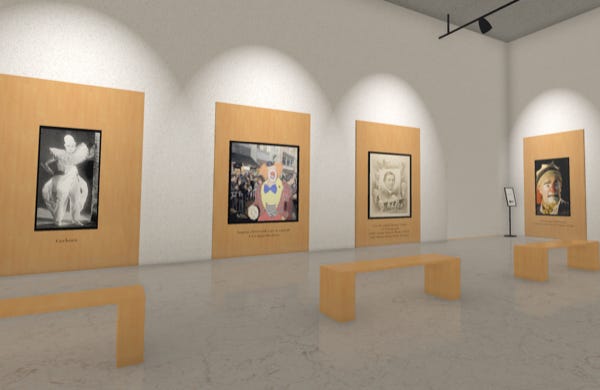
RigAnything: Template-Free Autoregressive Rigging for Diverse 3D Assets — via DreamingTulpa. (Research demo soon.) Misc Web, Procgen, WebGamesMOAT — Museum of All Things by Maya Claire. Via many, and so good. A Godot engine 3d gallery of Wikipedia articles and images, infinitely wandering— which requires a download but runs on most platforms, including supporting VR. Really well done. You can see the source Wikipedia pages too. Beware the clown section.
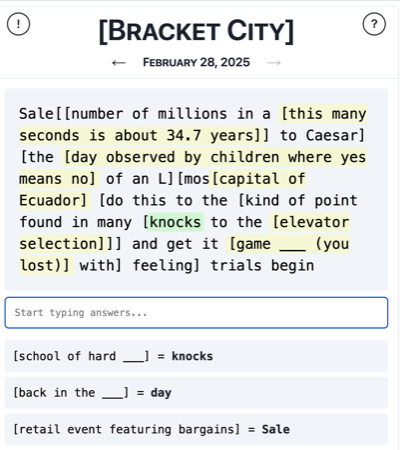
⭐️ Cruising through artworks in 3d, an X link via Dreaming Tulpa. Evidently the artist is MedelFPV and he is doing Youtube how-to’s. Yet another starry night in 3d, and some Dali. Styscraper 🐷🏗️ porcine physics game — via Matt Muir. A webgame where you build a tower of junk and try to rise high above the muck. You drag items onto a platform, stack them, and then place a pig to measure the height of your tower. Lol. Bracket City webgame. This is fun. Start filling in the words for the yellow items to solve the text puzzle.
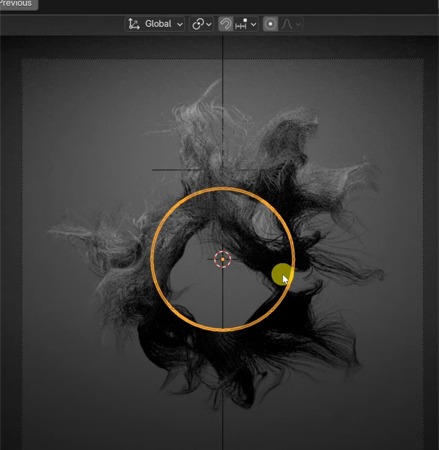
Fractal editing in ai programming tool v0 by one-line animated shader dude Yohei Nishitsuj, an example. You can click on the various versions to show them live. Art with a Blender Python Script — via Chris Ried. A pretty complicated tutorial video, tbh.
⭐️ Okay, this is weird… 3D words, where you have to turn them to see the two of them. Also via Chris Ried. It’s not totally successful with all fonts, but it’s pretty fun and you can export files.
Spacetime maps — redo the layout by travel time, kind of. It’s a neat visual effect, anyway. Games LinksTypeScript types can run DOOM - article by Simon Willison, recapping Dimitri Mitropoulos spending a year getting DOOM to run using the TypeScript compiler. It takes a long time to render the first frame of DOOM, but hey, hackery. The Ink Console — a device that briefly made a sneery splash (among many game writers I follow who suggested it ignored all existing prior art and tooling), intended to be for playing interactive fiction games on an e-ink display with dedicated hardware controls. Then it was retracted as the poster suggested it was bought/or being funded by someone? Mysterious. (A good recap piece by Zarf/Andrew Plotkin with other links.)
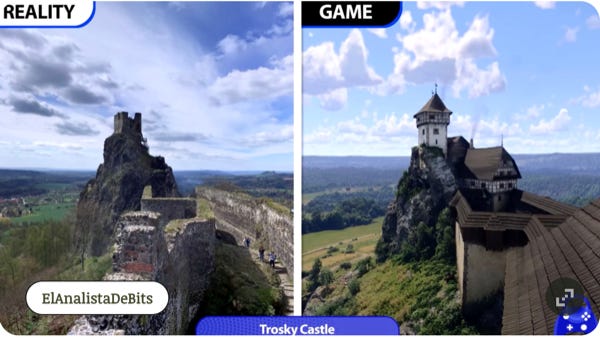
Electronic Arts release code for Command and Conquer games. Let the hacks begin here! Prologue: Go Wayback! on Steam: A single-player, open-world survival game set in an unknown landscape partly generated by machine learning: “it's a game about finding a radio tower on a 64km2 map, generated based on a mix of in-house art and public access landscape data fed through the developer's in-house machine learning technology.” The RPS take on it is mixed, with a trailing-off tiring report of web 3 crypto, Ready Player One-ism, etc. But I’m into the open worldish stuff, for the moment. Kingdom Come: Deliverance II — Comparing locations in the game with their real-life counterparts in the Czech Republic. Pretty cool.
Fireside Chat w/ the famous Emily Short via Destina Connor (Feb 2025) in London. I have not yet listened despite friends. All Work and No Play article: “Video games, like any creative product, reflect and refract the conditions of their production. Today, what they most resemble is twenty-first-century work.” Lots to digest and recognize, since it covers capitalism and grinding in games, the conflict between art creation and money making, labor issues in the industry (i.e., mass layoffs). Via Stephen Totilo’s nl. Makes a good transition to this: Elden Ring or Tenure-Track Professor? McSweeny’s, h/t Maria Antoniak. “Hours spent completing a task are rewarded with meaningless feedback and unhelpful awards. The rush of excitement upon achieving a long-sought goal is followed by the crippling realization that what you achieved doesn’t actually matter.” I don’t work in academia anymore, but was still ouched. A couple itch recs from friends that are on my list:
AI Games ThingsAdvancing game ideation with Muse: the first World and Human Action Model (WHAM) (model card) — The Microsoft world model game thing that got a lot of press and discourse (till the next day’s discourse). Game academic Mike Cook among others have responded to this, e.g., Eurogamer (“Microsoft's generative AI model Muse isn't creating games - and it's certainly not going to solve game preservation, expert says”) and Stephen Totilo (“Microsoft’s divisive new gaming AI uses years of players’ gameplay data”). I guess the best take is that the WHAM model allows game developers to try out some “what if” scenarios, in keeping with existing historical gameplay records, faster than coding by hand. AI and Games Conference videos - Videos from the AI & Games conference Tommy Thompson organized last year (which sold out almost immediately, he’s working on a bigger venue next time). Cardiverse: Harnessing LLMs for Novel Card Game Prototyping — generating novel card games! Example Game/Toy Gen with Claude 3.7New Claude (see Data Science section below) is really good at three.js. It’s also excelling at web dev benchmarks in general. Just a few of this week’s examples of people’s prompt work with Claude: That levelsio guy made a multiplayer flight simulator using new Claude’s help (Pieter.com Flight Simulator 2025). I’m impressed I got off the ground, given the mob scene at the starting runway.
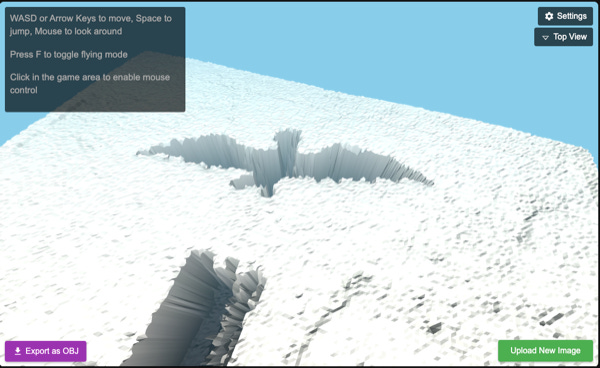
Evan Jones had Claude make a 17th century ship battle simulator in three.js. (x link). WebSim posted on X: “Upload an image and turn it into a 3d map that you can navigate in first person. Made in very few prompts with Claude 3.7 Sonnet by Noxy!” Try it here. This was one of mine, after I hit space enough to get out of the towering tree pixels:
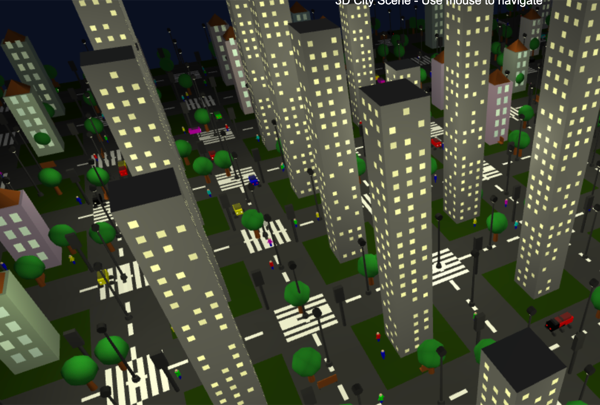
A 3D city generated by Claude one shot, that runs in Codepen. With little moving cars and people.
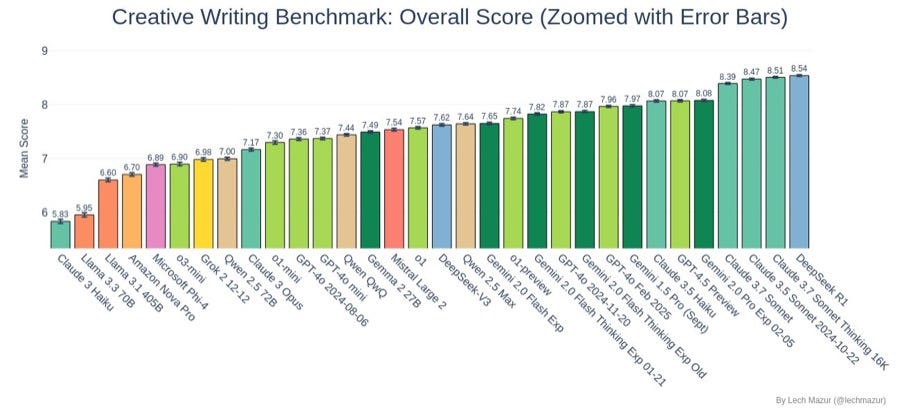
And here’s a driving simulator (X). Claude playing pokemon live on Twitch was a hit this past week. Even when he got stuck in a corner for hours. Narrative GenPastiche Novel Generation Creating: Fan Fiction You Love in Your Favorite Author's Style | Semantic Scholar. “WriterAgent, a novel generation system designed to master the core aspects of literary pastiche, and evaluates it on multilingual classics like Harry Potter and Dream of the Red Chamber, demonstrating its superiority over baselines in capturing the target author’s settings, character dynamics, and writing style.” ⭐️ Aaron A. Reed released the source code for his procedural gen novel Subcutanean. The book is very good, at least my version is. WHODUNIT: Evaluation benchmark for culprit detection in mystery stories — Dataset designed to test how well large language models can use deductive reasoning to identify culprits in mystery stories. It also looks at how different prompting styles and character name changes affect the accuracy of these models (hint: not as well). Lech Mazur’s Creative Writing story benchmark (x link) currently has R1 and Claude 3.7 at the top.
|









| ||||||||||


Комментариев нет:
Отправить комментарий
Примечание. Отправлять комментарии могут только участники этого блога.