Gen Z and the Affordability CrisisHousing, student debt, and a turbulent employment environment need a reset
Marie Newman is a former congresswoman (D-IL03), nonprofit CEO, marketing executive, author of A Life Made from Scratch and When Your Child Is Being Bullied: Real Solutions, former Moms Demand Action spokesperson, health equity champion and national LGBTQ+ advocate. In addition to those roles, she is a mom of two adult children, consultant and podcaster. Her Substack is Marie Newman. Written by Marie Newman, Data charts provided by Jeremy Ney .
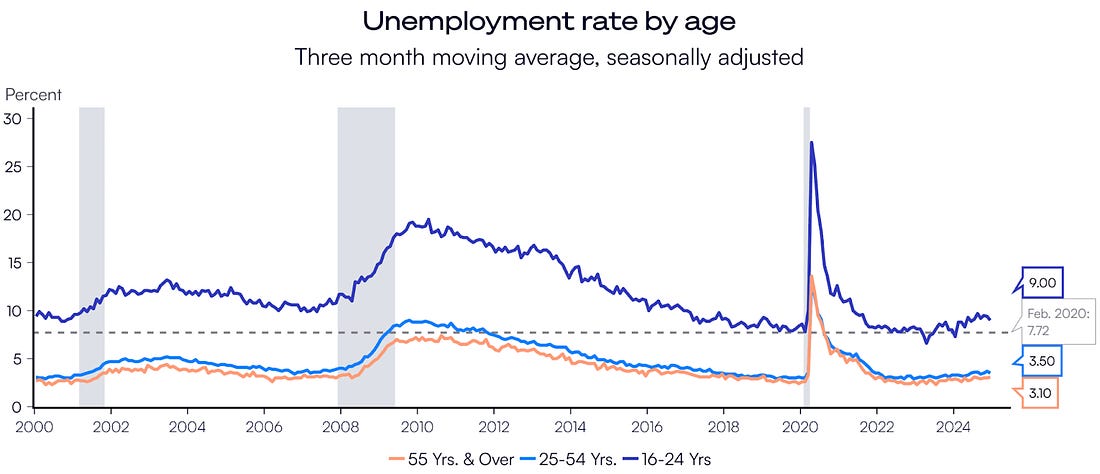
We have a crisis on our hands that has not received enough attention. Gen Z cannot afford their lives. Period. Worse, the generations before them have, unfortunately, contributed to this crisis. We have all voted for and elected politicians who have genuinely not listened to their voters, but did what their donors asked, causing not just a daunting income gap, but an affordability chasm. So here we are. Income inequality has become a pronounced concern worldwide, impacting various generations differently. Among these, Generation Z (born approximately 1997–2012) faces a unique economic landscape shaped by technological advancements, global crises, and shifting job markets. Comparing their experiences to those of Millennials, Generation X, and Baby Boomers highlights important disparities and challenges. I see this front and center in my own family. My kids are challenged by high rent, car prices, food prices and being able to afford insurance in their twenties. My son, who has a master’s degree in political science and international affairs had to move to a smaller city in a neighboring state in order to get a job in his field, and be paid enough to be able to afford rent, food and daily expenses. He is working hard and making ends meet, but just barely. He is finding it nearly impossible to save or plan for his future due to the state of our country’s economy, stagnant wages and the skyrocketing cost of housing. My daughter has a year of college under her belt, is very bright and is willing to work hard, but finding a job that will allow her to live on her own is very tough, but we believe she will prevail out of pure will and tenacity. She may need to tether together two gig jobs to make it all work. As I always say, everybody’s everyday is too expensive and can be demoralizing. Let’s break it down… The Economic Environment for Gen Z1. Entry into the Workforce During Turbulent TimesGen Z's transition into employment has coincided with major global upheavals. The COVID-19 pandemic resulted in significant job disruptions; the International Labour Organization (ILO) reported that youth unemployment globally spiked to 14.2% in 2020, compared to 8.2% for adults. Many young workers have been pushed into unstable gig roles, which often lack stability and benefits, impacting earnings and career progression.
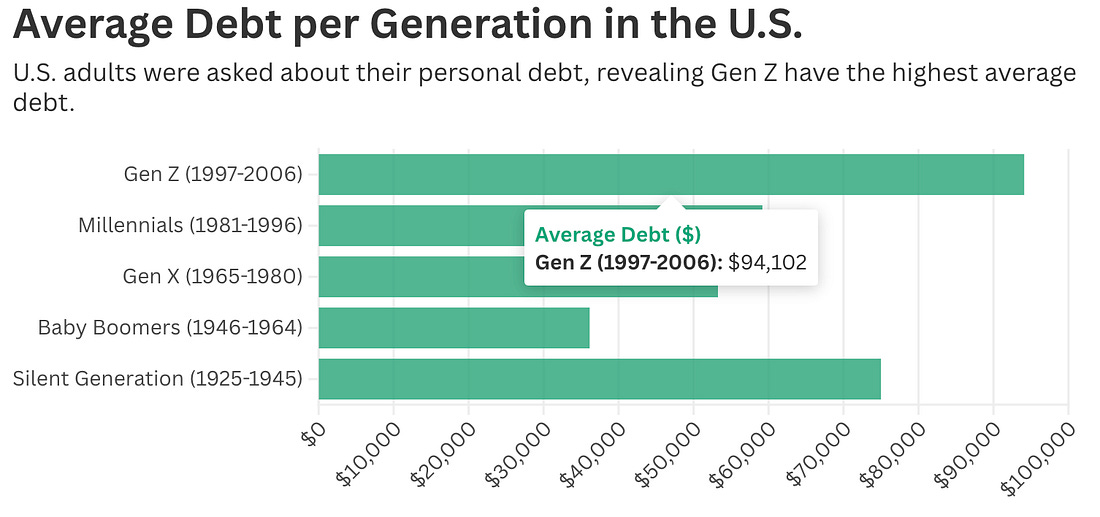
2. Education and Student Debt
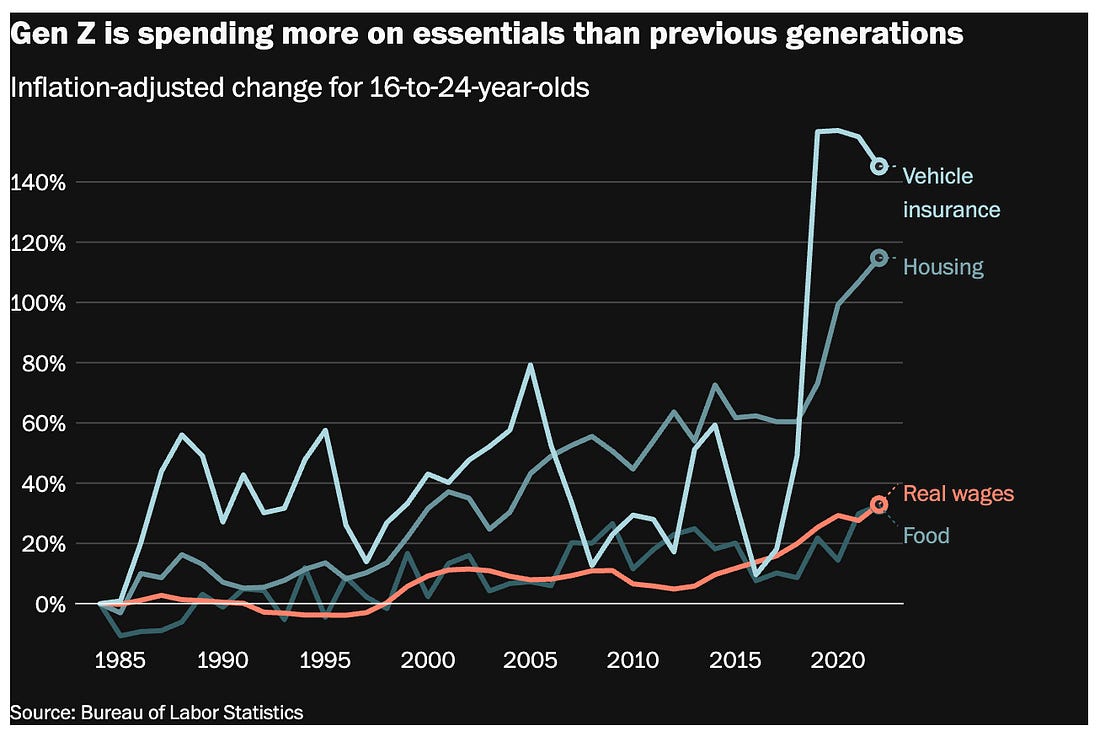
3. Housing and Cost of LivingHousing affordability has worsened. The National Association of Realtors (2024) notes that median home prices in the U.S. increased approximately 50% from 2015 to 2024, while wages for young workers grew at a modest rate, about 15% over the same period (U.S. Bureau of Labor Statistics). This disparity makes saving for a house significantly harder for Gen Z.
4. Technological Economy and New Opportunities
Income Inequality Compared to Other Generations1. Wealth Accumulation and Intergenerational TransferData from the Federal Reserve’s 2022 Survey of Consumer Finances shows that the median net worth for Baby Boomers (age 58-76) was approximately $288,700, compared to just $13,900 for Gen Z (age 18-26). Moreover, inherited wealth continues to benefit older generations: approximately 70% of Millennial and Gen Z wealth is not inherited, compared to less than 30% for Boomers, underscoring a growing wealth gap. 2. Income DisparitiesThe top 1% of earners in the U.S. capture about 20% of the total income, according to the Economic Policy Institute (2023). Meanwhile, median wages for young workers (ages 16-24) have stagnated, growing only about 1% annually since 2010, far below the growth rate needed to keep pace with inflation and living costs. 3. Social Mobility and OpportunityThe OECD reports that the U.S. has one of the lowest social mobility rates among developed nations. For Gen Z, mobility prospects are further diminished; a 2022 study in the Proceedings of the National Academy of Sciences indicates that economic mobility for U.S. youth has declined by nearly 25% over the past 50 years, making upward movement more difficult than in previous generations. Broader Impacts and Future OutlookThe rising income inequality impairs Gen Z's ability to accumulate assets, achieve homeownership, and secure financial independence. The World Bank estimates that global wealth inequality has increased by around 10% since 2010, with young people bearing the brunt. The Path ForwardIn some ways, there is a simple solution. Bring Gen Z into the conversation. Here is a path forward that can create more economic opportunity not only for Gen Z, but for America writ large.
The tougher part is getting Gen Z and Millennials elected to state houses and Congress. My solution: I am only working with and supporting candidates that support the above goals, and interestingly, most are Gen Z and Millenials. Keep charging folks!
You’re on the free list for American Inequality. Thanks so much for being part of our community! Please share with others and don’t forget to subscribe. Most sincerely, Jeremy
|






Комментариев нет:
Отправить комментарий
Примечание. Отправлять комментарии могут только участники этого блога.