Perplexity Perplexes Everyone |
|
THE BELAMY Weekly Newsletter of AIM Monday, Jul 21, 2025 | By Amit Raja Naik |
|
|
|---|
|
For a long time, Perplexity's appeal was obvious. A fast, clean AI-native search engine that did the job. No frills—just citations, clarity, and speed. It was the go-to tool for researchers, journalists, and power users who didn't care for small talk, just straight answers. It was never trying to be ChatGPT. But this week, it overtook it. Perplexity became the most downloaded app on the Indian App Store, beating ChatGPT, Google's Gemini, and even Amazon and Zomato. Backed by a fresh $100 million investment, now valued at $18 billion, the three-year-old startup has done what no one thought was possible, challenging both Google and OpenAI in the one place they rule: attention. |
|
|
|---|
|
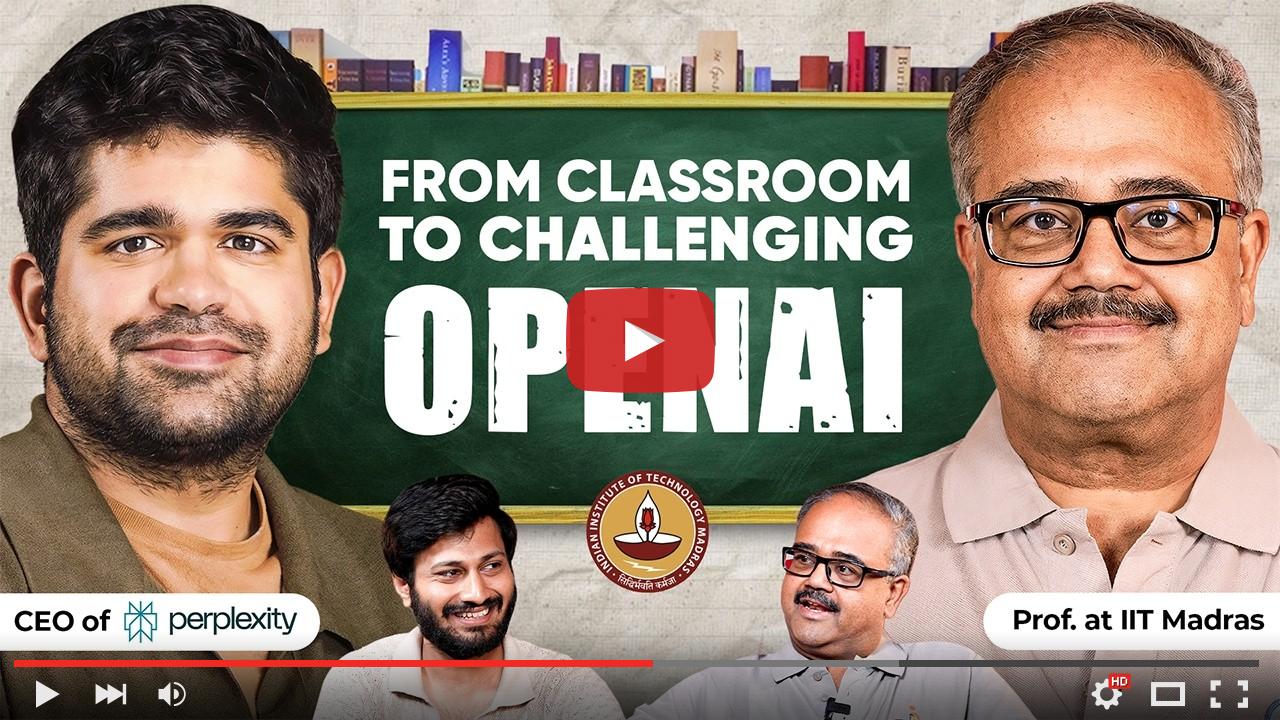
And at the heart of it all? A mindful, Chennai-born CEO who mixes IIT Madras rigour with Silicon Valley vision, and isn't afraid to brand search with swag. But what's really going on at Perplexity? Is this just a viral spike thanks to Airtel's free offer, or is something more significant happening? A Week That Changed EverythingFor Perplexity, the last seven days were a case study in how AI, marketing, and timing collide. The Airtel deal, which provided 360 million users with free access to Perplexity Pro, drove massive downloads. Suddenly, everyone was talking about the "ChatGPT alternative" that was free, fast, and full of facts. At the same time, Aravind Srinivas, the CEO, was spotted courtside at Wimbledon, not as a passive spectator, but as a player in a new kind of game, one where business, branding, and visibility are everything. He had just inked a helmet endorsement deal with Lewis Hamilton, the F1 legend. Not a team deal, not a logo slap, but a deliberate, high-style move. Srinivas isn't building an AI product alone; he's building a brand that travels across screens, sports, and cultures. And unlike many technical founders who struggle with the spotlight, Aravind seems to thrive in it. In fact, he's actively shaping the narrative, from LinkedIn to Centre Court. India: The Shortcut to SupremacyNeedless to say, Perplexity is quietly using India as a launchpad. Downloads in India are up 600% YoY. MAUs are up 640%. Paytm integration? Done. Airtel? Locked in. IIT Madras? Free Pro for all. [Must Watch] Speaking of IIT Madras, be sure to check out this exclusive interview with Prof Balaraman Ravindran, who is the mentor of Perplexity CEO Aravind Srinivas. |
|
Perplexity's strategy is simple: Give the world's most price-sensitive, search-hungry internet users a better experience, and scale before anyone notices. Srinivas even offered INR 1 million of his own money, and five hours a week, to help build India's own foundation models. He met Prime Minster Narendra Modi. He met Kamal Haasan. He even called out Google. And through it all, he never stopped asking: Why shouldn't India lead the AI revolution? But even with India's love for free tools, there's a question looming: Can Perplexity hold attention, or is this just Clubhouse 2.0? In a Reddit AMA, Perplexity CEO Aravind Srinivas said Google poses a long-term threat not because of innovation, but because of its scale and conflicting incentives. "They [Google] have business model constraints on letting agents do the clicks and work for you while continuing to charge advertisers enormous money," he wrote, adding, "At some point, they [Google] need to embrace one path and suffer." Further, he warned that tech giants like Google will eventually "copy anything that's good," referencing Google's Project Mariner and Comet's similarities, a sentiment he repeated during a June 2025 YC talk. |
|
Still, one can't ignore what Perplexity is building. From contests during ICC tournaments to investor bets on Slack-like agent workflows, Srinivas is turning Perplexity into a platform play—a serious one. Last week, Perplexity acquired the domain os.ai from HubSpot CTO Dharmesh Shah. "It makes complete sense for an OS for AI to exist," Shah said, calling it the next inevitable platform shift after PCs, browsers, and mobile, and hinting at Perplexity's bigger ambition beyond just search. The Google QuestionWhen asked if Google could simply kill Perplexity by copying it, Srinivas was blunt: "They've had two years. They haven't." The truth is, Google is stuck. AI-generated answers threaten its ad business. Perplexity doesn't have that baggage. It can go all-in on direct answers, without worrying about killing its own revenue. That's why VCs are backing Perplexity. Not because it's safe, but because it's unencumbered. Still, revenue remains a concern. While ChatGPT earned $773 million in Q2 from in-app purchases, Perplexity made just $8 million. In India? Practically nothing. So Airtel may bring users, but not necessarily the paying ones. The question now is: how many will stay, and how many will pay?
If you found this newsletter insightful, share it with a friend, a colleague, or that one person who's still Googling for answers. And if you haven't subscribed to our AIM TV channel yet, now's a good time. We break down the world of tech and AI in real time, crisp, clear, and always ahead of the curve. Don't miss out. While you are at it, here's a quick look at some of the top stories of the week. - OpenAI's new ChatGPT agent can now browse the web, run code, book appointments, and plan parties, marking its biggest leap yet toward autonomous AI, but also raising new questions about safety, control, and how far we really want our assistants to go. Read more here.
- Ahead of GPT-5 release, OpenAI's experimental reasoning model quietly solved five out of six problems at the 2025 International Math Olympiad.
- Launched just eight months ago, Lovable has hit unicorn status with a $200 million Series A led by Accel. Read more here.
- CodeParrot, a YC-backed Indian AI startup that turned Figma designs into code, has shut down after struggling to scale beyond $1.5k MRR.
- Vector databases are officially dead. Amazon just plugged vector search into S3, and it might be game over for specialised vector databases, as cost, scale, and convenience start to outweigh niche performance.
- Zoho is building its own AI stack from the ground up, launching 25+ enterprise agents, three in-house Zia LLMs, Hindi-English ASR models, and an MCP server to power privacy-first, India-specific AI across sectors. Read more here.
- India promised 34,000 GPUs to power its sovereign AI dream, but three months in, only Sarvam has received a fraction, leaving startups like Gnani, Soket, and Gan stalled. So, where are the rest of the GPUs? Read to find out.
Now, let's explore some exciting collaborations and exclusive insights from the AIM ecosystem, brought to you with a unique twist outside our standard editorial content.
Introducing 'The AI Foundry' by Tredence |
|
|
|---|
|
For Brand collaborations, reply to this email or write to info@aimmediahouse.com |
|
|
|---|
|
You received this email because you signed up to the updates from AIM. Click here to unsubscribe if you do not want to receive emails from us. |
|
|
|---|
|
|
|





Комментариев нет:
Отправить комментарий
Примечание. Отправлять комментарии могут только участники этого блога.