India Just Showed the World Its AI Game Plan |
|
|
|---|
|
India just had its wildest AI week yet. OpenAI has dropped half a million ChatGPT licences into classrooms across the country. Reliance launched a full-blown sovereign AI empire with Google and Meta. Two Indian spacetech startups rode SpaceX's Falcon 9 with AI payloads. The government shipped a Figma design system to fix every clunky portal in sight.
Then came the money: billions in new data centres, Microsoft and Kyndryl laying fresh infrastructure, a music model that finally pays artists, and a local GenAI stack built for affordability. Suddenly, it feels like India is building the AI stack end-to-end, at a pace nobody thought was possible. OpenAI Goes to School At the India Education Summit, OpenAI ran the school bell for a whole new era. Enter the Learning Accelerator, an India-first programme designed to embed AI into the country's education system. The initiative comes with a ₹4.5 crore grant to IIT Madras to research how AI can flip pedagogy on its head. Moreover, because ideas mean little without access, OpenAI announced the distribution of 5,00,000 free ChatGPT licenses to students and teachers across government schools, AICTE institutes and ARISE networks. The coolest part of this rollout is the 'study mode', inspired by Indian learners. Think less 'answer machine' and more 'tutor'. It guides step-by-step, prompting interactive questions and building critical thinking. Meanwhile, ChatGPT Go, priced at ₹399 per month—yes, with UPI support—makes AI access mainstream for millions. This is not just a product play but a structural move. Raghav Gupta, former Coursera MD, has been appointed the head of education for India and APAC. OpenAI will also open its first office in the country in Delhi later this year, expanding policy, research and market presence. Mukesh Ambani Bets on Sovereign AI A decade ago, Jio rewired India's digital future. Now, Reliance Industries chairman Mukesh Ambani wants to do it again. This time, with AI. At the Reliance annual general meeting, he pulled the curtain back on Reliance Intelligence, a wholly-owned subsidiary that marks the company's "next transformation into a deep-tech enterprise". Over $100 million already committed, and the blueprint comes with four pillars: - Data centres at gigawatt-scale: Jamnagar, already home to Reliance's clean energy push, will now host a state-of-the-art, AI-focused cloud region.
- Joint venture with Meta: By combining open-source models with Reliance's industry scale, the two promise to deliver enterprise-ready AI for sectors.
- Nationwide AI skilling: A national AI talent programme to train and deploy the workforce India will need in the future.
- Humanoids for work and healthcare: From manufacturing, supply chains, and healthcare, Mukesh is placing a long-term bet on intelligent automation.
For consumers, however, the showstopper was Jio Frames, an AI-powered smart glasses with Indic voice support, HD image/video capture, livestreaming to socials and Jio Cloud integration. Reliance Jio chairman Akash Ambani pitched them as "AI beyond smartphones, right in front of your eyes". Mukesh called the opportunity with AI "large, if not larger" than Reliance's digital push with Jio a decade ago. His ambition? Nothing less than "AI everywhere, for every Indian". |
|
|
|---|
|
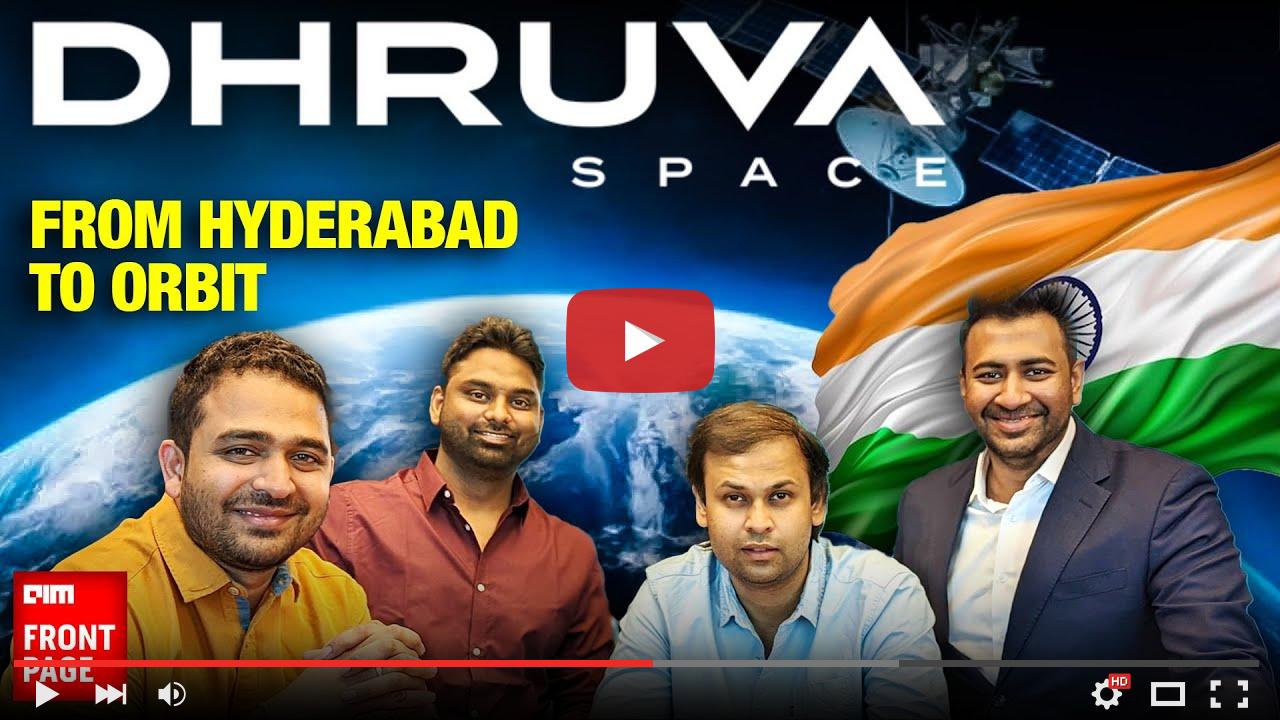
India Builds the Stack Designing governance: The electronics and IT ministry has launched UX4G, a Figma-based design system aimed at modernising every government portal. It comes loaded with standard typography (Noto Sans), colour tokens, reusable components and accessibility standards, backed by 27 workshops across states and UTs, as well as audits for portals like UMANG and DigiLocker. India's spacetech double act: On August 27, Pixxel launched three new Firefly satellites aboard SpaceX Falcon-9, completing Phase I of its hyperspectral constellation with six satellites. Each captures over 135 spectral bands at 5m resolution, enabling daily global coverage. The next wave, the Bengaluru-based spacetech startup's Honeybees satellites, will expand the spectrum range and cut revisit times. Meanwhile, Dhruva Space launched the LEAP-1 Mission, a modular P-30 bus carrying an AI payload, signalling the rise of scalable satellite platforms.
[Must Watch] Here's an exclusive interview with Keyur Gandhi from Dhruva Space just five hours before their successful launch of the LEAP-1 Mission. |
|
Meanwhile, ISRO transferred five new technologies, ranging from adhesives to power converters, bringing its total number of tech transfers to 98, thereby accelerating private adoption. Infrastructure: India's AI infra boom accelerated: Snowflake opened a new hub in Bengaluru, targeting 700 employees by year-end. Microsoft launched its Envisioning Theatre in the city, a showcase lab for Copilot agents, AI control towers and RoI measurement. A week ago, Kyndryl committed $2.25 billion over three years, opening an AI Lab in Bengaluru and launching skilling for 2,00,000 people, with MoUs on AI-driven governance. Techno Digital inaugurated a 36-megawatt NVIDIA GB200-certified AI data centre in Chennai, with 2,400 racks connected to global cable landings.
Reports confirmed Google's $6 billion investment to develop a one-gigawatt data centre in Visakhapatnam, India's single largest data centre yet. Culture: Bengaluru-based Beatoven.ai launched Maestro, a fully licensed generative music model that pays artists royalties per output. Trained on licensed datasets via partners like Rightsify, Maestro enables instrumental generation today, vocals and SFX tomorrow, and provides tools for catalogue tagging and metadata enrichment.
Meanwhile, YouTuber Dhruv Rathee's AI Fiesta debuted with seven updates in just its first week, from chat rename and search to file uploads, support for 10 new AI models, a 3M token limit, and light mode, with web search rolling out next.
Moreover, in the hardware sector, boAt announced the HrdWyr Indus 1011, a "fully indigenously designed" system-on-chip for TWS charging cases, developed with Bengaluru-based startup HrdWyr and assembled by Tata Electronics. Slated to debut in boAt's Nirvana range by mid-2026, the chip promises 30% better charging efficiency and tighter supply-chain control. The company has plans to integrate AI features for smarter battery performance and aims to cover 25% of boAt's portfolio by 2026.
On the materials front, Union minister Ashwini Vaishnaw inaugurated India's first tempered glass manufacturing plant in Noida, an ₹800 crore partnership between Optiemus and Corning. The facility will scale from 25 million to 200 million units annually, creating 4,500 direct jobs and ending India's complete dependence on imports for smartphone cover glass.
Affordability: Finally, Bud Ecosystem and NxtGen announced a partnership to deliver pay-as-you-go GenAI infrastructure through NxtGen's sovereign cloud. Integrated with Bud's AI Foundry, it offers pre-built agents, edge-ready compact models and outcome-based pricing. If you found this newsletter insightful, share it with a friend or colleague who follows India's AI and tech story. And if you haven't subscribed to AIM Tv yet, now's the time. We break down the world of AI and tech in real time—crisp, clear and always ahead of the curve. Click here to subscribe now! While you are at it, here's a quick look at some of the top stories of the week. - NVIDIA revealed that just two customers drove 39% of its record $46.7 billion quarterly revenue, underscoring its deep reliance on hyperscalers and AI giants like xAI, OpenAI or cloud providers, even as data centre sales now account for 88% of its business.
- Mid-sized Indian IT firms like Sonata, Happiest Minds, Coforge, and Persistent are boldly attributing 15-20% of revenues to AI and flaunting agent libraries, even as larger peers like TCS and Infosys remain cautious, raising questions of genuine edge versus "agentic washing".
- India's AI learning boom, with one lakh sign-ups for upGrad's Microsoft course and surging corporate skilling, risks creating millions of AI users but too few architects. This raises concerns about who will actually build and govern India's AI future.
- Google launched Gemini 2.5 Flash Image, nicknamed 'nano-banana', a low-cost ($0.039/image) model that enables multi-image fusion, character consistency, fine-grained edits via natural language, and comes with SynthID watermarking for safe, enterprise-ready creative control.
Now, let's explore some exciting collaborations and exclusive insights from the AIM ecosystem, brought to you with a unique twist outside our standard editorial content.
[Register now] Snowflake World Tour Lands in Hyderabad |
|
Step into the future of data, AI and apps on September 10 at the Snowflake World Tour in Hyderabad, a one-day gathering packed with innovation, insights and networking you can't afford to miss. [Register here]
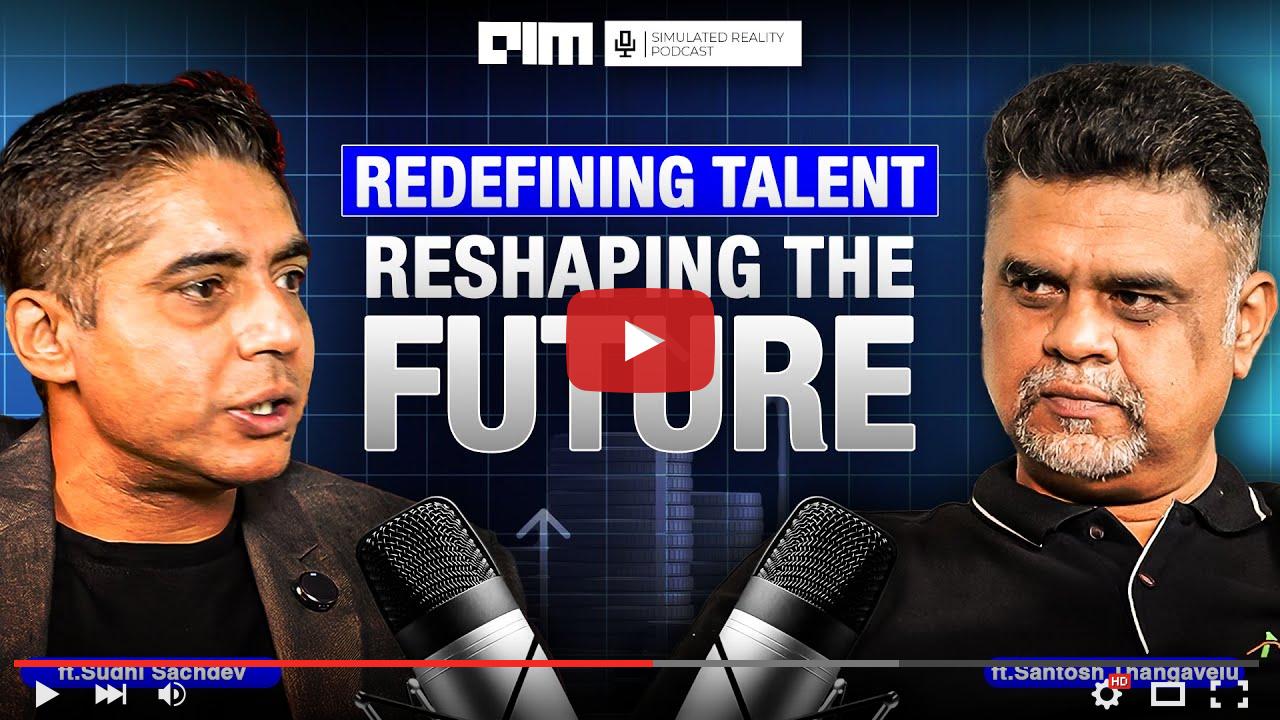
AIM x Axtria Podcast: Redefining Talent for an AI-First World
|
|
In the latest episode of the Simulated Reality podcast, Axtria CHRO Santosh Thangavelu explains why AI is no longer a skill but an "operating system for work", how GCCs are evolving into global orchestration centres and why companies must balance execution with innovation through a "predictably innovative" model. Watch the full episode here.
Can India Build Its Own Google or NVIDIA? |
|
In the latest episode of What's the Point, professor Amit Sheth argues India won't birth the next Google or NVIDIA without deep talent and long-horizon research: our colleges produce great undergrads, but the "depth", on par with levels of PhD and TRL 1–7 that powered Silicon Valley, is thin at home. ANRF-style merit funding, reverse brain-drain research organisations, and hands-on mentorship are the missing engines.
Check out the full episode here.
|
|
|
|---|
|
You received this email because you signed up to the updates from AIM. Click here to unsubscribe if you do not want to receive emails from us. |
|
|
|---|
|
|
|







Комментариев нет:
Отправить комментарий
Примечание. Отправлять комментарии могут только участники этого блога.