The Great Generational Wealth DivideBaby Boomers own half of all wealth in America, while Millennials and Gen-Z own the majority of debt
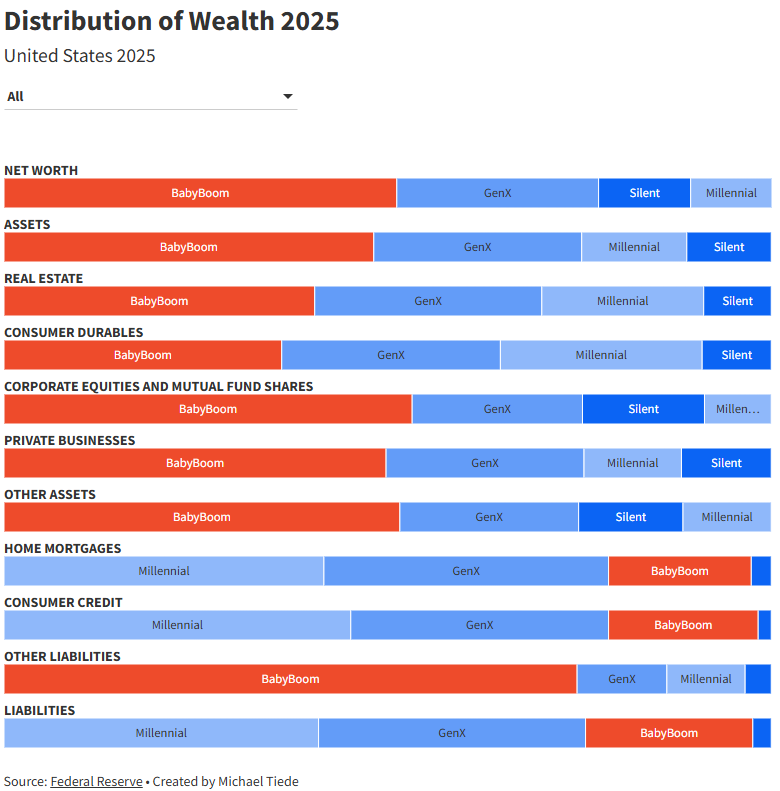
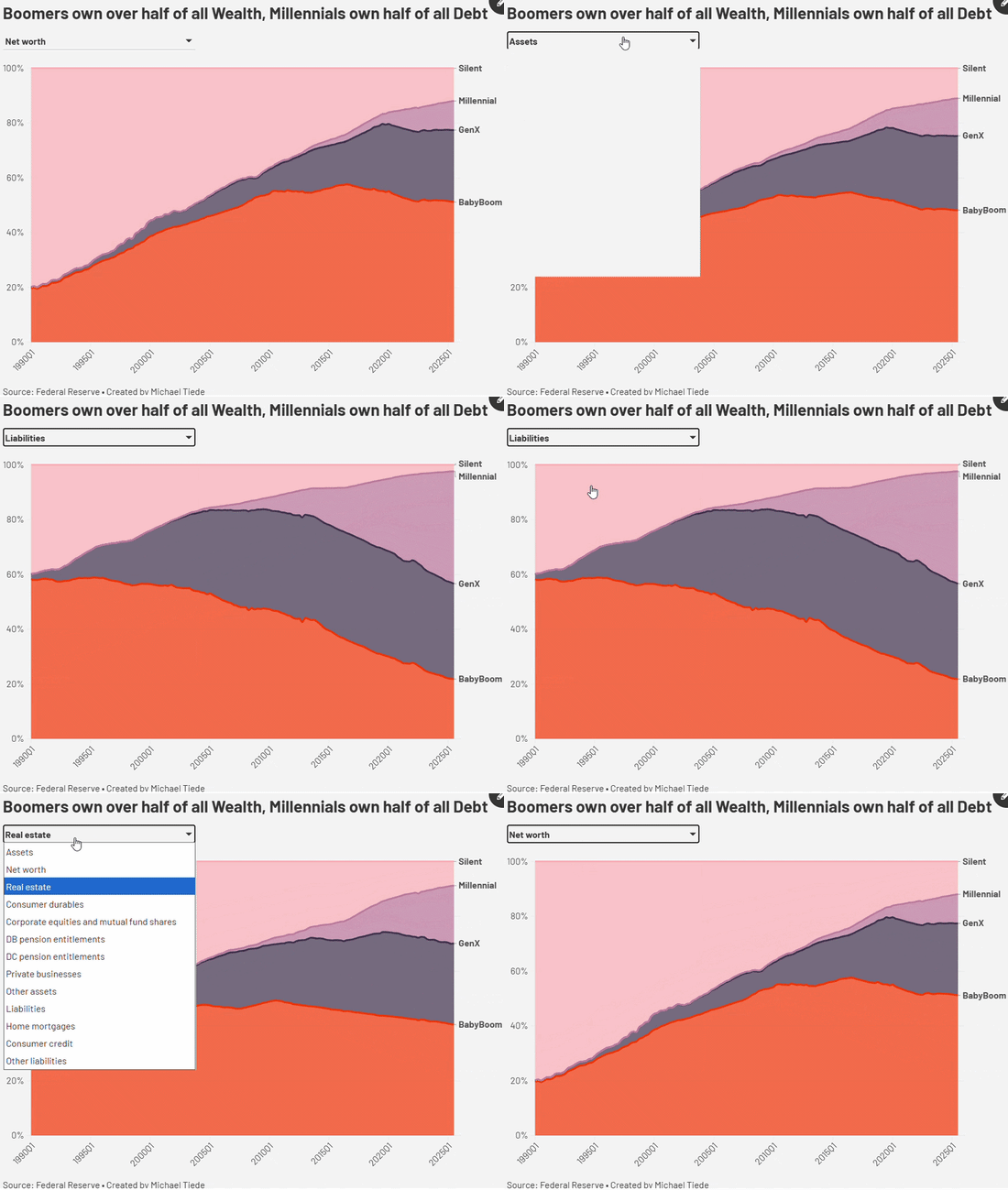
Baby Boomers have spent the last half-century molding America in their image. They were born into an era of unprecedented expansion and today hold the keys to the economic, social, and political kingdoms of this country. Now, as the youngest Boomers reach the age of retirement, and the oldest moving into their 80’s, the Boomer generation is facing its final act—and the economic aftershocks will be felt for generations to come. Welcome to the The Dividing Line from American Inequality. These visuals are all interactive and available with more information below. Almost half all wealth in America is owned by Boomers, while half all debt is owned by Millennials. Expensive housing markets, growing debt, increased cost of living, and slow wage growth all are factors at play in the struggle to accumulate wealth for younger Americans. As younger, more diverse, and more educated generations compete for a larger hold on the country’s attention and power, it may be too hard of a climb for many. While Boomers came of age in an era of ‘opportunity for the taking,’ successive generations are finding those gateways to the American middle class have been bolted shut. The upward climb feels less like a journey and more like a treadmill, yet so many Boomers still race ahead.
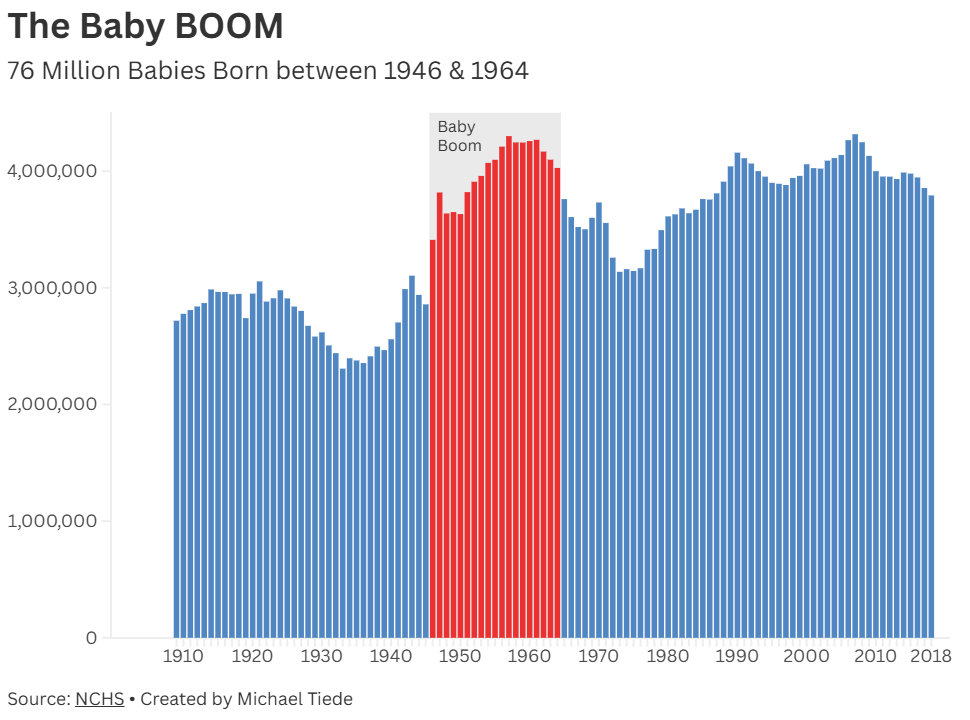
Between 1946 and 1964, approximately 76 million babies were born in America, a surge that increased the nation’s population by more than 50%. On average there were 4 million births per year during the Boomer years, but today there are only 3.6 million births per year, despite the fact that the country is 2.5 times bigger today. In order for birth rates today to be comparable to birth rates during the Boomer years, we would need to have 3x the current amount.
As families grew in size, consumer demand grew too. Families had to purchase new diapers, baby shoes, toys, and more at rates the country had never seen. Televisions in homes became mainstream when Boomers were young children and teens, changing advertising to target young kids. Children were generating $33 billion in retail sales annually. California was building one school a week in the 50’s, and Los Angeles alone was spending over $1 million on new schools. In the fall of 1952, 2 million new students were entering schools across America. As they grew older, Boomers were leaders during the Civil Rights movement and were the majority on college campuses in the 1960s. Many key historical events of the U.S. in the 20th Century were defined by the Baby Boomer Generation.
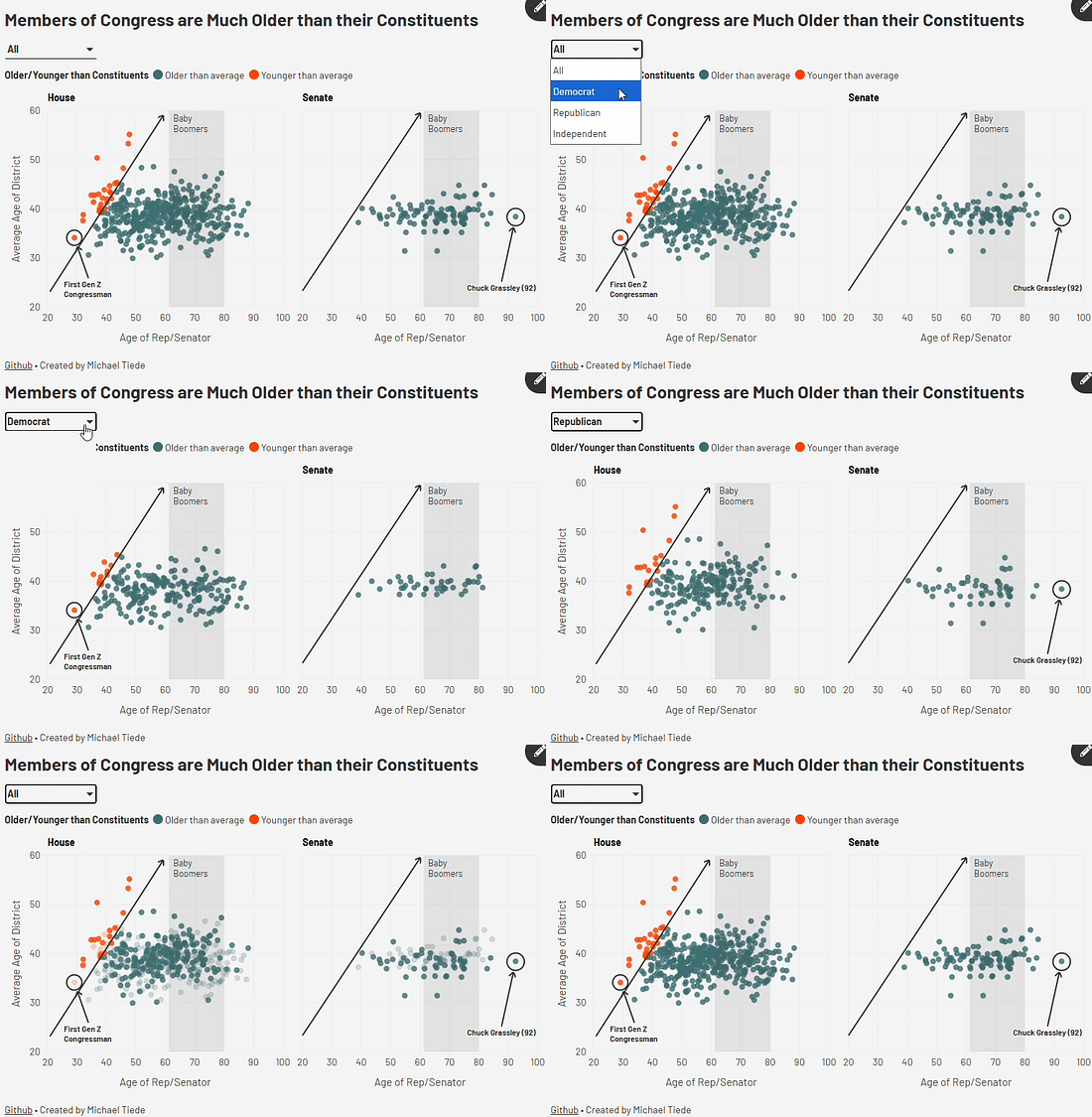
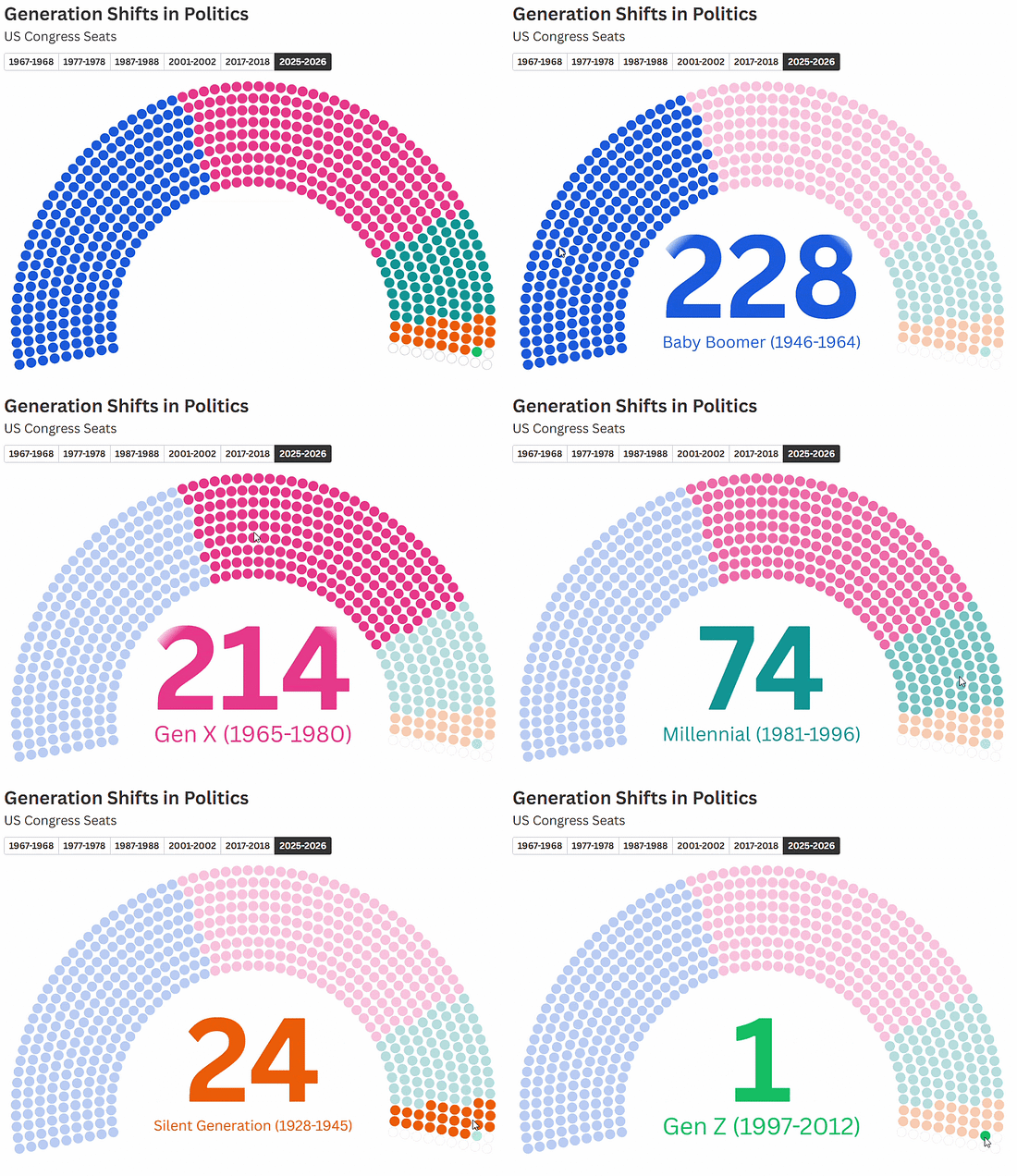
1976 marked the first year Boomers were eligible to run for Congress, and immediately a visible shift was apparent. The average age of a member of Congress was 65 in 1965, but fell to 49 in 1981. The then-young Boomers took over D.C. From that point on, many of those members of Congress hung onto their seats for decades. Congress aged as Boomers aged. By 2001, they made up the majority of Congress, and 60% at their peak in 2013, even though they made up only a quarter of the US population. Today, the average age of a Congress member is 60 years old. As we can see from the chart above, almost all members of Congress are older than the districts they represent (as shown by the green dots). Only in a handful of areas (orange dots) are they younger than their districts. In the Senate, not a single senator is younger than the average age of the state they represent.
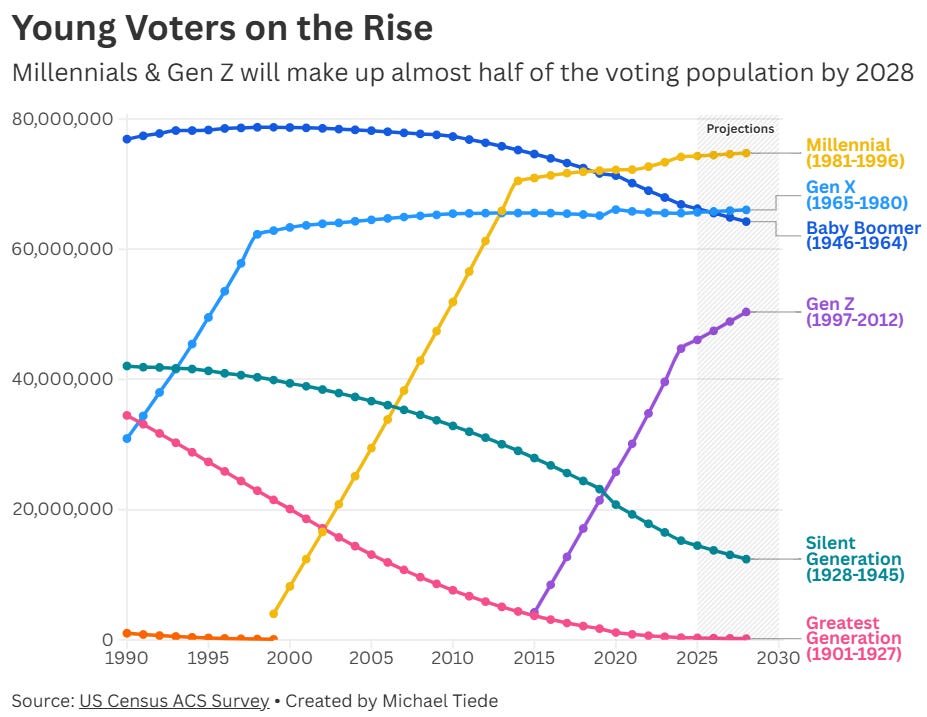
Of the last 5 presidents, 4 were boomers. Over a 35-year stretch from 1993 to 2028, 31 of those years will have been led by a Boomer president (Clinton, Bush #2, Obama, & Trump). Notably, the Silent Generation was nearly skipped over entirely, with Joe Biden standing as its only representative in the Oval Office. The sheer dominance and quantity of children being born during this era is also apparent when comparing the four Boomer presidents’ birthdays – all 4 were born within 66 days of each other. That grip on power is beginning to loosen and in 2019, Millennials surpassed Baby Boomers as the largest voting population, and Gen X is projected to follow suit by the 2028 election. Those older members of Congress passed legislation that reflected the priorities of the older, more powerful majority in America. They placed limits on new housing development, created tax structures that favored the accumulation of wealth, and bolstered retirement protections that younger generations may never see.
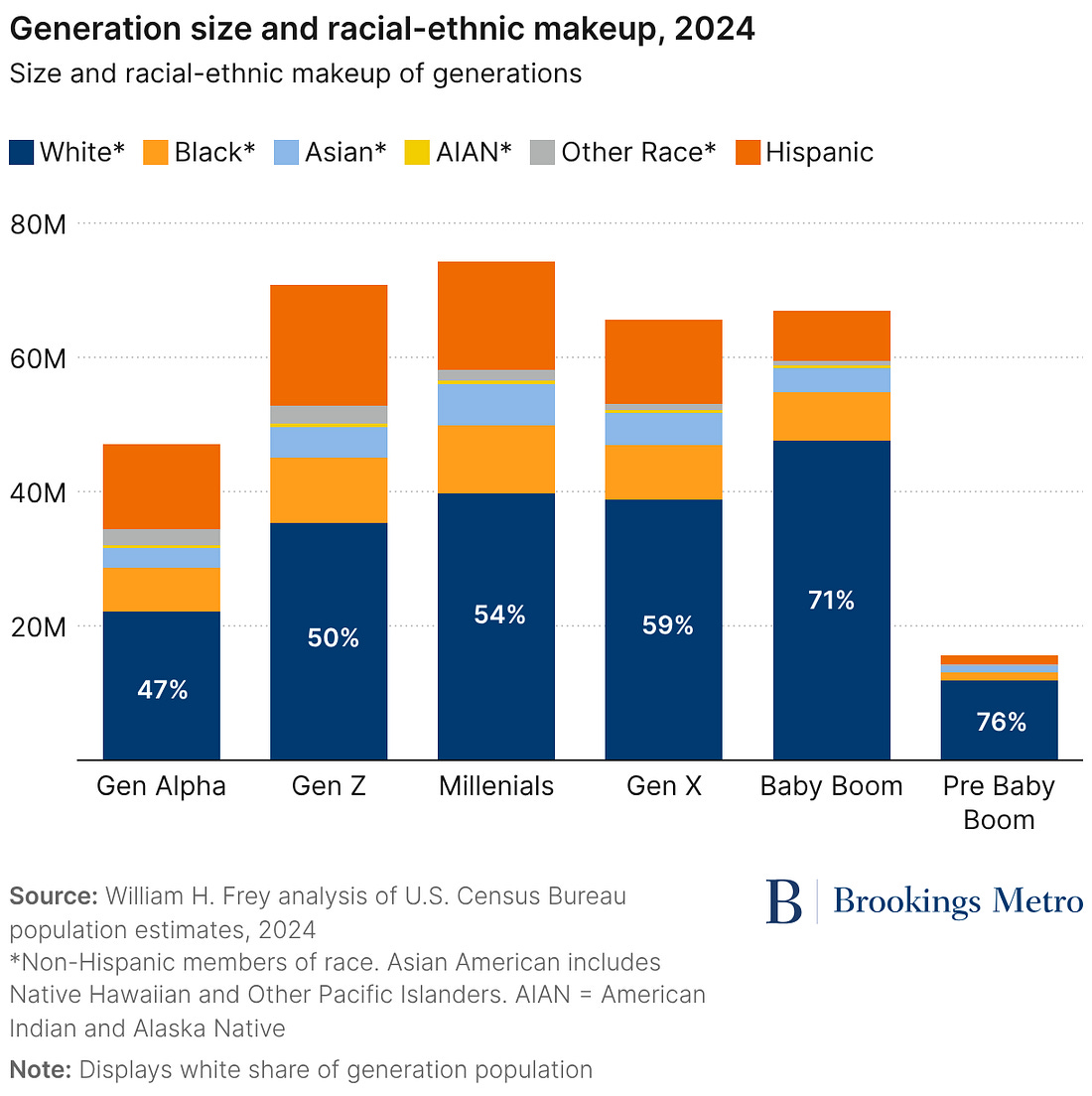
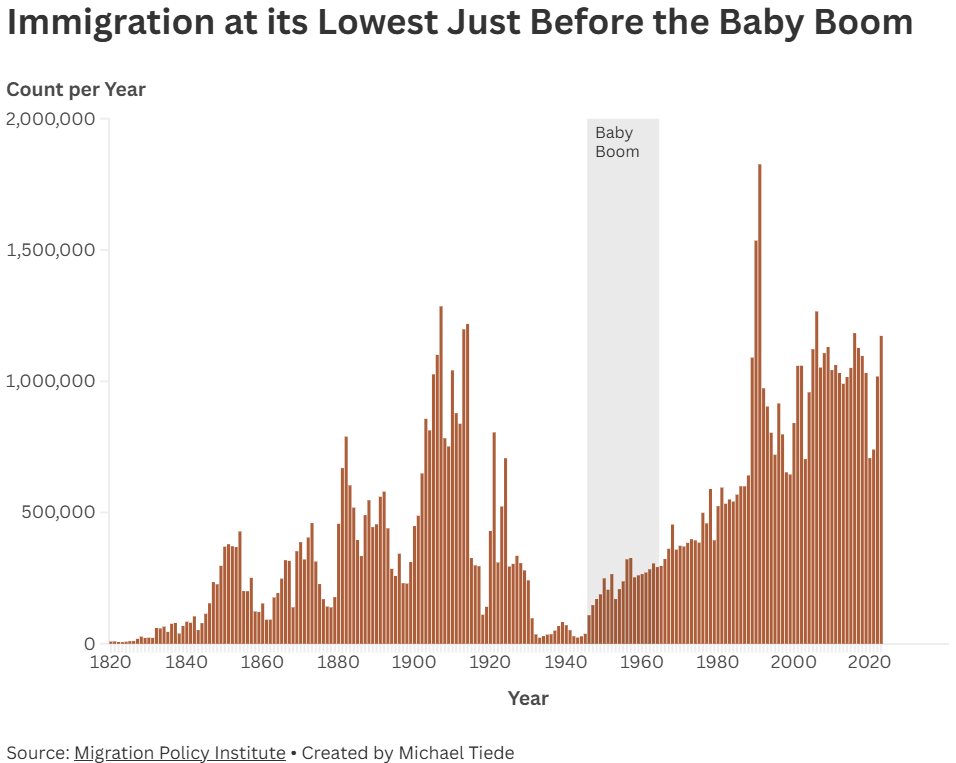
Boomers grew up in an America that looks very different from the America we have today. Immigration was at an all-time low just as the boom began, and the immigrants who did emigrate were mainly from western Europe. In 1945 there were only 38,000 immigrants entering the US. In 1970, only 4.7% of Americans were foreign born, compared to 15.4% in 2025. Immigration since then has grown significantly – mostly from Asian and Latin American countries in the latter half of the 20th Century, and Central/South America countries in the 21st Century. The world Boomers grew up in was dominated by one universal demographic that’s begun to decline.
At the heart of the immigration debate lies a profound generational disconnect over what it means to ‘feel at home.’ For a segment of older Americans, the rapid shift toward a more globalized society feels like a departure from the America they had grown up with. In contrast, younger and more educated generations tend to see a pluralistic future not as a threat, but as an evolution. A 2012 Pew Research Survey showed that more than half of White baby Boomers and seniors view the rise of newcomers from other countries as a threat to traditional American values and customs, while this view was the minority of younger generations.
Income inequality has grown significantly since the 1970s, and within the generation itself the majority of wealth is concentrated at the top. In 2022, Boomers owned in total $77 trillion in assets, but the top 10% held 71% of that total wealth. Along with an uneven distribution of wealth, added problems have compounded on top for younger generations. While boomers own the majority of wealth, millennials own about half of all debt (41%) – almost double Boomers (22%).
Debt has primarily come from higher education costs, which are 9 times the cost they were in 1989. Other causes of increased debt are rising inflation, slow wage growth, higher childcare costs, and rising cost of living. One surprising and growing source of debt is from credit cards. In 2025, Millennials ($6,961) surpassed Boomers ($6,795) in credit card debt. Americans under 60 continue to accrue credit card debt while older Americans are slowing down. Gen X has an average credit card debt of $9,600 – almost 1.5x higher than any other age group.
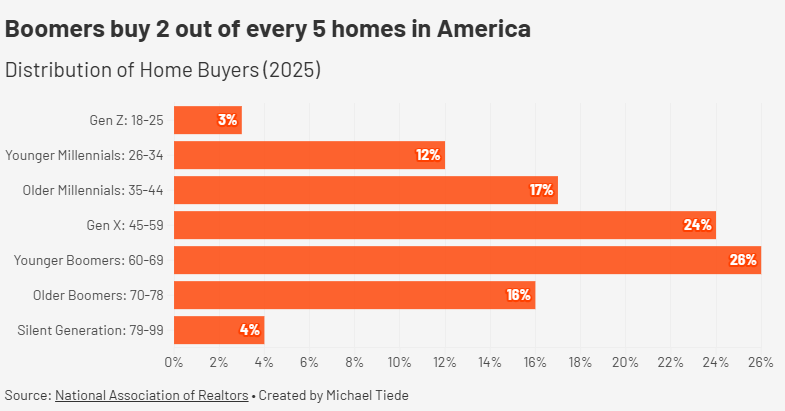
Housing is another major discrepancy between older and younger generations. Home prices are rising while single family construction is falling. America is building fewer homes per 100,000 than it did in 1975, and the majority of Americans who are buying homes are Boomers. 41% of all real estate wealth is owned by Boomers, and the homes they own are large homes with few people living in them. More empty-nester boomers own homes with 3 or more bedrooms than Millennials with children. Larger homes also make up the majority of homes being built. In 2022, nearly half of all new construction were homes with four bedrooms or more, compared to 1 in 5 homes in the 1970s. Homes today are on average 1,000 square feet larger than they were in 1973, and space per person has doubled. Bigger homes, and less homes overall has compounded the problem of need and affordability.
The average home price in 1976, when the oldest boomers were turning 30 was $42,800 and when adjusted for inflation would be $242,000 today. The average home at the end of 2025 was $405,300 – 1.5x more expensive when adjusted for inflation. During the Boomers prime earning years, America had extremely strong economic growth, lower tuition and healthcare costs and favorable tax policies that brewed the perfect conditions for growing personal wealth, compared to younger generations with higher costs, more debt and more volatile markets i.e. the dotcom bubble burst and the Great Recession. There is no question that a transition is underway – Boomers are aging, $84 trillion in wealth is being transferred through 2045, and young Americans are maturing in their voice for change. Boomers grew up in a world of abundance, and rightfully took advantage of it. Somewhere along the way, that abundance became guarded rather than shared. This moment is an opportunity to change that – to build an America with more housing development, affordable education, increased wages, and more pathways into the middle class. There’s no guarantee positive change will come. Wealth often stays in the hands of those most privileged. It’s on us to work for the greater good so all can aspire for the American dream. You’re on the free list for American Inequality. Consider upgrading to support this work, get access to the community chat, and doing your part to reduce inequality in America. If you are interested in partnering on projects, reach out at helloamericaninequality@gmail.com
|







Комментариев нет:
Отправить комментарий
Примечание. Отправлять комментарии могут только участники этого блога.