"Wealth in People" and Rethinking the Social FabricA radical reframing of prosperity in conversation with Nobel Prize winner James Robinson
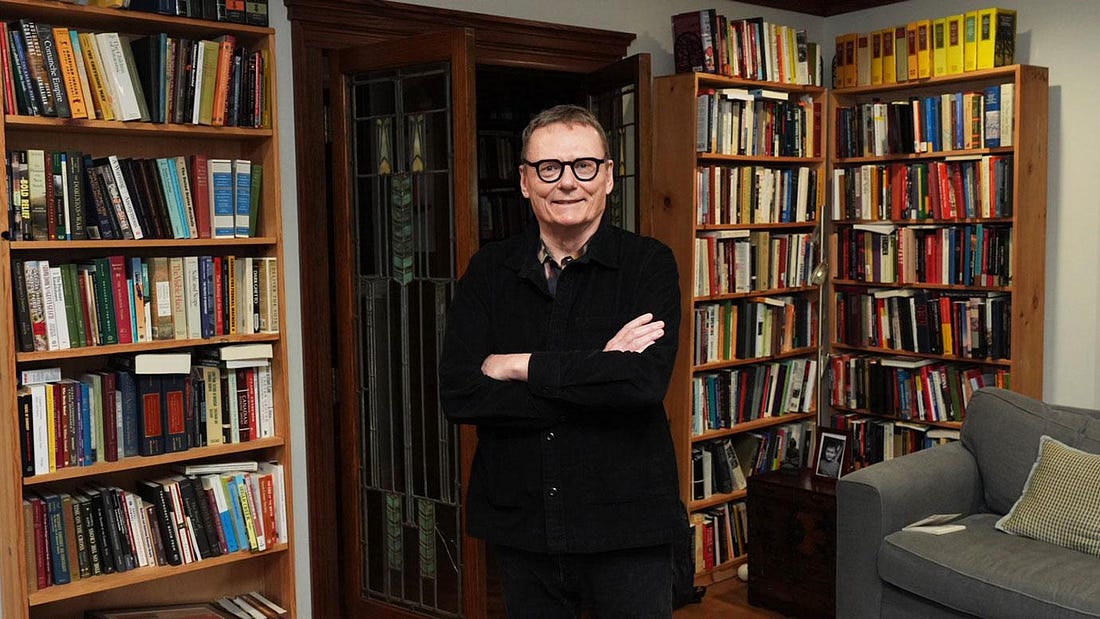
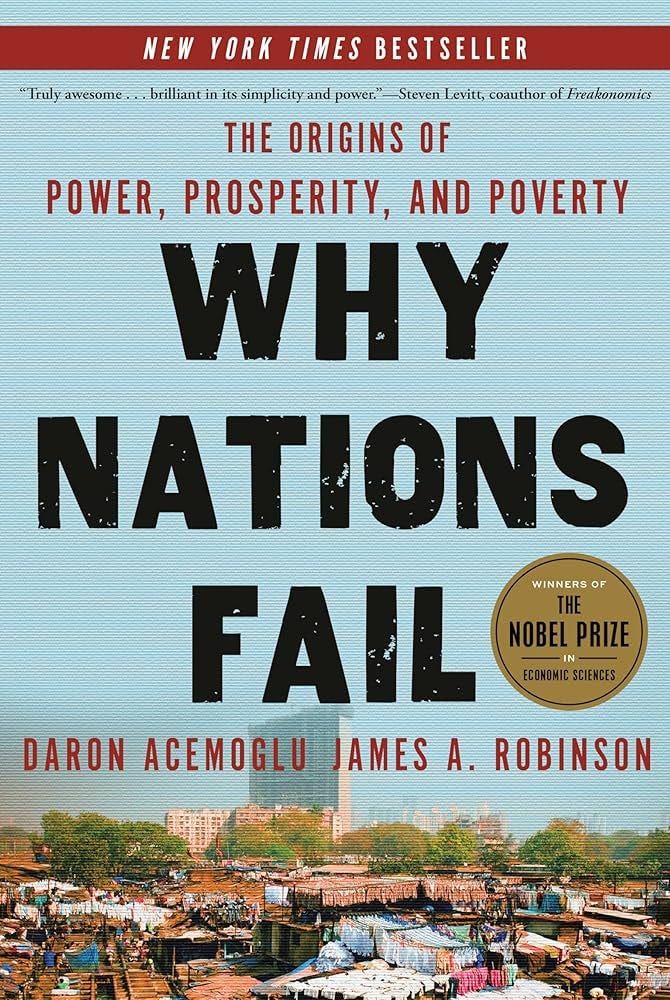
James Robinson, the renowned co-author of Why Nations Fail and 2024 Economics Nobel Prize Winner, is currently engaged in a deep, multi-decade exploration of African development that challenges conventional Western social science. I had the chance to sit down with Robinson and discuss his latest work which is centered on a profound concept he refers to as “wealth in people” that has implications far beyond the continent. The ways that societies develop, the institutional paths that they follow, and the contours of their historical foundations s all play a critical role in whether individuals are likely to achieve future success. The implications for this today are far reaching.
A New Way To Understand WealthJeremy Ney: You’ve dedicated much of your career to understanding the roots of prosperity and failure. What is the central focus of your current research on Africa? James Robinson: I’ve been working on African development for over twenty years, and what I’ve realized is that you need a much better theory to explain how Africa got into such a mess in the modern world and why that isn’t necessarily determinative of its future. At the heart of this is a principle that is absolutely essential in African society, which I call “wealth in people.” In Western social science, we are obsessed with material assets—bank accounts, land titles, factories. But in much of Africa, wealth has historically been counted through social relations, the strength of the community, and the kinship group. I was talking to a friend of mine from Malawi recently about what “wealth” actually means there and he talked about his children, his personal character, the food that he was able to provide. This is not just a sentimental cultural sentiment but instead what I show is that is has become institutionalized. If you want to understand fertility behavior, for example, you have to understand that children are wealth. This focus on people over things organized the entire economy, from how property rights were managed to how labor markets and political institutions functioned. Ney: You often use the “ensemble,” to describe this system of connection. How do these different economic, social, cultural, and religious elements actually fit together in a large group? Robinson: The idea of the “state” is very different in Africa. You can have areas where thousands of small towns or groups exist together, but they might not find the same type of allegiance with the country or state that they are located in. “Ensemble”is a set of mutually reinforcing characteristics that create a specific social equilibrium and bind groups together. In this system: Kinship groups and lineages are the primary institutions for managing wealth and labor; religious systems, specifically the veneration of ancestors, fortify the lineage principle, making the family unit the central pillar of reality; and property rights are often collective, where access to land depends on membership in a descent group. All these forces describe a vector of characteristics that are mutually reinforcing. In other parts of the world—like China, Mesopotamia, or the Greco-Roman world—you can find similar pieces, like corporate kinship groups, but in those cases, for various idiosyncratic reasons, one of those pieces got knocked out, causing the whole “ensemble” to unravel and lead toward political centralization and state formation. In Africa, this equilibrium stayed remarkably stable. Ney: If this “wealth in people” system and “ensemble” was so successful at preserving community, why did it leave Africa so vulnerable to the outside world? Robinson: The tragedy is that while these institutions were successful at preserving social cohesion, they were never designed to handle the exogenous shocks of the modern era, like the massive demand for slaves in the Americas or European colonial expansion. Because authority was so fragmented—by the 19th century, Africa was likely divided into 50,000 separate political entities—it was incredibly difficult to mount a unified defense. It’s obvious when you look at the history that the larger, more centralized states were the only ones that could really push back. Ethiopia, Zulu land, and the Asante were able to inflict military defeats on colonial powers. But for the rest of the continent, this fragmented nature of authority made it nearly impossible to construct a working social contract or a unified front. Even today, trying to build a nation-state in a place like Nigeria or Cameroon is a struggle because you are fighting against this deep-seated history of political fragmentation. Ney: Let’s talk about the West. What are the implications of this logic for a country like the United States, which seems increasingly divided and where wealth is so concentrated in the hands of the few? Robinson: The United States is currently tearing itself apart because it has become so polarized. We have a system built on “majority rule” that has become incredibly destructive. We think in terms of: “if I get 51% of the vote, I get to screw over the other 49%”. This creates a “winner-take-all” mentality where there is no incentive to build a broader social consensus. We also have a very strange way of thinking about representation. In the U.S. Senate, we represent “pieces of earth”—geographic territory. But as the Somali say, a person’s genealogy is like an Englishman’s home address; they define themselves by their social relationships, not by a coordinate on a map. When Somaliland rebuilt its state in the 1990s they created a legislative body called the Guurti that represented clans instead of following the ideas of a western map. They built a state on the logic of their society. The U.S. could learn a lot from that—moving away from territorial battles and thinking more about how to represent the actual social fabric of the country. We also need to embrace cosmopolitanism as a strength. Africans are often the most cosmopolitan people in the world; they navigate multiple languages, histories, and cultures every day. The 19th-century concept of the nation-state is increasingly out of date—it’s a relic that we’re all trying to hang onto with gritted teeth. Those who can leverage diverse social networks and move beyond rigid national identities are far better equipped for globalization than the average Brit or American. Ney: Are you saying there is a better way for us to make decisions beyond the popular vote? Robinson: We have a lot to learn from the way African assemblies traditionally operate. They don’t put forward pieces of legislation in the same way that they do in America. They don’t see the policy process as “I have my ideal point, you have yours, let’s see who can bludgeon the other into getting just enough votes across the finish line”. Instead, they believe there is a “right answer” or a truth that is good for the community, and they deliberate until they find it.
They make decisions by consensus, discussing a problem until everyone can agree on the path forward. This is what Julius Nyerere was talking about in the 1960s—that in a society without highly polarized classes, you don’t need a two-party system that lives to defeat the other side. If we could move toward that kind of deliberation in the West, we might actually find solutions that don’t leave half the population feeling like the system has been rigged against them every four years. Ney: You’ve mentioned that poverty in the U.S. feels different from poverty in Africa. How does your research change our understanding of inequality? Robinson: It’s a fascinating contrast. You can look at a place like Rwanda where cash transfers have been very impactful for poverty alleviation, and then look at Flint, Michigan, where the same interventions might fail. In many African communities, even when people are materially poor, they are embedded in these robust kinship ensembles that foster a spirit of entrepreneurship and creativity. In contrast, people in many impoverished U.S. areas are socially isolated and saddled with student and medical debt. They are paying off the past rather than building a future. U.S. policy focuses almost entirely on individual financial metrics, but we ignore the fact that without a functioning social ensemble, without the ability to provide groups that can act together to produce upward lift (like unions used to do in America), individuals remain trapped. We need to think about how to reinvent our institutions to strengthen those community networks. Ney: You’ve been vocal in your criticism of “geographic determinism.” Why do you find models like Guns, Germs, and Steel so problematic? Robinson: I think that whole “Guns, Germs, and Steel” model of the world is, frankly, ludicrous. It suggests that human destiny is pinned down by exogenous fundamentals like endowments or geography. But the reality I see is that humans create their societies. We create the rules, the institutions, the religious systems, and the philosophies. There is an enormous amount of human agency and variation in how these equilibria are formed. It’s not indeterminate, but it’s certainly not fixed by the land. Some ways of organizing are more successful than others, of course, but the idea that we are just pawns of our environment ignores the creative capacity of people to design their own futures. Ney: If we want to improve the state of the world, how can we leverage these insights to better our economies and societies? What is the path forward? Robinson: We have to start by asking a different first question. Instead of asking “What should the government do?”, we should ask: “What is working well already in this context, and why?”. Whether it’s in Nigeria or a rural community in the U.S., there are always bits of society that work—well-intentioned people who have found a way to innovate despite the system. We should be looking for those successes and trying to scale them up. Wealth in people provides a different foundation for collective action and prosperity. In the West, we have become trapped in a narrow, materialist view of success, but my work shows that humans have the agency to design societies where the primary asset is the strength and quality of our social relationships. This creates a more functional and resilient equilibrium where the success of the individual is fundamentally tied to the health of the “ensemble.” We often think of wealth as a finite resource that divides us, but wealth in people is inherently additive. By leveraging the cosmopolitan nature of diverse social networks and building institutions that reflect our actual social logic rather than arbitrary geographic coordinates, we can generate a kind of collective wealth by looking after each other’s children, taking care of our families, improving social capital, and building community connection. Communities don’t have to be pinned down by our circumstances. We have the scope to create a society where collective flourishing is the ultimate institutional goal. INTERESTING ON THE WEB
You’re on the free list for American Inequality. Consider upgrading to support this work, get access to the community chat, and doing your part to reduce inequality in America. If you are interested in partnering on projects, reach out at helloamericaninequality@gmail.com
|





Комментариев нет:
Отправить комментарий
Примечание. Отправлять комментарии могут только участники этого блога.