Поиск по этому блогу

Search1

123

пятница, 9 июня 2023 г.

Challenging assumptions—and bureaucracy

How to break through green energy gridlock.
O'Reilly
Next:Economy
Newsletter
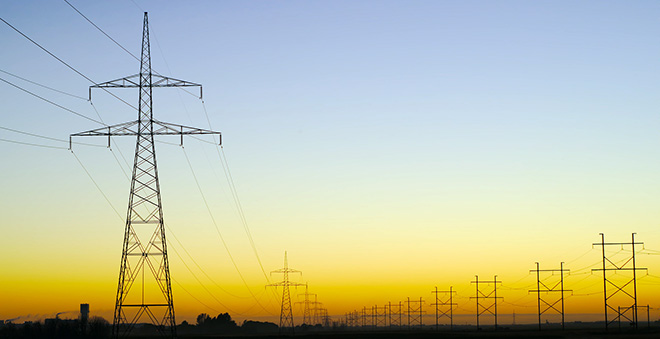
power lines at sunset

Cropped image by Bruce Guenter on Flickr

Challenging one assumption may have made desalination more effective

For the past 25 years, reverse osmosis has been the gold standard for water filtration systems, but these systems were built on the assumption that water molecules diffuse through the system individually. That assumption always bothered Menachem Elimelech, founder of Yale's Environmental Engineering Program. In a recent study , his team proved that water particles travel through the membrane in clusters. Their "solution-friction" theory is important because it could help people design membrane materials or structures that make desalination more efficient and better at screening out undesirable chemicals.

Breaking through green energy gridlock

Sometimes problem-solving innovation isn't enough, though. Sometimes we must also challenge bureaucratic obstacles. For example, there are plenty of projects in the works that could provide inexpensive clean energy, but bottlenecks in connecting to the grid have slowed progress. This NPR Planet Money podcast episode interviews Lyle Jack, a member of the Oglala Lakota Nation who has pulled together several South Dakota tribes to build a wind farm. But the interconnection process is almost impossible to navigate. Just completing the study that shows whether the project can be connected and how much it would cost has stymied the project for years.

Thousands of projects are currently in limbo, representing more electrical capacity than all the existing power plants in the US today. The limits of the power network are likely the biggest barrier to clean energy growth facing American wind and solar.

But there are ways to speed the process. For one thing, the government could help finance new power lines. Advance planning on where the power lines would have the most impact and connect to the most promising sites could also help. Reviewing potential projects in batches that use the same grid and the same power lines (and letting those projects split the costs) would be faster and less obstructive. Projects could be connected to the grid now, and if the additional power proves to be more than the grid can handle, the power producers could be asked to throttle down until the energy is needed or the grids are improved. But there are ways to speed the process. For one thing, the government could help finance new power lines. Advance planning on where the power lines would have the most impact and connect to the most promising sites could also help. Reviewing potential projects in batches that use the same grid and the same power lines (and letting those projects split the costs) would be faster and less obstructive. Projects could be connected to the grid now, and if the additional power proves to be more than the grid can handle, the power producers could be asked to throttle down until the energy is needed or the grids are improved. And permitting could be made easier—an idea that has enough bipartisan agreement to make permitting reform a compromise in the recent debt-limit talks. The just-signed bipartisan debt deal includes provisions that will streamline the permitting process for building fossil fuel and clean energy projects, although it doesn't address much-needed infrastructure like transmission lines.

Luckily, other clean tech manufacturing sectors are expanding so fast that solar and battery manufacturing capacity is now on track to meet the 2030 milestones set out in the IEA's scenario for net zero CO2 emissions by 2050. That being said, the national clean energy priorities set by legislation such as the Inflation Reduction Act may well be stymied by interstate transmission regulations or even local building codes.

+ "Speeding Up US Power Grid Connection 'Top Priority,' FERC Chairman Says"

Our future depends on our ability to implement

The backup in the interconnection queue is just one example of how a government culture stuck in the industrial era is thwarting the implementation of desperately needed policies and services.

That's the subject of Jennifer Pahlka's new book, Recoding America: Why Government Is Failing in the Digital Age and How We Can Do Better . Pahlka was the founder of Code for America and was deputy chief technology officer under President Obama, where she set in motion what became the United States Digital Service. (Disclosure: she's also married to our founder and CEO, Tim O'Reilly.) Drawing on her time in government and from examples set by amazing public servants who are making government work despite the obstacles, Pahlka shows how to meet the greatest challenges of our day—climate change, inequality, healthcare, national security—by implementing our laws and policies with an approach that works.

Adam Grant said, "No one should be allowed to hold public office without reading this book." And Michigan Lt. Governor Garlin Gilchrist said, "Pahlka's call to action should be in the front of the minds of every policymaker." But it isn't just for government nerds. Charles Duhigg thinks that "everyone can learn something from this wonderful book."

Preorder your copy now and find out how you can take action yourself.

+ Pahlka joined Ezra Klein this week to discuss Recoding America. Their wide-ranging conversation touched on how the "better safe than sorry" interpretation of policy holds implementation back, balancing agility and stability, why implementers need a seat at the table when policy's being written—and much more. Listen to "The Book I Wish Every Policymaker Would Read."

+ Pahlka is also speaking at a number of events this month. Check them out here.

Effective government—What an idea!

Effective Government California is a network of entrepreneurs and others who want to help close the gap between California's values and its outcomes. EGC focuses on increasing state capacity, building drastically more housing, clean energy abundance, and decreasing the risk of California "megafires " by putting resources into proactive management rather than just responding when disaster occurs. All of these areas seem unsolvable because of a common pathology: "We have been in a vicious cycle with the California government over the last fifty years. We create an environment that makes success nearly impossible, then punish our elected officials for not succeeding by increasing the difficulty of the environment. We need to reverse the polarity of this trend to get a virtuous cycle and an effective government."

+ From the New York Times: "The Problem with Everything-Bagel Liberalism" by Ezra Klein

Комментариев нет:

Отправить комментарий

Примечание. Отправлять комментарии могут только участники этого блога.