Does Data Shape Our Identities?The 2030 Census put out a call for help. The results may redefine how we view communities in America
Listen to the podcast version of this article recorded with NotebookLM. Share the newsletter with a friend. A REQUEST: I’m looking to connect with people who have lived or worked in the Imperial Valley, California. If this is you or someone you know, please reply to this email or leave a comment!Samera Hadi identifies as Yemeni American, but explains that “the categories of the Census don’t speak to my identity as Arab or, more specifically, Yemeni. I don’t walk through this world as a white person, I don’t get those privileges as a white person, I don’t have white culture.” For every Census , Samera would have been categorized as White. That might all change in 2030. Samera wears a headscarf and is from San Jose, California. She recently moved to Chicago and began working with high school age refugee girls seeking educational and social support. She also has two daughters of her own and is trying to help them understand their identities as they grow up in a diverse city that welcomes them but in a country that doesn’t always recognize them in official measures and categories.
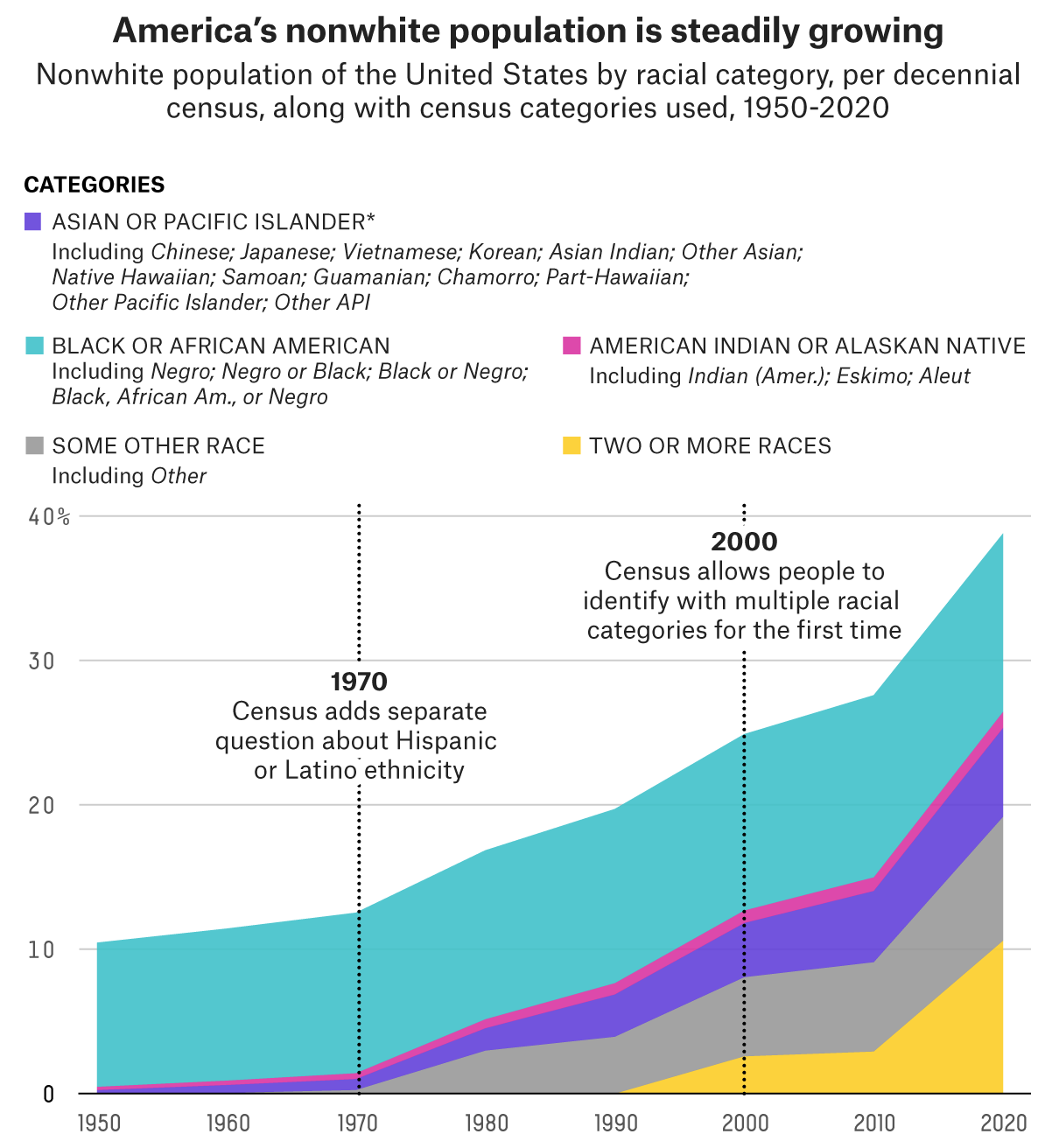
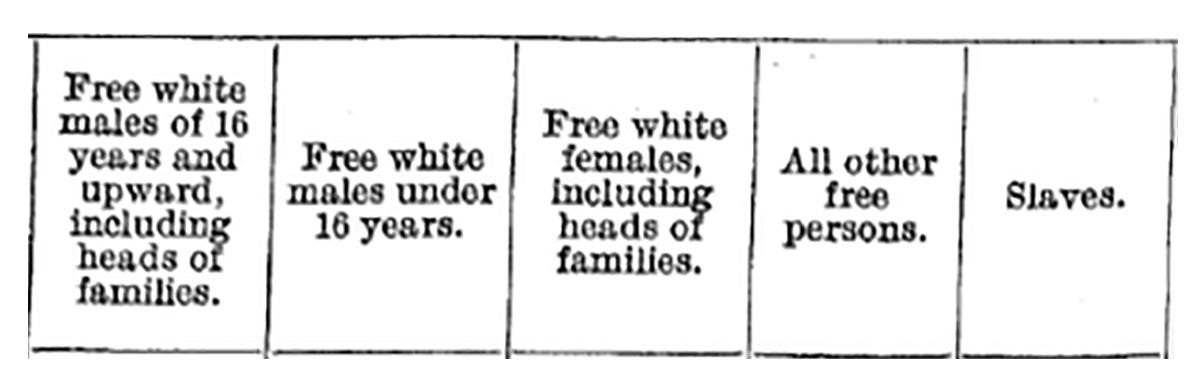
On November 18, the Census Bureau put out a call asking for help defining race and ethnicity. Bureau demographers started to work on the 2030 census and explained, “Public feedback on the code list is essential to making sure future data on race/ethnicity groups accurately reflect our nation’s diverse population.” The main request the Census made was for people to submit identity groups that might be missing from the code list. At a time when ‘identity’ and identity politics are such fixtures of our national conversation and when the census is trying to understand what all the different identities might be, I thought I’d try to understand where some of this might be headed. The way we categorize identities might be driving our growing divides. Or it might be missing the picture altogether. A long awaited new categoryA new category is coming to the 2030 census that advocates have been championing for over three decades: Middle Eastern or North African (MENA). Matthew Stiffler, a University of Michigan lecturer on Arab American studies, explained, “The MENA community fought to be white in the early parts of the 1900s and they achieved that, but as politics and world affairs developed later that century and into the 2000s, it became clear that Arab and MENA folks were not going to be treated as white.” The Census estimates that more than 4 million people will select this category in the 2030 census. Perhaps most importantly, the census is used as the #1 source for allocating funds both in the private and public sectors. Federal funding for many social services and apportioning House seats all comes from the Census. The budget documents for SNAP, Medicaid, Housing Choice Vouchers, and the main programs for childcare and job training rely on census data. Marketing, advertising, and eCommerce companies rely on census data to identify different populations in certain regions they are trying to serve. Changing with the timesIdentity categories are not immutable. The 1790 census had just 5 categories, with two of them including ‘slaves’ and ‘all other free persons’. Prior to 2000, the census did not permit people to list mixed or multiple racial identities.
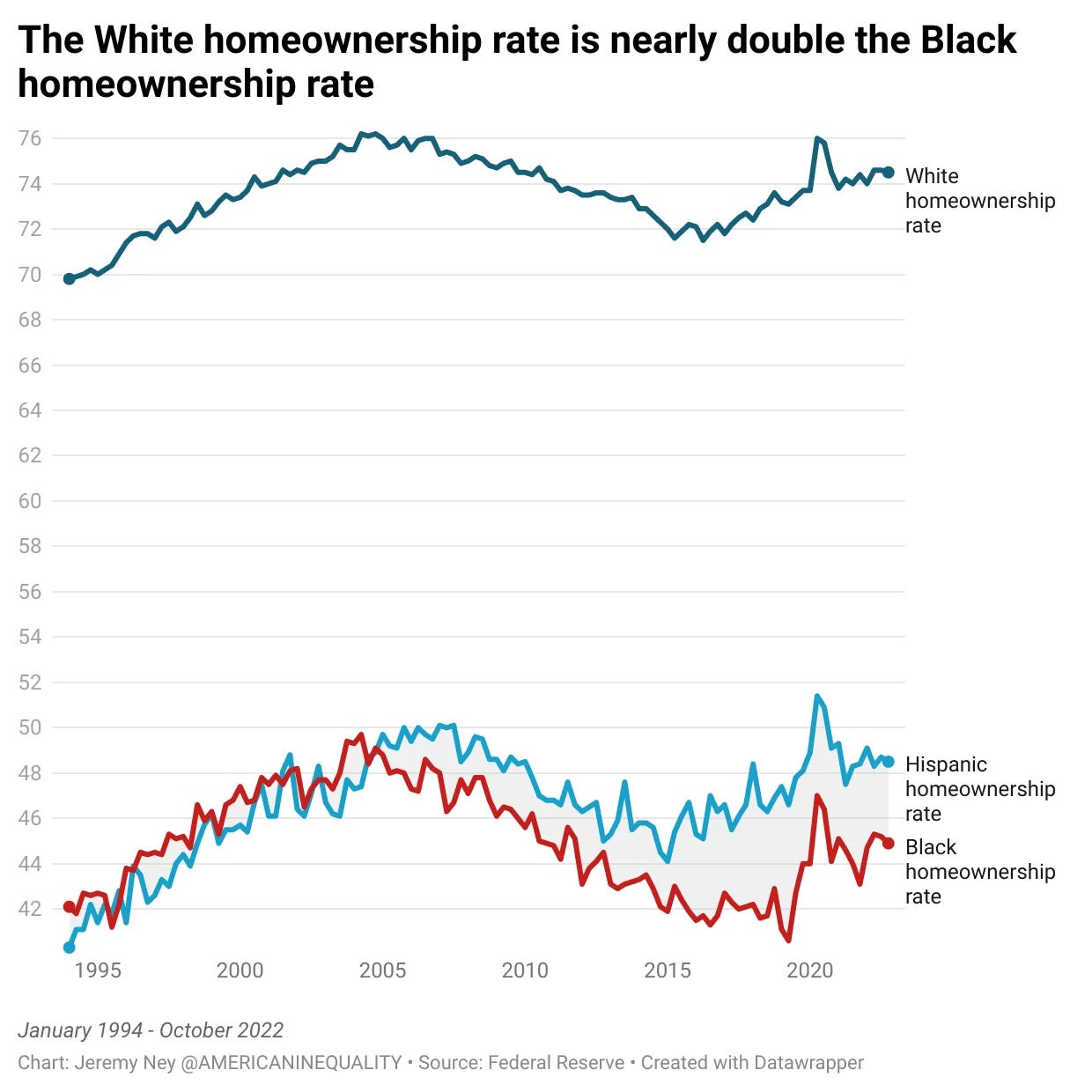
The updates to the Census try to reflect the current identities of the nation, but those changes have created some unexpected pushback. Recent social-psychological research reveals that many whites react negatively to the idea of a majority-minority society and assert more conservative attitudes because of it. When white people realize that other racial groups are occupying a larger share of the population, this has a causal effect in making the white people more conservative. We can’t change what we can’t measureThis past spring, I was speaking at Georgetown and a student raised his hand and asked something I had never heard, “Isn’t the chart only telling a narrow part of the story?” he asked. “Why are you not including other demographics like Asians or Native Americans?” I had pulled up one of my charts showing Black vs. White vs. Hispanic homeownership rates over the last 30 years. I had published this chart 2 years earlier and used it in dozens of presentations to show that Black home ownership rates are consistently half those of White homeownership.
The student was right in many ways, but my challenge was that I was just reflecting a perhaps bigger issue. The Federal Reserve has never published homeownership data on Native Americans and only in 2016 did it start publishing data on Asian homeownership, though this was lumped together with Native Hawaiians and Pacific Islanders. The only data going back to 1994 was for these 3 demographics of Black, White, and Hispanic. We cannot change what we cannot see. When policymakers, economists, and politicians don’t know how bad an issue is for a certain population, they may never be able to enact meaningful change for that group. This is especially important now when every project needs to be able to prove its efficacy.
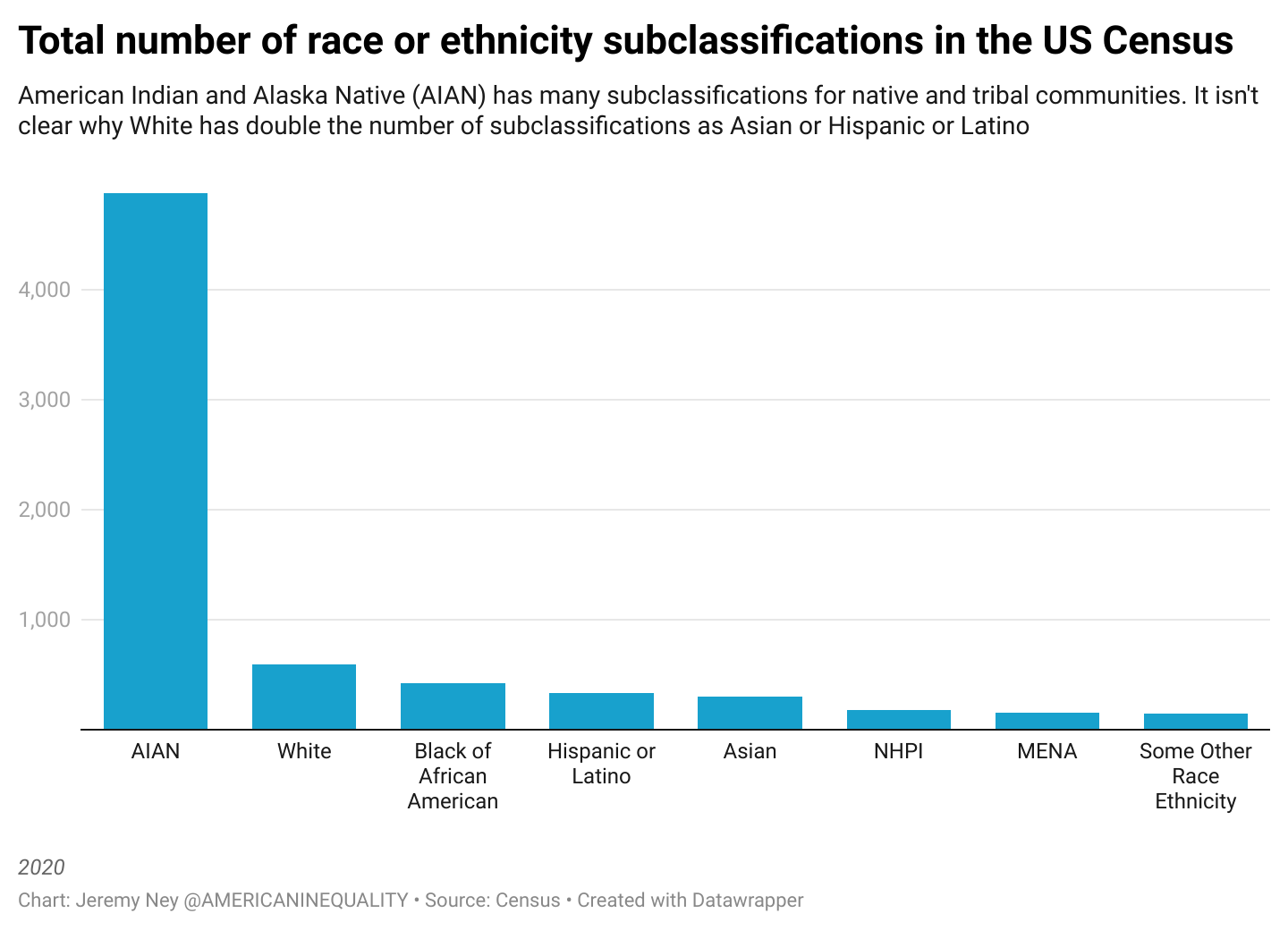
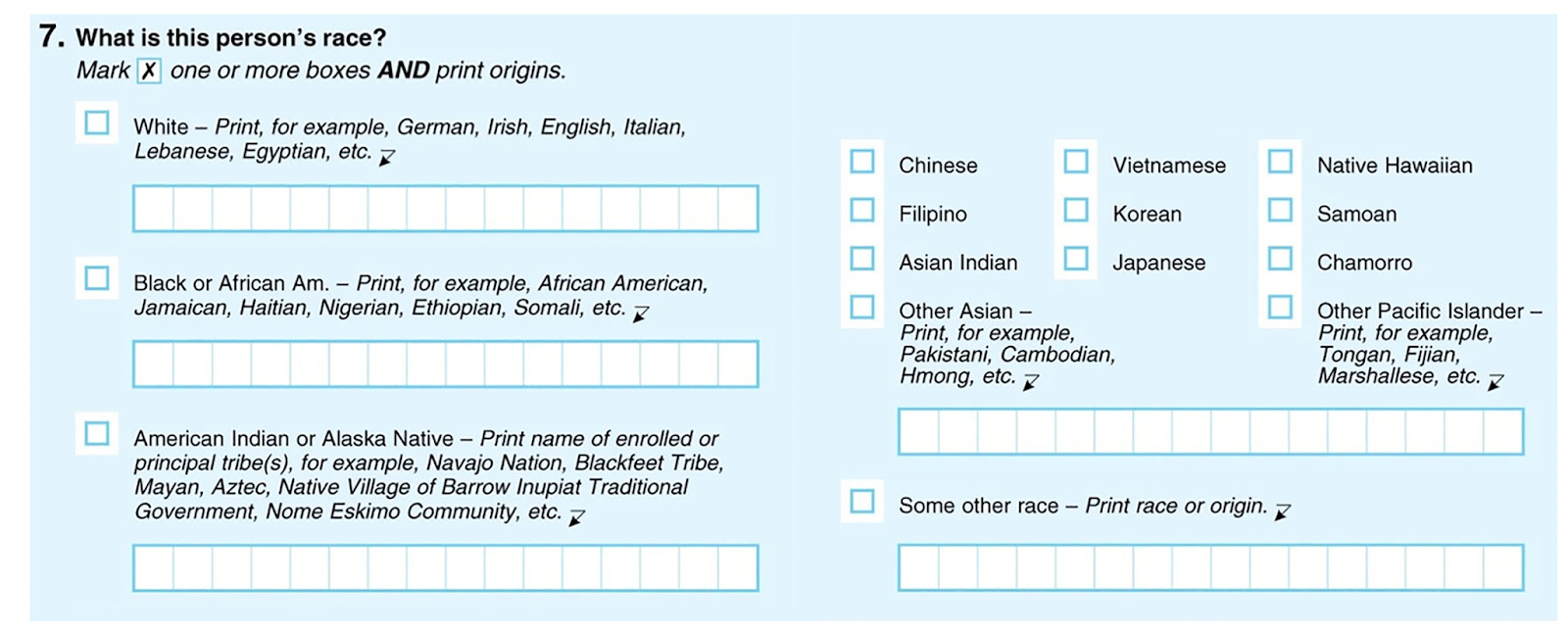
Who does the Census identify?The code list has 7,054 terms that stretch across 8 main categories - White, Hispanic or Latino, Black or African American, Asian, American Indian or Alaska Native, Middle Eastern or North African, Native Hawaiian and Pacific Islander, or Some Other Race and/or ethnicity. Within these 8 main categories, there are many sub-sections that drive the distinctions.
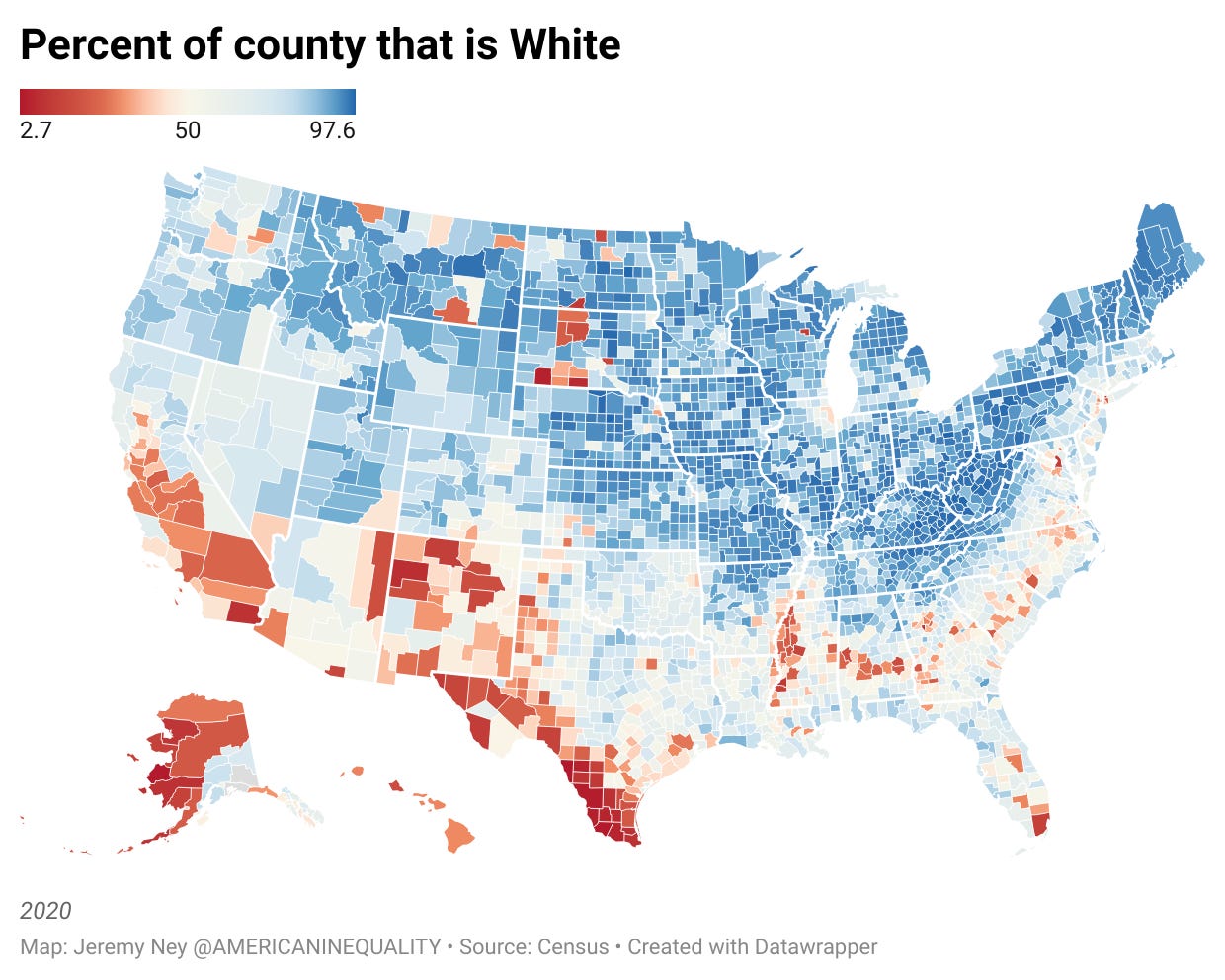
These different categories also make a huge difference for how Americans see themselves. As 538 explains, “The first significant release of the 2020 census data arrived in August, and it paints a picture of America unlike any we have ever seen before. The share of Americans who identify as white fell 11 percentage points, from 72% to 62%, while the number of Americans who identify as multiracial more than tripled, from nearly 3% in 2010 to over 10% in 2020.” This was not due to massive shifts in demographics over the 10 year period.
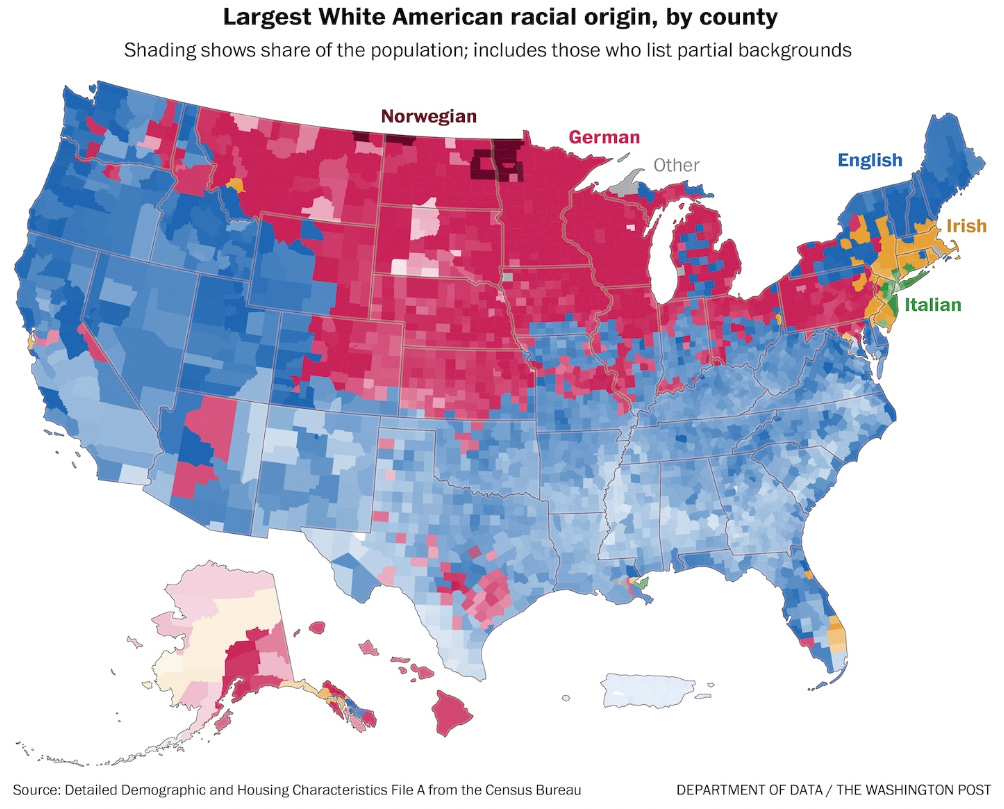
America’s largest ethnic group is German. Or maybe it is English. If you want to understand why we might not actually know, despite a change to the 2020, read this incredible act of journalism by our friend of American Inequality and data journalist Andrew Van Dam. Gender identity and sexual orientationThe census is also evaluating whether to ask about sexual orientation and gender identity. Earlier in 2024, Census officials sent out hundreds of thousands of ballots and opened up a comment period as well to understand what language would be sufficient for asking this question and whether it brought back responses that could be useful. The trial questionnaire is testing “degenderizing” questions about relationships in a household by changing options like “biological son” or “biological daughter” to “biological child.” On the sexual orientation question, respondents can provide a write-in response if they don’t see themselves in the gay or lesbian, straight or bisexual options. One way to view this is that politics drives data. Data is not ‘objective’ – we create the categories. We decide what to measure. In this case, one could argue that the questions are becoming less detailed (i.e. removing categories) in favor of a more gender neutral category that doesn’t label a child in a certain way. The Path ForwardData is never perfect. But the Census is such an important measure that we need to get it as right as we can. Here are a few things I realized along the way of writing this piece.
You’re on the free list for American Inequality. Thanks so much for being part of our community! Please share with others and don’t forget to subscribe. Most sincerely, Jeremy
|
среда, 18 декабря 2024 г.
Does Data Shape Our Identities?








Подписаться на:
Комментарии к сообщению (Atom)
Комментариев нет:
Отправить комментарий
Примечание. Отправлять комментарии могут только участники этого блога.