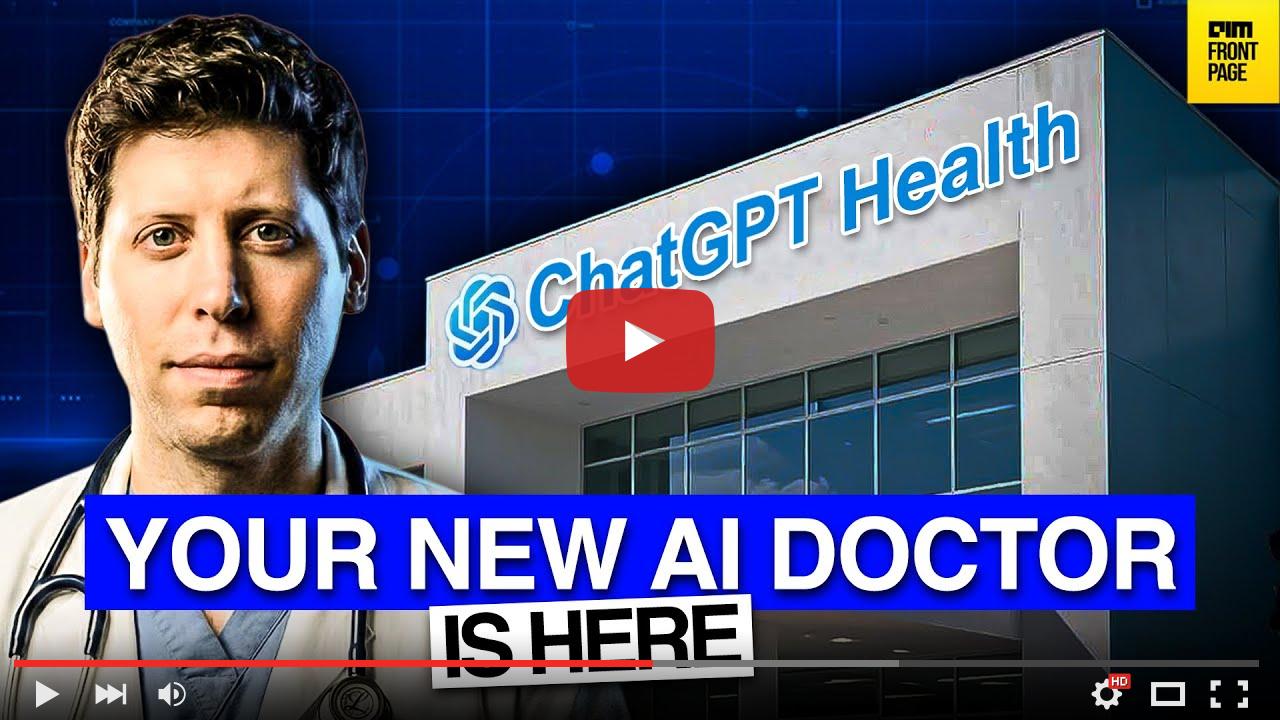
While OpenAI was busy building walls around health data, Anthropic chose a very different route. Claude for Healthcare launched just days after ChatGPT Health. Unlike OpenAI's sandboxed model, Claude for Healthcare is woven directly into Claude itself. The system can securely access medical and insurance databases to check coverage, explain lab reports and even prepare claims documentation. It is HIPAA-compliant and connected to scientific databases for biological research. For hospitals and insurers, Claude functions as a workflow tool. For patients, it acts as a translator of medical complexity. India, meanwhile, isn't standing still. Fractal's Vaidya.ai is already live in beta as a health advisor app. Considering everything, doctors agree on one thing: AI is great for understanding, not for decisions. It can explain reports, list options and flag risks. What it cannot do, however, is replace clinicians. Google and Apple Also Step In Meanwhile, Google has also chimed in at the right time with a renewed focus. It has updated its open MedGemma model and released MedGemma 1.5 4B with improved medical imaging support. Alongside this, there's also MedASR, its new open medical speech-to-text model. Though not packaged as an app, Google is also getting serious about healthcare, something it has been doing for a while now. Meanwhile, Apple is also said to be working on a substantial refresh of its Health app, with multiple new features expected in the iOS 26.4 update. According to a report from 9To5Mac, the update includes calorie tracking and even video-based health services. In short, AI will be your doctor, but it might make sure they are not drowning in paperwork. | 





Комментариев нет:
Отправить комментарий
Примечание. Отправлять комментарии могут только участники этого блога.