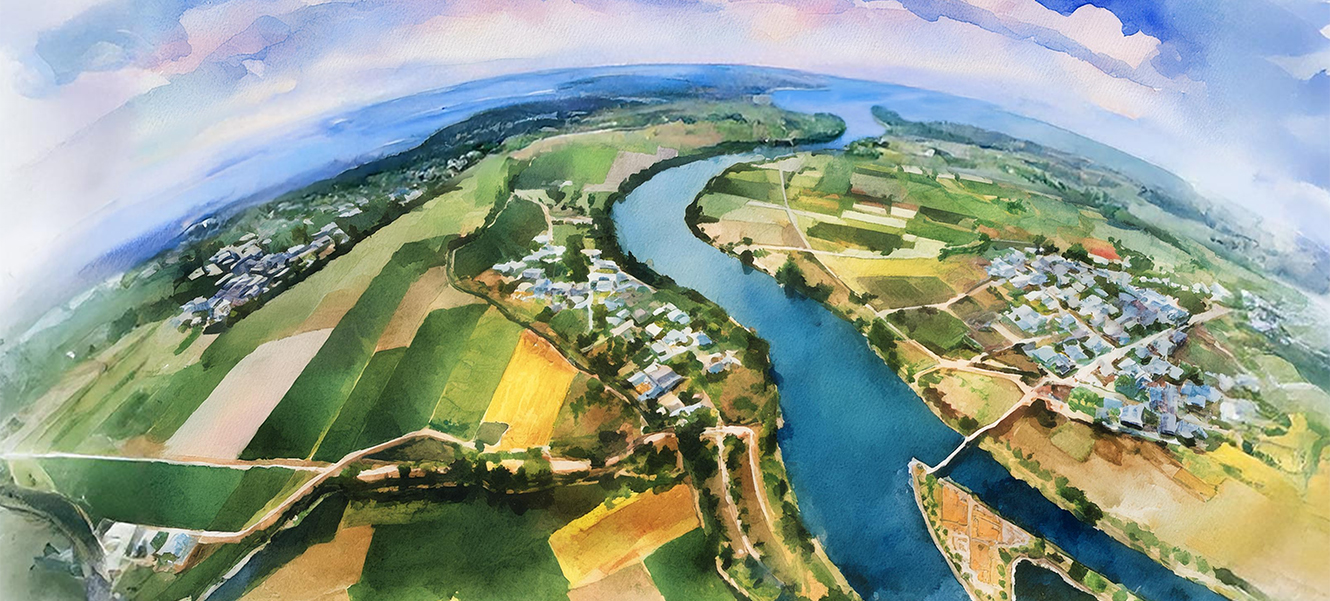
"We need new policies that reflect water's true value." Generated with Adobe Firefly. | | | | | Solving the water security crisis As weather patterns grow more extreme, we're likely to oscillate between feast and famine where water is concerned—devastating years-long droughts coupled with increasingly frequent hundred- and thousand-year storms that leave death, destruction, and billions in damages in their wake. We already know the cause, but we're still wrapping our heads around the reverberations of this new normal on agriculture, industry, real estate (and insurance), infrastructure. . .and water security itself. Water insecurity "is a human-made crisis, and it can and must be resolved through human interventions," argue Global Commission on the Economics of Water cochairs Mariana Mazzucato, Ngozi Okonjo-Iweala, Johan Rockström, and Tharman Shanmugaratnam in Project Syndicate. "But to achieve equity and sustainability everywhere, we will need new approaches to governing water and a wave of vastly higher investment, scaled-up innovation, and capacity-building." They call for better management of water sources: not just "blue water" like rivers and lakes but the "'green water' in our soil, plants, and forests, which transpires and is recycled through the atmosphere." But they also recognize that solving the crisis will require water policy that reflects the global scale of the challenge and the interconnectedness of the water system. Here are just a few of their recommendations: The most fundamental policy shift lies in valuing water properly to reflect its scarcity as well as its critical role in sustaining the natural ecosystems that every society depends on. We must cease the underpricing of water across the economy and the harmful agricultural subsidies that drive unsustainable usage and degrade the land. . . . To fix chronic underinvestment in water, we must reprioritize water infrastructure in public finance, where it is oddly neglected in most countries. . . . Given the collective nature of the water challenge, we must ensure larger and more reliable flows of finance to help low- and lower-middle-income countries invest in water resilience. . . . Just as we are doing for emissions, we must compile high-integrity data on corporate water footprints and create frameworks for water-use disclosure. We must also develop systems for valuing water as part of natural capital. You can read the Global Commission on the Economics of Water's seven-point call to collective action here. And keep on the lookout for the final report, due later this month. + From ScienceBlog: "A groundbreaking study from Stockholm University. . .suggests that current methods may significantly underestimate the risks to our water supply." + From St. Louis Public Radio: "Missouri and the Midwest Are Gearing Up for Water Fights Fueled by Climate Change." | | | | | Reining in bad behavior As Mazzucato, Okonjo-Iweala, Rockström, and Shanmugaratnam point out above, the private sector has a role to play in ensuring water security—but incentives must be aligned with sustainable policies. And that's clearly not the case right now. "Water is more valuable than oil," declared The Guardian in an investigation into water transfer investment firm Greenstone Resource Partners' management of water rights on the Colorado River . (Greenstone sold water to communities hundreds of miles from the river during a drought, displeasing local farmers who depend on water from the shrinking Colorado.) And Greenstone isn't the only one behaving badly. In its Water Grab series, Bloomberg has been tracking how "investors are moving to control and profit from scarce and pristine water sources ": The six stories document shockingly similar incidents from around the world in which investors grow rich while local communities are left high and dry. (Not to mention the ecological damage they leave behind.) The danger isn't just that companies see water as a commodity but that they're working from a playbook that puts profit above all other concerns, extracting the greatest possible value without regard for the consequences. + To wit: Here's The Guardian's George Monbiot on "how the overseas owners of England's water companies clean up by polluting our rivers": The water companies' business strategy has worked as follows: load themselves with debt to finance dividend payouts; load the future with costs as they fail to build the infrastructure—such as new reservoirs and pipes—required to meet our growing needs; and load the rivers with excrement to avoid the expense of upgrading their plants. | | | | | Join our WTF Economy Substack One last thing before we go: Next week will be our last issue as Next Economy. We're moving to Substack, under the name The WTF Economy. While we won't be sending a weekly newsletter, we'd still like to keep in touch. So if you're interested, head over to Substack and sign up. | | | | | | —Tim O’Reilly and Peyton Joyce | | | |




Комментариев нет:
Отправить комментарий
Примечание. Отправлять комментарии могут только участники этого блога.