| | | | Hello, readers! This is your AI Human, Amit Raja Naik, bringing you some exciting new updates. Yesterday, OpenAI unveiled GPT-4o, which will forever change how people interact, work, and communicate. I believe this is the start of a ‘pre-AGI’ era. |
|
|
|
|
|
|
| At the OpenAI Spring Update, CTO Mira Murati revealed GPT-4o, a new model with ‘omni’ capabilities integrating text, vision, and audio, set to elevate both developer and consumer experiences progressively and dubbed by Sam Altmanas reminiscent of AI from movies, her. This new model from OpenAI is said to challenge the relevance ofGoogle Translatewith its advanced real-time translation features. |
|
|
|
| | | Former OpenAI computer scientist Andrej Karpathysimplified GPT-4o for everyone and said that it is a“combined text-audio-vision model that processes all three modalities in one single neural network, which can then do real-time voice translation as a special case afterthought, if you ask it to.” Altman said that the original ChatGPT hinted at what was possible with language interfaces, but “this new thing feels viscerally different. It is fast, smart, fun, natural, and helpful.” What’s really interesting about GPT-4o is that it will be available to both ChatGPT Plus as well as ChatGPT free users soon. “We are a business and will find plenty of things to charge for, and that will help us provide free, outstanding AI service to (hopefully) billions of people,” said Altman, sharing his vision to democratise AI, and calling GPT-4o a step in that direction. |
|
|
|
| | | Is this the end of Google Translate? |
|
In the demonstration of GPT-4o’s real-time translation capabilities, the model seamlessly translated between English and Italian, exemplifying its sophisticated linguistic adaptability. Many believe that this new feature of OpenAI is likely to replace Google Translate. Meanwhile, Google is preparing to make some major announcements at Google I/O. “Super excited for my first Google I/O tomorrow and to share what we’ve been working on!” postedGoogle DeepMind chiefDemis Hassabis, sharing a similar glimpse of its multi-modal AI assistant. Check out Google I/O 2024 expectations here. |
|
|
|
| | | | | Inching closer to autonomous agents |
|
OpenAI gave us a glimpse of how it works, and the general consensus is that it will change how people work. According to WEF, LLMs were predicted to impact about 40%of working hours last year. But now, many anticipate it might even reach 90%, making employees either super lazyor more productive than ever before. The latter seems more plausible. A few days ago, Altman, in the latest episode of theAll-In podcast, expressed similar views of AI systems like ChatGPT acting like ‘senior employees’ who can engage with users much like a trusted employee would with a CEO. This includes the ability to push back, reason, and access emails within specified constraints. Altman emphasised that an AI assistant shouldn't be like an ‘agent’ but like a ‘senior employee’, saying that the latter will question illogical requests, and the agent unquestioningly follows commands. |
|
|
|
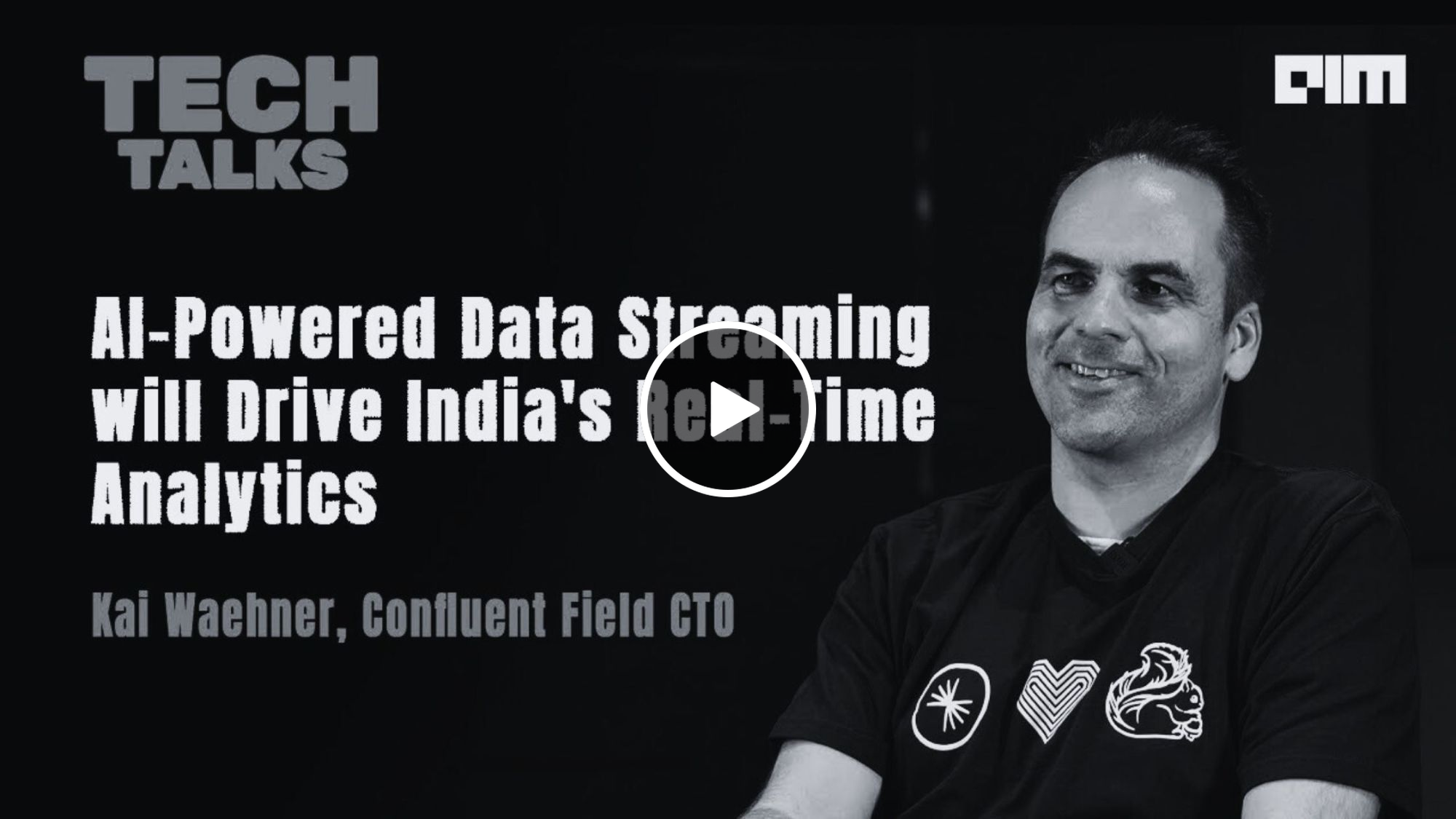
| | | | | Confluent has 20% of its global workforce in India, and it is looking to expand more in the coming months. In an interview with AIM,Kai Waehner, Confluent's field CTO, shared his take on how the company's AI-powered data streaming capabilities can propel India to the forefront of global real-time analytics. |
|
|
|
| India’s Villages are the New Frontier for Data Centre Expansion |
|
|
|
| | | In a country where nearly 60% of the 1.4 billion population resides in rural areas, India is addressing challenges like patchy connectivity and limited digital access by rapidly advancing towards hyperscale data centres concentrated in major cities. However, to cater more directly to consumers in smaller urban areas, edge data centres are becoming increasingly relevant inTier 2 and 3 cities. Nestled in the Tier 2 city of Nashik, ESDS aims to make digital services accessible to everyone nationwide. In a discussion with AIM,Piyush Somani, founder of ESDS data centres, shared insights on the evolving landscape of the data centre industry in India, emphasising local solutions for widespread connectivity. |
|
|
|
| | | As reported by Intel-IDC report, India’s AI spending is projected to triple to $5 billion by 2027, driven by sectors like BFSI. OpenAI recently expanded its capabilities, supporting over 50 languages, including Indian languages.GPT-4o has significantly optimised token usage for Indian languages, reducing Gujarati by 4.4x, Telugu by 3.5x, Tamil by 3.3x, and Marathi and Hindi by 2.9x. Sarvam AI recently launched the AI Residency programme, offering a monthly salary of up to INR 1 lakh. Apply now. Zomato is looking to hire people for its generative AI team. Apply here. Sophos's ‘State of Ransomware in India 2024’ report revealed that ransomware attacks against Indian organisations decreased from 73% in the previous year to 64% this year. TATA AIG announced the launch of India’s first Satellite In-Orbit Third-Party Liability Insurance policy, which will provide critical financial protection and cater to the growing needs of satellite manufacturers and operators in the Indian space sector. |
|
|
|
| | | | | | | Rakuten India, in partnership with AIM, is hosting the fourth edition of the Rakuten Product Conference (RPC) ‘24, a virtual event on May 21-22, focusing on Enterprise SaaS and AI for data scientists and innovators globally. |
|
|
|
| Enjoying Sector 6 (formerly AIM Daily XO)? Share it with colleagues or friends – they can sign up here. We love hearing from our readers! Have thoughts on our new format? Questions, comments, or ideas are always welcome. If there’s a specific topic in AI or analytics that you're curious about, tell us! Reach out to us at info@analyticsindiamag.com. Stay tuned for more insights in our next edition!
Curated with ♥️ |
|
|
|
| | |
|
|


Комментариев нет:
Отправить комментарий
Примечание. Отправлять комментарии могут только участники этого блога.