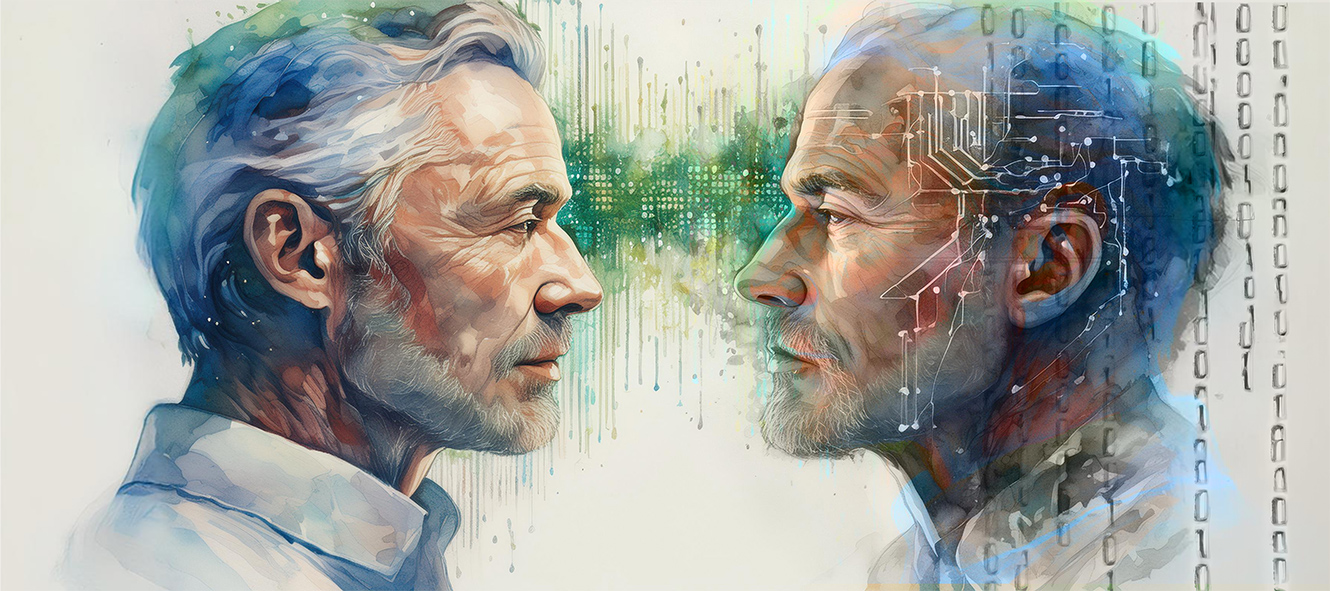
"Deepfakes could be more than just an instrument for scammers." Generated with Adobe Firefly. | | | | | Disinformation is on the rise this election season In the immediate aftermath of the assassination attempt on Donald Trump at a rally last month, the public was inundated with disinformation. It wasn't a surprise. We've seen it before whenever viral rumors outrun reporting—as Graham Brookie, senior director of the Atlantic Council's Digital Forensic Research Lab, explained to Bloomberg, "In any fast developing event, there is inevitably a high influx of false or unverified information , especially on social media." While some of that disinformation originates with armchair detectives and internet trolls, state actors also peddle falsehoods to sow chaos or influence voters . As we already learned in 2016 and 2020, the US election is a prime target, and some experts think 2024 will be even worse. As the AP reports, citing research from Syracuse's ElectionGraph Project, political ads have become a "prime source for misleading information about elections—and a tantalizingly easy way for con artists to target victims." And the same is true in Europe, where research from Dutch consultancy Trollrensics found that "coordinated networks of accounts spreading disinformation 'flooded' social media in France, Germany and Italy before the elections to the European parliament." However, the financial interests of social media companies may keep those best positioned to tackle disinformation from doing so. As The New York Times points out, all this viral content is great for engagement: Most social media platforms profit when outrage and indignation results in more engagement, and ultimately, more advertising revenue. Companies have little incentive to alter the algorithms that allow toxic content to spread, despite calls from political leaders appealing to society's better angels. + Despite the wave of Twitter alternatives that sprouted following Elon Musk's purchase of the company, X continues to be a critical source for those on both sides of the aisle who are "looking for news and live updates of major events." But as the Washington Post notes, the site's retreat from "policing misinformation" has allowed falsehoods to flourish—and it isn't just affecting Democrats. + More from the AP: "Russian-Linked Cybercampaigns Put a Bull's-Eye on France. Their Focus? The Olympics and Elections." + From WIRED: "How Disinformation from a Russian AI Spam Farm Ended up on Top of Google Search Results" | | | | | The disingenuous fight against disinformation fighters Since 2018, the Stanford Internet Observatory has produced hard-hitting research exposing a range of online harms, including disinformation. However, in doing so, the SIO has also come under attack by conservatives like Rep. Jim Jordan (R-Ohio) and Trump adviser Stephen Miller, and the document requests and lawsuits are costing "Stanford millions of dollars in legal fees," as the Washington Post reports. First, SIO founder Alex Stamos scaled back his involvement due to "political pressure" (per the Post ). Then the Observatory failed to renew research manager Renée DiResta's contract, prompting worries of the project's demise. The Observatory insists that "Stanford has not shut down or dismantled SIO as a result of outside pressure." But as DiResta argued shortly after in The New York Times, the recent events at the Observatory can't be separated from the "conspiratorial thinking" that underpins a huge portion of political disinformation. As the headline of DiResta's op-ed makes clear, "What Happened to Stanford Spells Trouble for the Election ." It's also a good reminder of the intellectual dishonesty of those who decry cancel culture while being its most successful practitioners. + From Bloomberg: "Fight Against Misinformation Suffers Defeat on Multiple Fronts." + More from the Washington Post: "Trump Allies Crush Misinformation Research Despite Supreme Court Loss." | | | | | Reid Hoffman on deepfakes, AI, and the American economy The potential for deepfakes to cause harm is clear. But could deepfakes ever be used for good? Beena Ammanath, a board member at the Centre for Trustworthy Technology, argues that to realize any benefits, we need to "[get] to a place where this technology is common, familiar and trustworthy." However, doing so depends on "how synthetic content is used and the guardrails that surround its development." One person who believes we'll get there is LinkedIn cofounder Reid Hoffman, and he's been experimenting with the technology to show what's possible—most notably by creating his own " digital twin." (He calls the twin ReidAI, and you can see the two of them in conversation here.) Reid will be joining me next month for an exclusive discussion on how ReidAI came to be and why he believes deepfakes will be more than just an instrument for scammers and other criminals. We'll also get into the potential of deepfakes for good (as well as for ill) and think through how such a powerful technology ought to be regulated—assuming that it is regulatable. This free hourlong virtual event is happening September 27 at 9:30am PT/12:30pm ET. If you're an O'Reilly member you can sign up here. And if you aren't, you can save your seat here. It's sure to be an interesting conversation. I hope you'll join us. | | | | | | —Tim O’Reilly and Peyton Joyce | | | |




Комментариев нет:
Отправить комментарий
Примечание. Отправлять комментарии могут только участники этого блога.