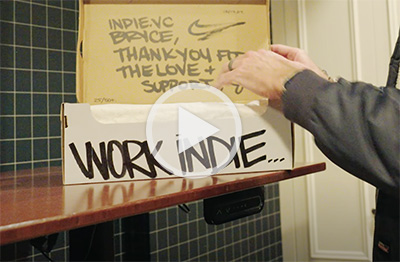
"Ever-increasing financialization has wrapped banks and businesses in a 'web of debt.'" Generated with Adobe Firefly. | | | | | Private equity's "web of debt" A few weeks ago, the Financial Times shared a visual story, "How Private Equity Tangled Banks in a Web of Debt," to help readers make sense of "the sprawling private equity network, with multiple layers of debt, in which banks have become increasingly intertwined ." You might assume that the process of funding a private equity buyout would be straightforward—banks lend cash to private equity firms and those firms use it to buy companies—but the reality is much more complex. Every party involved in a buyout, from general and limited partners to the targeted companies themselves, borrows from banks, with "different types of lending. . .led by different teams within a bank, and often different banks altogether." As a result, FT points out, "every transaction ends up adding more leverage to heavily indebted businesses, which can make them more vulnerable in a downturn," while a distinct "lack of oversight has regulators worried about whether lenders can really know just how exposed they are." And as buyouts have slowed, the private equity industry has responded with ever more Byzantine alternatives, including secondaries funds and net asset value financing, to make money for investors. It's a very useful illustration of how the ever-increasing financialization of assets has created an economy of "supermoney" that's far removed from the world most people live in, "where a dollar is a dollar." In my 2021 article "Two Economies, Two Sets of Rules," I explained how harmful the supermoney economy can be. In arrangements like the one the Financial Times outlines (but also the speculation in subprime mortgages that led to the Great Recession, the boom in venture capital that powered the Silicon Valley "unicorn" bubble, and many more), the rich "get a huge interest-free loan from the future" while ordinary people pay the price when these businesses collapse, driving inequality. But as I remarked then, we shouldn't be surprised: "Our society and markets are getting the results the algorithm was designed for." Changing it will take forceful action, including well-designed regulations and government policy that incites the results we want. + Bloomberg columnist Matt Levine jokingly summed up the Financial Times report as "everything in finance is more fun with a bit of leverage." But he also notes that the real danger of this financialization is to individual investors: A (the?) main risk to the financial system is when people put money into assets that they think are safe, and those safe assets turn out to be correlated and risky. The more sorts of safe tranches you manufacture out of the basic raw materials of business cash flows, the more ways some of them could go wrong. + From The New York Times: "All the Rage in Private Equity—Mortgaging the Fund" + From the International Consortium of Investigative Journalists: "How Investment Firms Shield the Ultrawealthy from the IRS" | | | | | Profiting from the most vulnerable The private equity industry has a reputation for exploiting companies to earn short-term windfalls at the expense of workers and consumers alike, in sectors like healthcare, media, and food. Or take investments in tax liens. The American Prospect's Andrew Kahrl reports on how investors are using tax enforcement to monetize debt from homeowners who've fallen behind on their property taxes in Cook County, Illinois. Kahrl explains why the strategy can be so lucrative for investors: Tax lien investors target poor neighborhoods and vulnerable homeowners because, quite logically, they are poor and vulnerable. The conditions that generate higher rates of tax delinquency in poor, predominantly minority neighborhoods are precisely what makes tax liens in these areas so attractive. For, one, tax lien certificates generate greater returns the longer they go unredeemed. Not only does interest accumulate, but in some states the interest rate increases the longer it goes unredeemed, as do the amount and type of fees an investor can attach to the debt. The harder it is for a homeowner to settle their debts, the more money a tax lien holder can extract from them. Tax liens in poor neighborhoods are also attractive for their speculative value. For minimal cost, tax lien investors can claim liens on properties in areas where the market has bottomed out in the hope that it will eventually become targeted by developers and gentrifiers. In the meantime, their speculative investments often lie vacant and in disrepair, further eroding neighborhood conditions and blocking any community-led attempts at revitalization. | | | | | Invest in "real builders, building real businesses" instead While private equity and venture capital have traditionally focused their investments in different areas—although as venture capital pulls back, private equity funds are proving more than willing to enter the startup space —both participate in the supermoney economy I described above. But there's another way to invest in companies, one that prioritizes value over a longer timeline. Indie, a VC firm led by Bryce Roberts, invests in "real builders, building real businesses." In a new series of videos, Bryce shares his thoughts on investing in a way that supports a business's long-term success. The videos are great and worth watching in full, but here are a few choice quotes from Bryce that epitomize his philosophy: + You can watch more on Indie's "Vibes" page. | | | | | | | Disclosure: Tim O’Reilly cofounded OATV, the institutional seed fund where Indie originated, with Bryce Roberts and Mark Jacobsen. | | | | | | —Tim O’Reilly and Peyton Joyce | | | |





Комментариев нет:
Отправить комментарий
Примечание. Отправлять комментарии могут только участники этого блога.