Progress Isn’t Dead YetIn context, we're seeing some truly amazing advancements in the world in 2025
INTERESTING ON THE WEB:
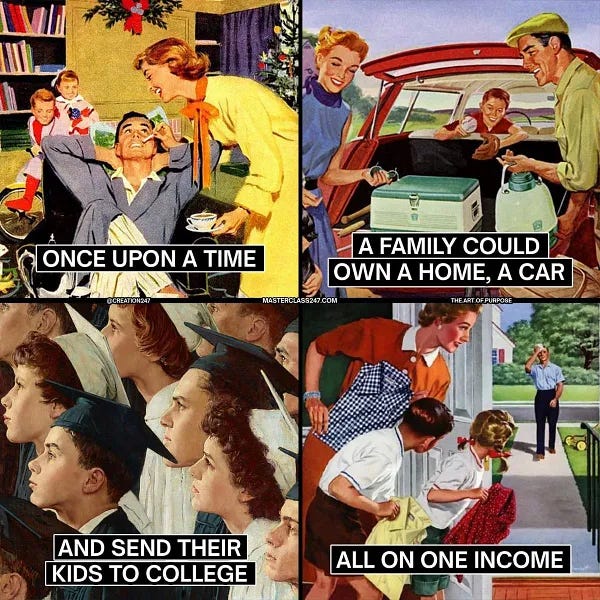
I recently did an interview with John Stossel to discuss whether things are tougher for young people today than they were 50 years ago. Stossel is a former Fox News, ABC, and 20/20 anchor and so I knew I would get some pointed questions, and at the very least, his famous “You’re wroooong!” On the other side of the debate from me was Norbert Michel from the Cato Institute, the conservative/libertarian think-tank founded by Charles Koch. I loved debate in high school. I would travel to DC and Philadelphia for various debate tournaments and I kept up with it in college for a bit too. Two of the most important lessons that I learned in debate were to (1) respect other people’s ideas and arguments; and (2) know what your opposition is going to say before they say it. In this debate, I took the position that ‘yes’ the economy is worse today for young people than it was for their parents for the following reasons:
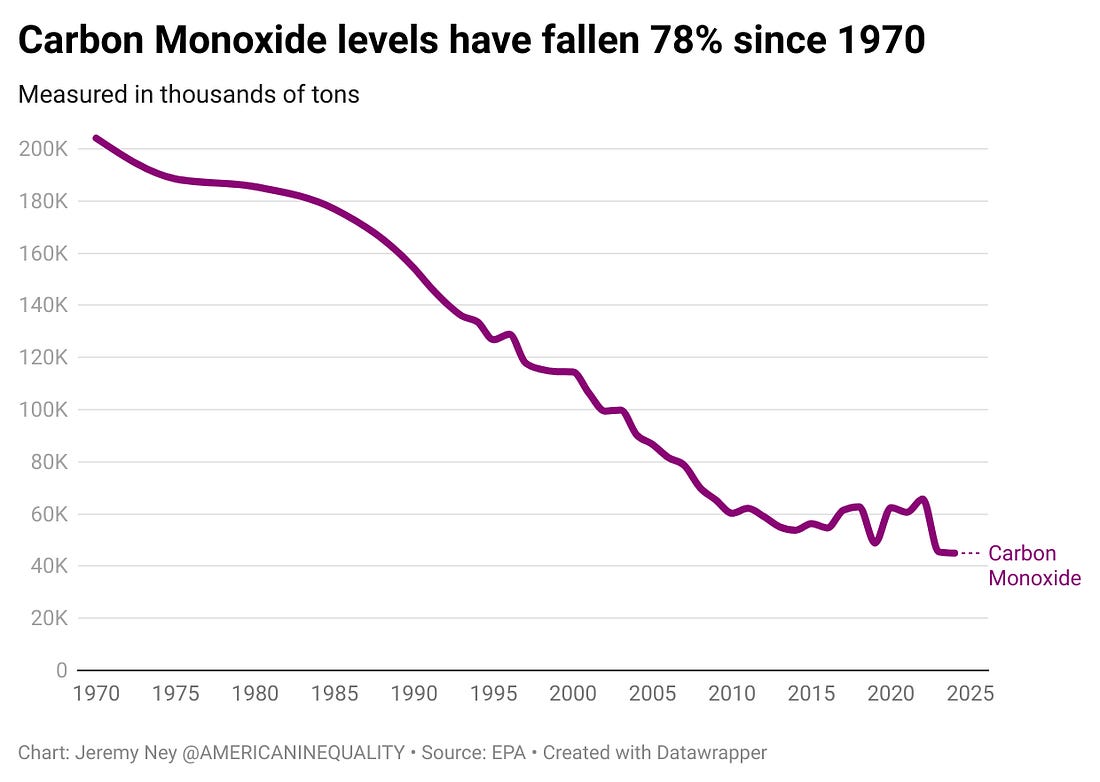
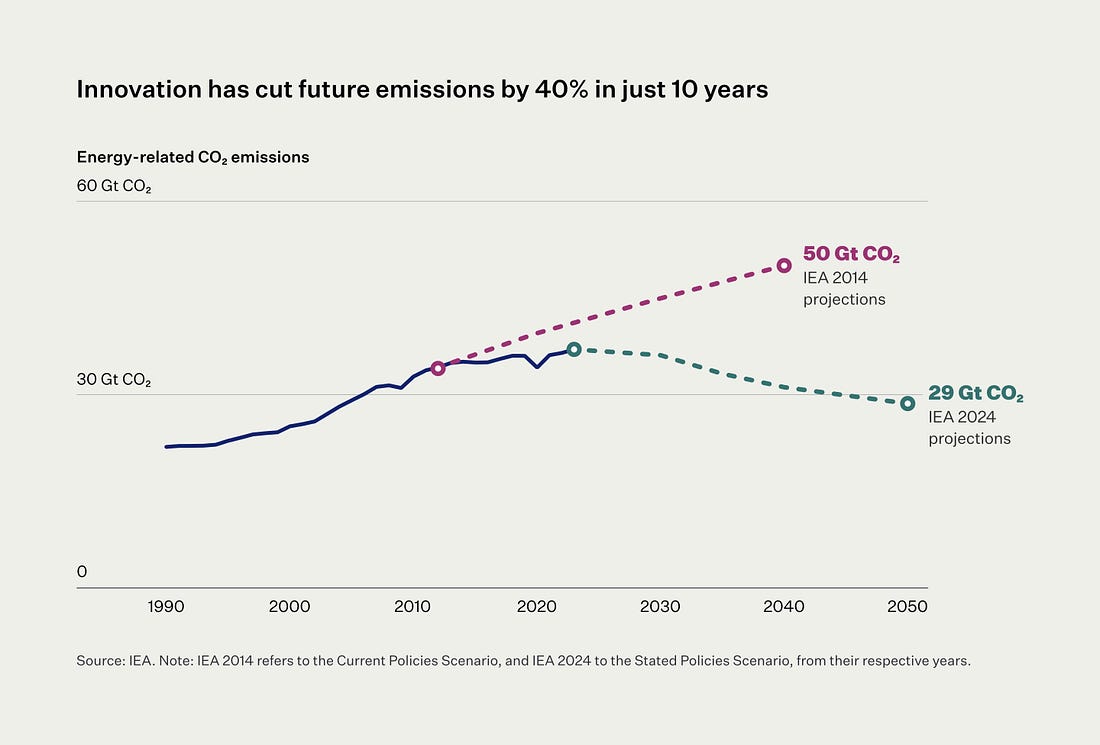
And while I didn’t include it in our conversation back then, millions of Americans (many of whom are children) are going hungry as the government plays poker with their food support, and millions more still have seen their healthcare premium payments double. The current pain is very real. But in my research I also prepped the other side of the argument. I wanted to know all the data on the ways the world had gotten better and why we should also be both hopeful about the state of the world today. There is a lot of darkness around us, and there is no doubt that we are living in an age of tremendous inequality. For half of the people in the US it feels like the American Dream is impossible to achieve. But the reason that the conversation was set up as a debate is because there have been incredible improvements in America. While my focus tends to be on the current state of the world - with a particular lens on regional divides - the historical perspective going back to the 1970s shows that we have in fact seen some tremendous gains along certain measures. America isn’t perfect, but I hope there’s a bit of brightness in here for everyone. Environmental improvementsEnvironmental quality has improved tremendously thanks to the Clean Air Act — air pollution is down by 70% since 1970. Carbon monoxide levels have fallen 78%, largely due to cars and trucks making 10x improvements in pollution emotions. Even as the U.S. population has grown by 130 million people since 1970 - requiring more homes, cars, streets, and plane travel - our per capita CO2 emissions have fallen by 35.6%. In 1970, the US was producing 29 out of every 100 tons of CO2 pumped into their environment. Today, it is just 13 (largely as the US has swapped spots with China as being the world’s leading polluter). Particulate matter 2.5 (the most important measure of pollution that tracks large particles which can get stuck in your lungs and deteriorate your health) has fallen 32.6% since 1990. Chlorofluorocarbons, a chemical often referred to as ‘the O-zone killer’, have nearly disappeared from most manufacturing processes.
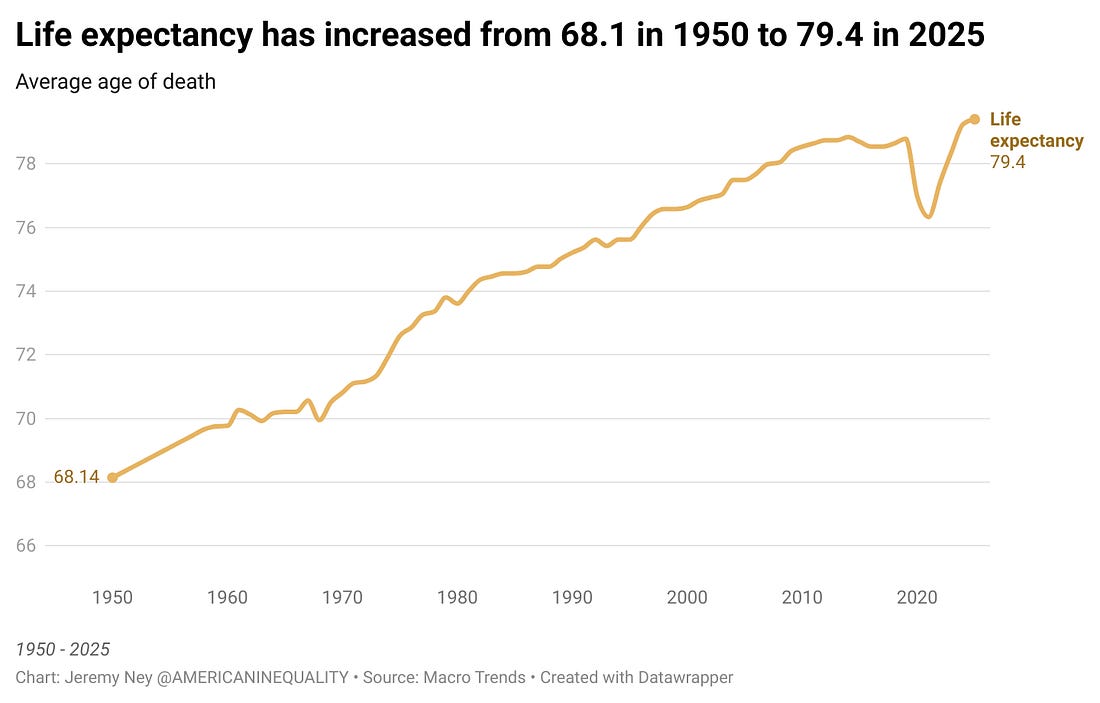
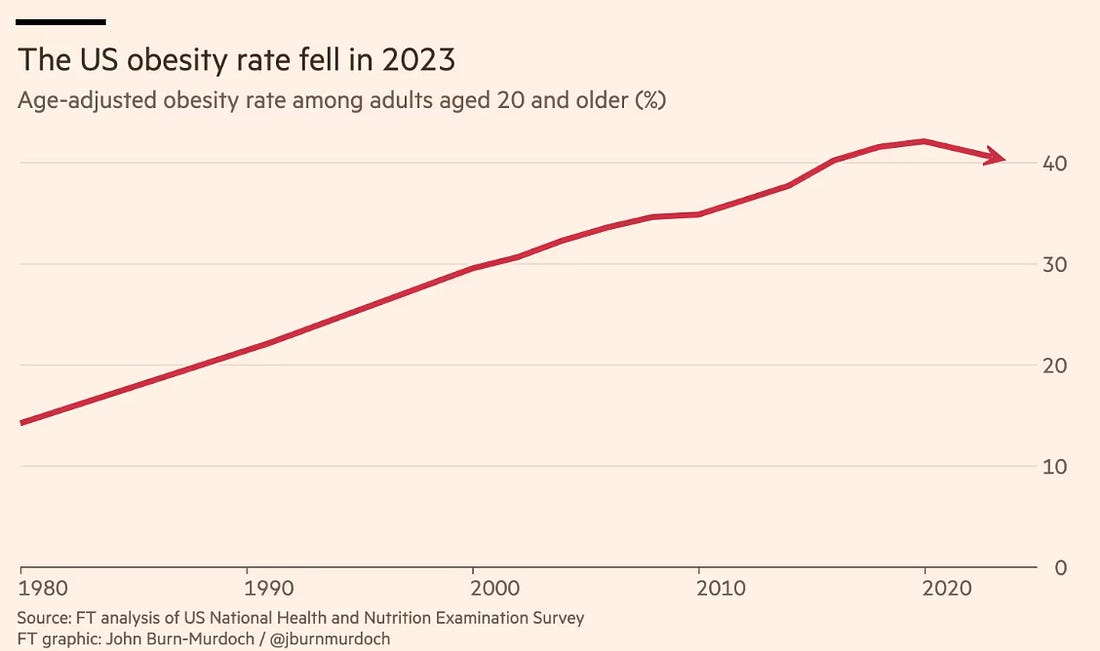
Life expectancyThe very first article I wrote for the American Inequality Substack was about the 20 year gap in life expectancies across regions in the nation, and while anyone who knows my writing knows that I despise a national narrative because it masks what is happening in communities, it is still acknowledging that nearly every region has experienced huge gains in life expectancy since the 1970s. Life expectancy has increased by almost a year and a half for every decade since 1970 (which makes you wonder, by 2070 at this rate we will only be living to ~89 on average). But there have been tremendous gains in healthcare improvements. Although healthcare costs continue to be overwhelmingly painful for Americans (and we see horrible return-on-investment for the amount we spend on healthcare without getting the corresponding improvements in health), heart disease death rates have fallen by half, stroke death rates have fallen by more than half, it turns out that the COVID19 vaccine doubled the cancer survival time of patients in a completely unexpected and amazing twist. Many are also estimating that thanks to GLP1s like Ozempic and Wegovy, the US obesity rate is now falling for the first time ever (or at least since we started tracking it in 1980 🙂. As John Burn-Murdoch points out, “What makes this all the more remarkable is the contrast in mechanisms behind the respective declines in smoking and obesity. The former was eventually achieved through decades of campaigning, public health warnings, tax incentives and bans. With obesity, a single pharmaceutical innovation has done what those same methods have repeatedly failed to do.”
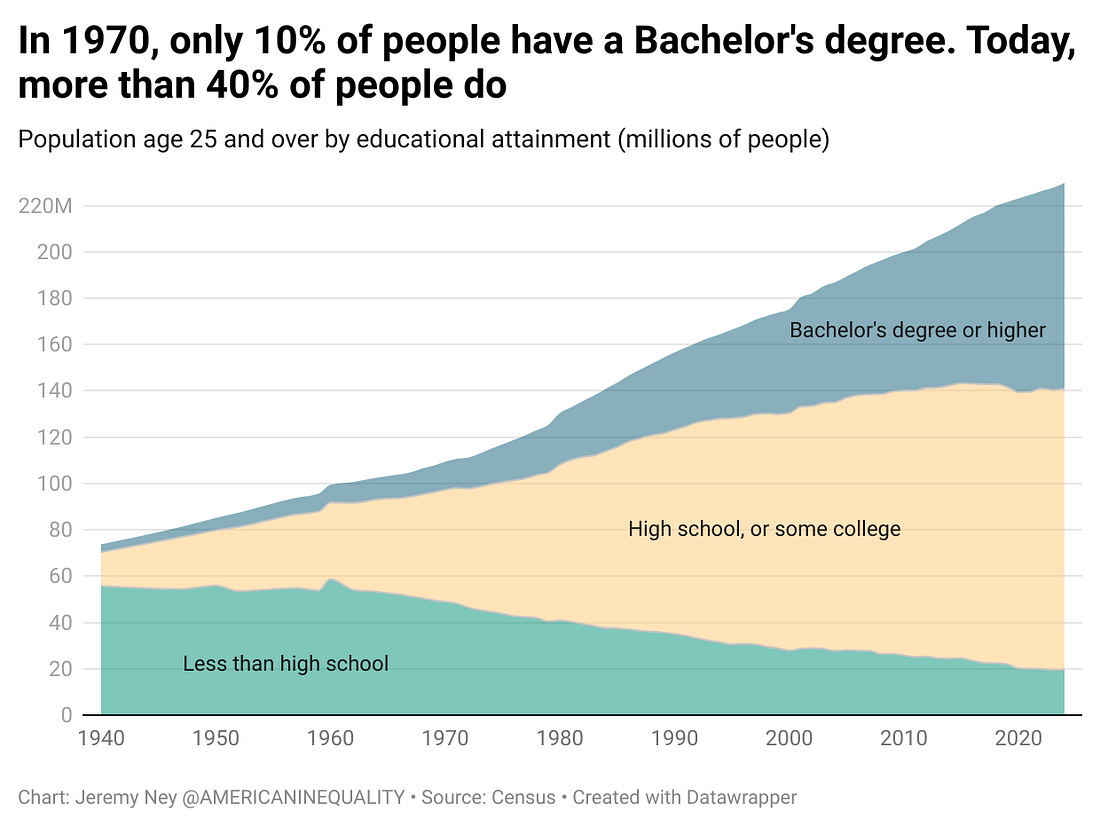
College AttendanceOne of the biggest improvements since the 1970s has been college attendance, largely as more women began applying to college and more colleges began accepting women. Today ~40% of young adults have a bachelor’s degree, compared to ~10% in 1970. As I’ve previously covered in my article about male loneliness, women weren’t allowed into Yale until 1969, Brown until 1971, and Columbia until 1983. Colleges were not interested in accepting women for decades, but many of the social movements of the 1960s changed that persona, as well as the codification of Title IX. In 1970, 33.6% of women had less than a high school education. By 2016, it had fallen to just 6%. People who go to college earn what is called ‘the college wage premium’ which means that they earn far more later in life. One government report says that men will make $900,000 more when they get a BA vs. only a high school degree and another gov report says that a BA can increase weekly median wages by 66%. At the same time, only half of all Americans say that college is only worth it now if you can go without taking out loans. With $200,000 in debt and a possible lifetime of interest on that loan, those higher wages may feel too far off for some people. Quality of LifeIn the Stossel debate, Norbert Michel explained, “Materially, we are so much better off now than we were in the 1960s and 1970s.” The median home size in 1963 was 1,365 feet but in 2023 the median is 2,286 feet. They are twice as likely to have central air, twice as likely to have a second refrigerator, and the abundance of dishwashers, washer dryers, and a range of other household appliances has made those homes much more comfortable. Those benefits have also created greater gains for women who disproportionately had many household duties fall on them. While it may feel like the price of groceries has exploded in 1960, U.S. consumers spent an average of 17.0 percent of disposable personal income (DPI) on food. By 2019, this share had shrunk to 9.5 percent. People eat out at restaurants almost twice as often as they did in 1970 and they have the luxury of ordering food to their house more easily. Path ForwardThe Path Forward for this is pretty simple to describe, but challenging to achieve: Keep up the momentum. Our gains on climate, life expectancy, college, and quality of life feel like they are seeing cracks that we need to make sure stay closed. A new report found that climate change kills 1 person every minute globally. Measles was eliminated from the US in 2000 and is now seeing some of its highest levels in decades. 45 million Americans have $1.6 trillion in student debt. Women who have lost their right to choose and immigrants who feel threatened daily may not feel like their quality of life has improved, despite having a smartphone in their pockets. We still have a long way to go, and the further back we look, the better things might be (2025 is lightyears better than 1925) but today in America, the answer to the debate for me is clear: opportunity is out of reach. You’re on the free list for American Inequality. Consider upgrading to support this work, get access to the community chat, and doing your part to reduce inequality in America. Most sincerely, Jeremy
|
среда, 12 ноября 2025 г.
Progress Isn’t Dead Yet





Подписаться на:
Комментарии к сообщению (Atom)
Комментариев нет:
Отправить комментарий
Примечание. Отправлять комментарии могут только участники этого блога.