Поиск по этому блогу

Search1

123

понедельник, 15 декабря 2025 г.

10 Years of OpenAI

  -  
AIM-logo-black
AIM-logo-black

10 Years of OpenAI

THE BELAMY

Weekly Newsletter of AIM

Monday, Dec 15, 2025 | By Siddharth Jindal

Now, subscribe to our Digital & Print Editions >


Ten years ago, OpenAI began as an improbable experiment.

In December 2015, a small group of researchers and technologists, including Sam Altman, Greg Brockman, Ilya Sutskever, Elon Musk, Peter Thiel and Reid Hoffman, pledged $1 billion to build a nonprofit lab with an almost idealistic mission to create artificial general intelligence to benefit all of humanity.

There was no product roadmap, no revenue model and no certainty that the organisation would even survive. What existed instead was belief—a belief that AI would reshape the world, and that someone needed to take responsibility for how that transformation took place.

A decade later, OpenAI stands as one of the most influential companies on the planet. Its models power startups, enterprises, governments, classrooms, creative studios and developer ecosystems. 

Valued at $750 billion today, OpenAI rivals tech giants that took generations to build. What began as a research lab has grown into a company building models, applications, compute infrastructure and even AI hardware.

image-17
image-17

The Early Years: Research Before Revenue

From 2016 to 2018, OpenAI looked like a traditional research lab. It released open tools like Gym and Universe, trained reinforcement-learning agents to play Atari games, and published robotics breakthroughs such as a robotic hand capable of solving a Rubik's Cube.

In 2018, Musk stepped down from OpenAI's board, citing potential conflicts with Tesla's AI efforts. It later emerged that he had proposed taking control of OpenAI and merging it with Tesla, believing the company was falling behind Google.

Despite the turbulence, the research did not slow down. The first mainstream breakthrough came in 2019 with OpenAI Five, which defeated professional human players at Dota 2. The feat proved that large-scale learning systems could master complexity far beyond scripted rules.

That same year, OpenAI released GPT-2, but delayed its full release citing safety concerns. The move sparked controversy and set the tone for how the company would balance progress with risk.

In 2020 came GPT-3, a 175-billion-parameter language model that stunned developers. It could write essays, generate code, answer questions and mimic styles with uncanny fluency.

ChatGPT: When AI Went Mainstream

Then came November 2022.

ChatGPT was released as a research preview, powered by GPT-3.5. Within days, it spread faster than any consumer app in history. For the first time, AI felt conversational, accessible and personal. OpenAI soon followed with subscription plans, launching ChatGPT Plus and ChatGPT Enterprise.

By 2023, OpenAI had crossed into the multi-billion-dollar annual revenue, driven by subscriptions, API usage and enterprise licensing. 

The Boardroom Crisis That Nearly Broke OpenAI

In late 2023, OpenAI's board abruptly removed Sam Altman as CEO, citing governance concerns. Within days, employees revolted, Microsoft intervened, and Altman was reinstated. The episode exposed deep tensions inside the company—between safety and speed, research and commercialisation, nonprofit oversight and market pressure.

In the aftermath, OpenAI restructured its board, consolidated leadership and began moving towards a more conventional corporate setup.

By 2025, OpenAI formally transitioned into a public-benefit corporation, with a new nonprofit foundation holding a significant ownership stake.

Beyond Text and GPT-4o 

OpenAI never intended to remain text-only. In January 2021, the launch of DALL·E showed that models could generate images from imagination. Whisper soon followed, tackling speech recognition. 

Then, in 2024, it unveiled Sora, a text-to-video model capable of producing cinematic clips from simple prompts. However, the defining release of the year was GPT-4o, OpenAI's first natively multimodal model. It brought real-time voice interaction that allowed users to speak with the model in natural, low-latency conversations. 

In 2025, OpenAI introduced native image generation in GPT-4o, a release that quickly went viral due to the Ghibli-style image trend across social platforms. 

And that wasn't all. 

This year also saw the launch of Sora 2 alongside a standalone app, as well as a partnership with Disney, opening access to its vast catalogue of characters and worlds to generate.

video_preview_249a81e48b17c330e9eb66c681eacb6c.jpg

AWS AI Conclave Bengaluru

Amazon Web Services is gearing up to host the AWS AI Conclave 2026 on January 22, 2026, at the Sheraton Grand, Whitefield, Bengaluru, bringing together the brightest minds shaping the next era of AI. 

This edition will spotlight breakthroughs in agentic AI, autonomous systems, data strategies and enterprise-scale AI adoption, offering a front-row seat to the technologies redefining global innovation.

Click Here to Register Now


GPT-5, GPT-5.1, GPT-5.2…

GPT-5 arrived at a moment when OpenAI's strategy was already clear. Released in 2025, it was presented as a consolidation model. Instead of fragmenting capabilities across dozens of specialised systems, OpenAI positioned GPT-5 as a single system that could write, reason, use tools, analyse images and carry context across long sessions.

GPT-5.2 is the company's latest launch, which it claims is its best model for professional work.

Over the past couple of years, OpenAI has also introduced tools beyond ChatGPT, including Codex for AI-assisted programming, Atlas browser for exploring large and structured knowledge sources, and reasoning models such as the o1 series, designed to handle complex, multi-step problem-solving rather than simple text prediction.

Simulated Reality >>

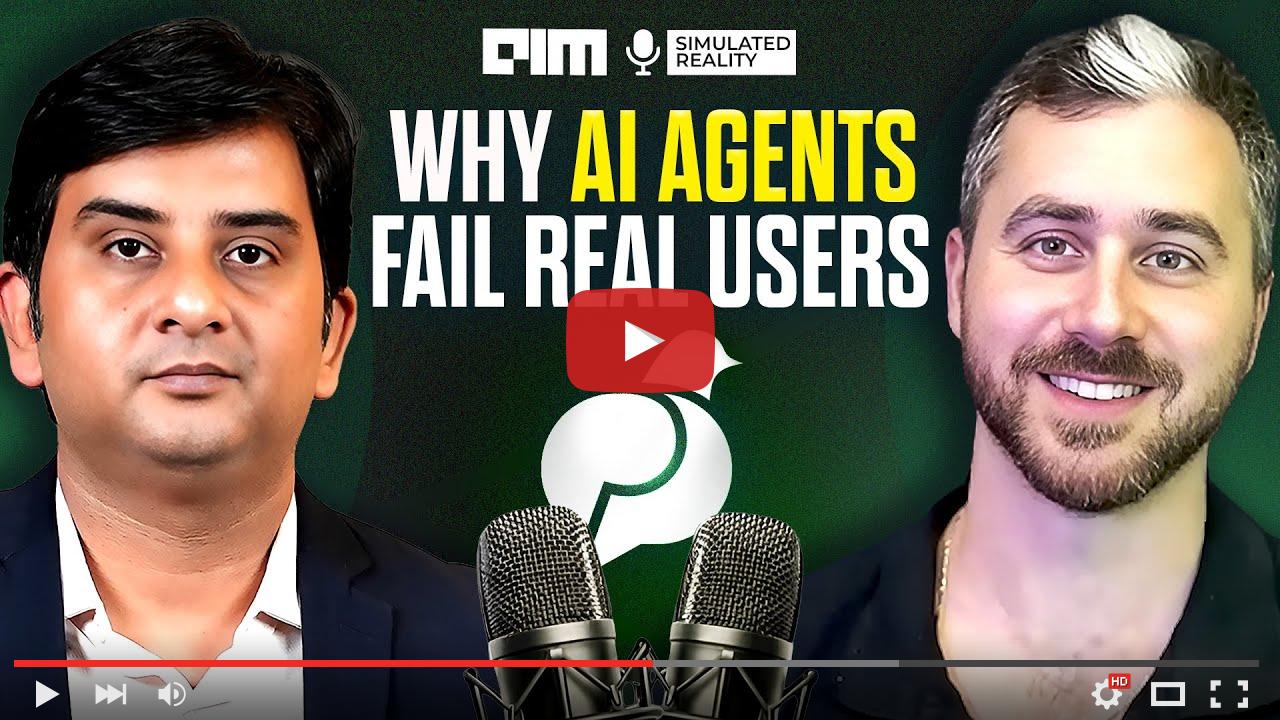
In this podcast, AIM chats with Yam Marcovitz, CEO and co-founder of Parlant, the open-source platform rethinking conversational AI architecture. Marcovitz shares his journey—from designing hard real-time operating systems for autonomous vehicles to solving the need for control and accuracy in generative AI.

video_preview_8329dc5efd222b6ff69ad9175ffe6376.jpg

Business Growth, Partnerships and Valuation

OpenAI's business model and partnerships evolved rapidly. What began in 2020 as an experiment with APIs has grown into a business powered by subscriptions, enterprise deals and developers building on top of its models. 

According to Altman, OpenAI is on track to cross a $20 billion annualised revenue run rate by the end of this year. That growth, however, carries a cost that few companies in history have had to confront.

Modern AI does not scale quietly.

To meet rising demand, OpenAI is planning infrastructure investments of roughly $1.4 trillion over the next eight years. That ambition is now taking physical shape through Stargate, the company's long-term effort to build next-generation AI data centres for frontier models.

OpenAI has raised about $64 billion overall, with the March $40 billion round led by SoftBank, Microsoft, Thrive Capital, Dragoneer, Coatue and Altimeter.

The Messy Middle of the OpenAI Story

As OpenAI's reach expanded, so did the list of people willing to challenge it.

The most serious pressure came through the courts. In late 2023 and 2024, authors including George RR Martin, John Grisham and Sarah Silverman, along with major publishers, filed lawsuits accusing OpenAI of training its models on copyrighted books without permission.

The New York Times followed with its own lawsuit, alleging that OpenAI models could reproduce large portions of its articles and were built using its journalism without authorisation.

The legal risk was significant. By 2024, the company began signing licensing deals with media groups such as News Corp, choosing compromise over conflict.

The same year brought internal change. Several senior leaders and researchers left the company, including co-founder and chief scientist Sutskever and chief technology officer Mira Murati.

The Next 10 Years

Altman's outlook for the coming decade is unusually direct. "In 10 more years, I believe we are almost certain to build superintelligence," he claims in his latest blog post.

Yet, he expects the future to feel paradoxical. Daily life may not look dramatically different, but people's capabilities will expand in ways that are hard to imagine today. "The people of 2035 will be capable of doing things that I just don't think we can easily imagine right now."


Now, subscribe to our Digital & Print Editions >

For Brand collaborations, reply to this email or write to info@aim.media

You received this email because you signed up to the updates from AIM. Click here to unsubscribe if you do not want to receive emails from us.

  -  

Комментариев нет:

Отправить комментарий

Примечание. Отправлять комментарии могут только участники этого блога.