Trees and InequalityWith so many Christmas trees in living rooms today, a story on tree injustice felt only right
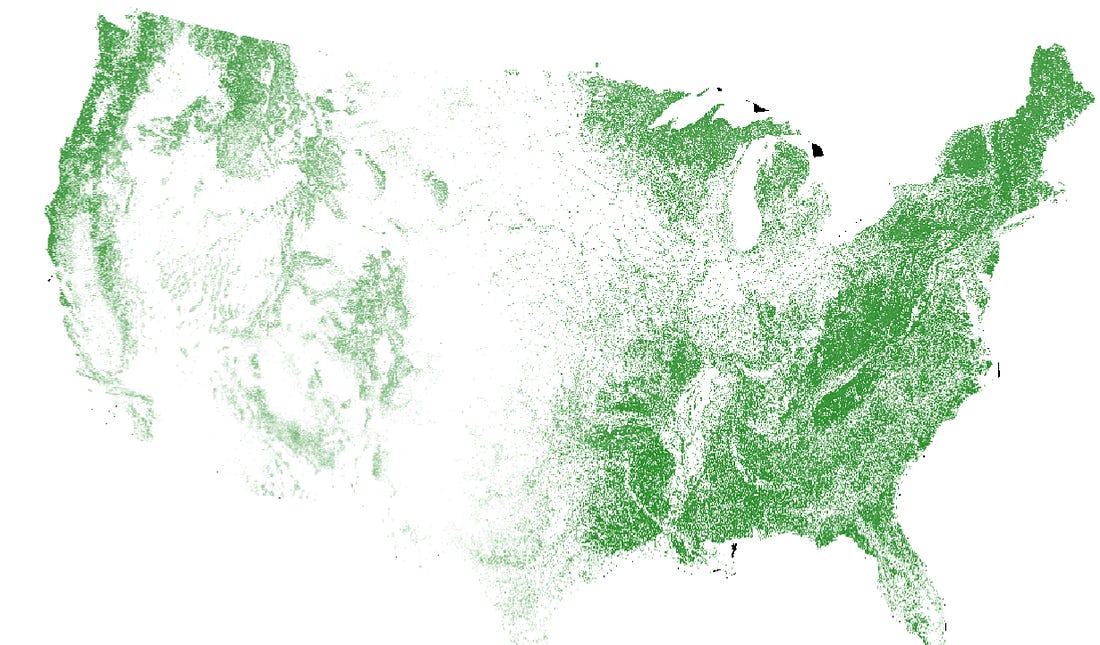
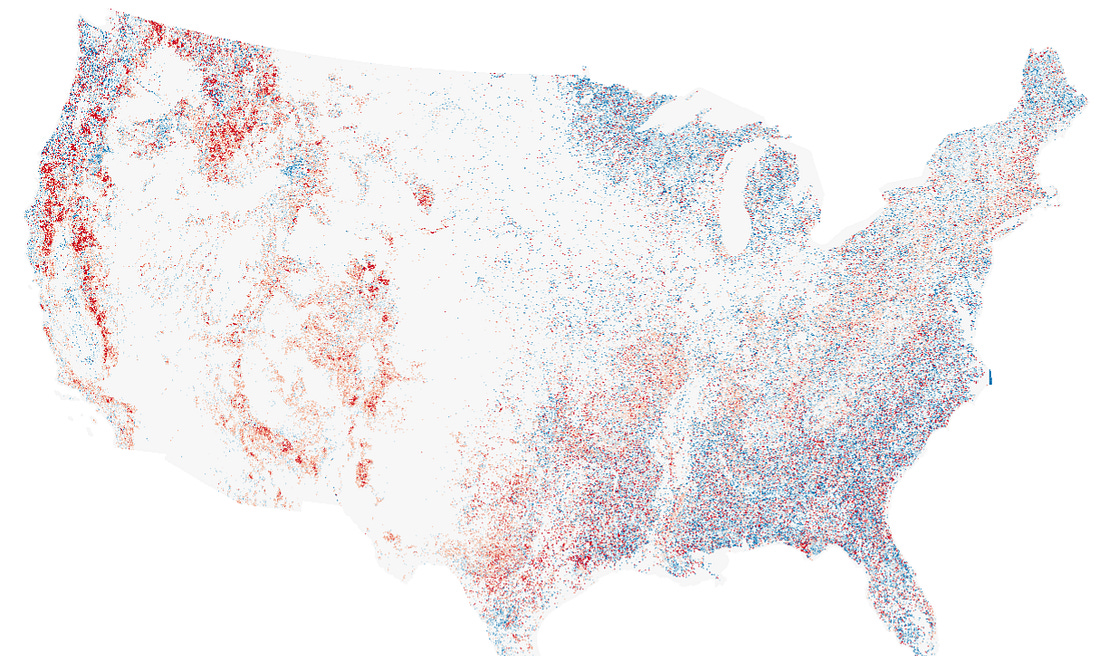
America is losing 36 million trees per year. Since 2010, the country has lost 10% of its forest coverage. Welcome to The Dividing Line from American Inequality.
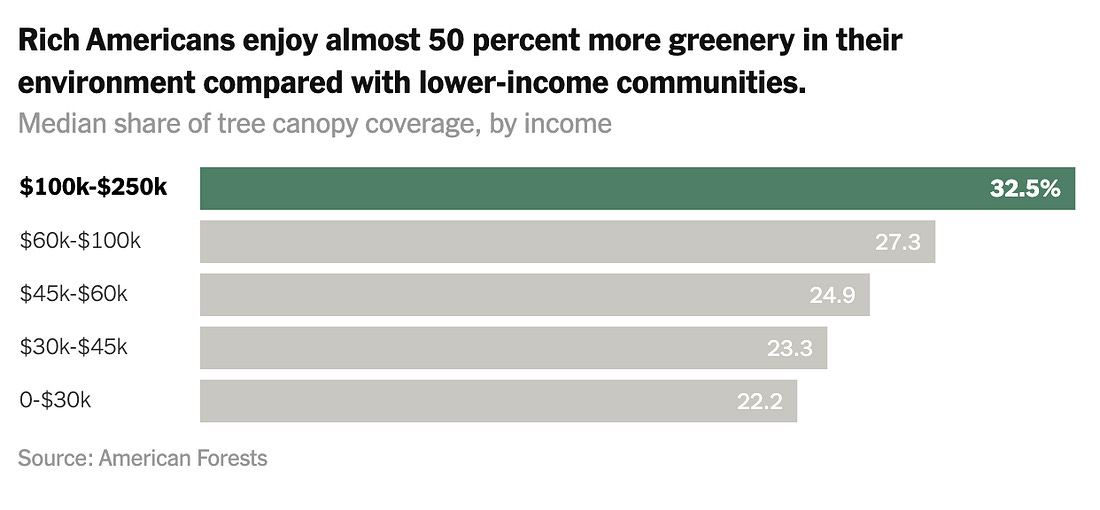
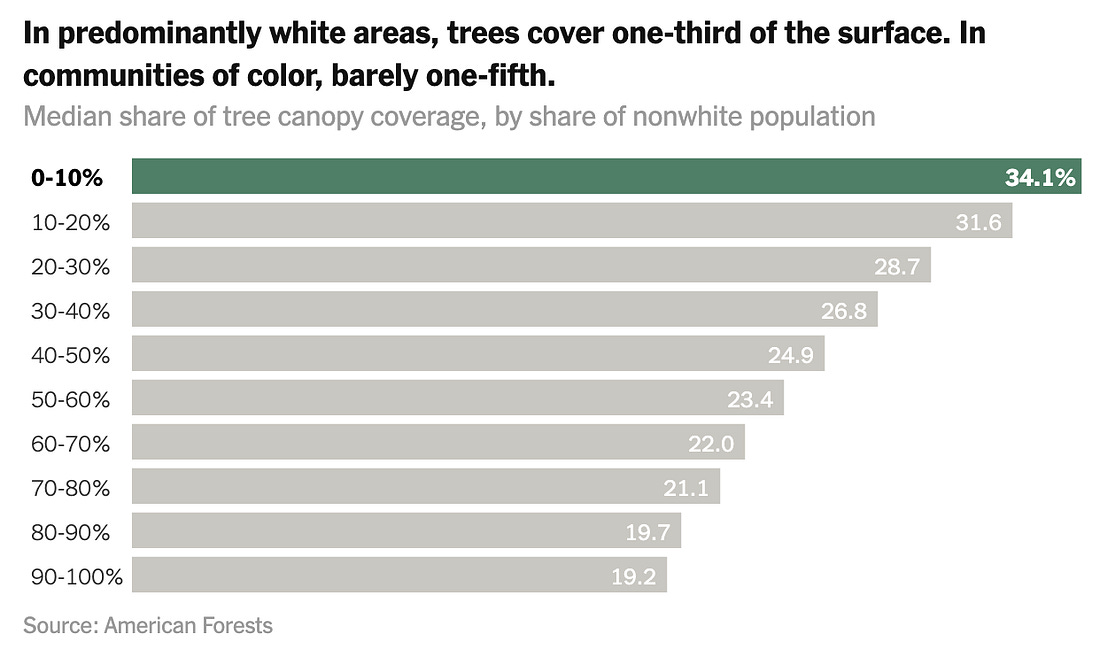
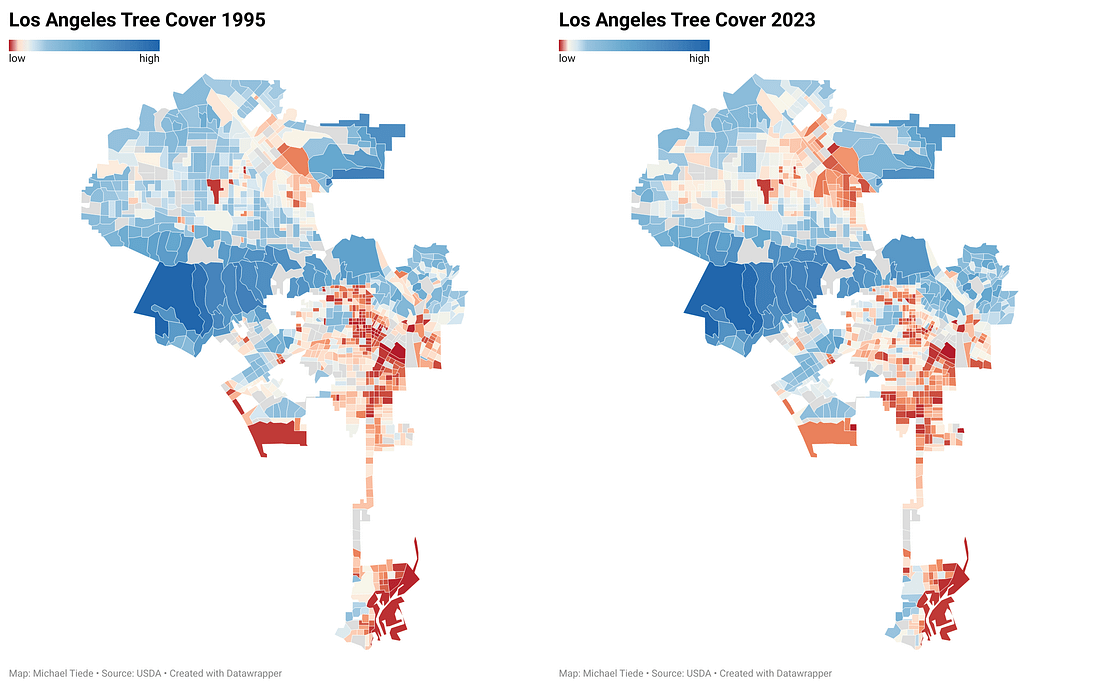
On this Christmas Eve, while millions of families will be gathering around trees in their homes, we thought it would be appropriate to talk about trees and inequality. As it turns out, the amount of greenery on your street depends on the amount of green in your pockets, But Christmas isn’t the only reason to cover this now– recent actions from the current administration have accelerated the calamity of this issue. Earlier this year. President Trump signed an executive order which allowed the U.S. Department of Interior and Department of Agriculture to bypass the Endangered Species Act protections to ramp up timber sales, despite the red flags from environmentalists that this would destroy precious forests. The goal of the executive order is to reduce the United States’ dependency on foreign timber, particularly from Canada, which supplies approximately 25 percent of the U.S.’s lumber demand. The benefit of tree coverage is not just for animals and for long stretches of forest scattered across the nation. Trees are a critical part of urban landscapes that keep air clean, that provide critical shade, and allow children to play outside without threat of overwhelming heat. In low-income areas, however, those trees are often absent. Rich Americans enjoy almost 50% more greenery in their environment compared with lower-income communities.
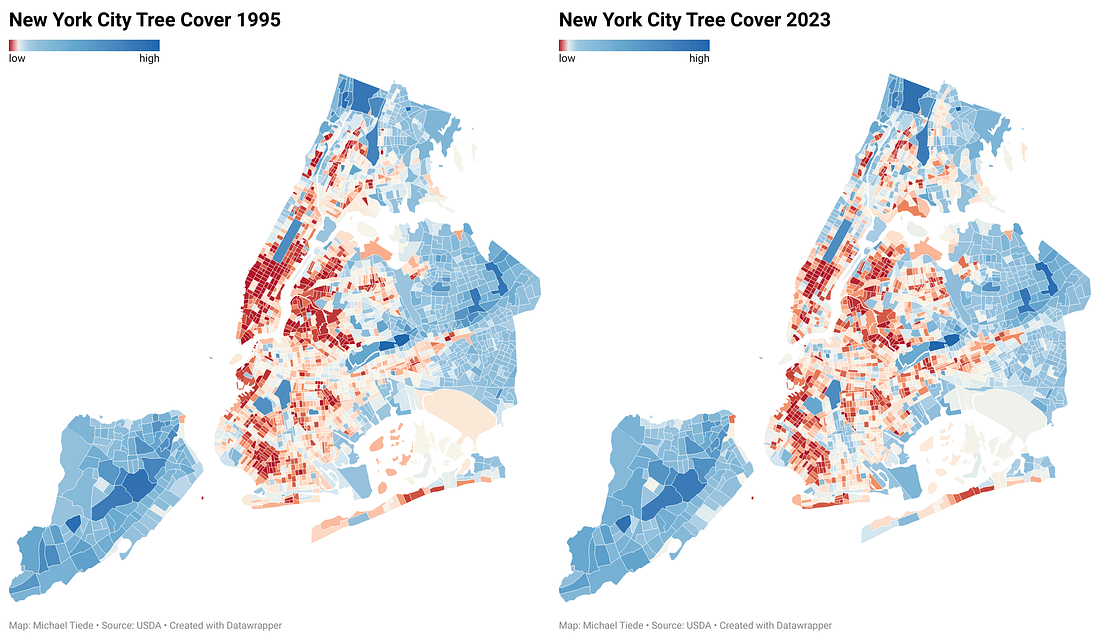
Neighborhoods with a majority of people in poverty have 25 percent less tree canopy on average than those with a minority of people in poverty. There is an emerging body of research from the U.S. Forest Service and others that has found a direct relationship between tree canopy today and red lining policies of the past. As journalists from Grist identified:
Researchers estimate that it would cost $17.6 billion in tree planting and natural regeneration could correct these disparities and benefit 42 million people by protecting them from heatwaves. Another study from Tree Equity Score estimates that it will take 522 million more trees for metro areas in the continental U.S. with more than 50,000 people. Heat is getting worse in America, which makes tree coverage more important. Heat kills more people than any other kind of extreme weather in America, according to the National Weather Service. Trees today prevent approximately 1,200 more heat-related deaths annually in American cities. By 2050, Heat related deaths are expected to increase by 70%.
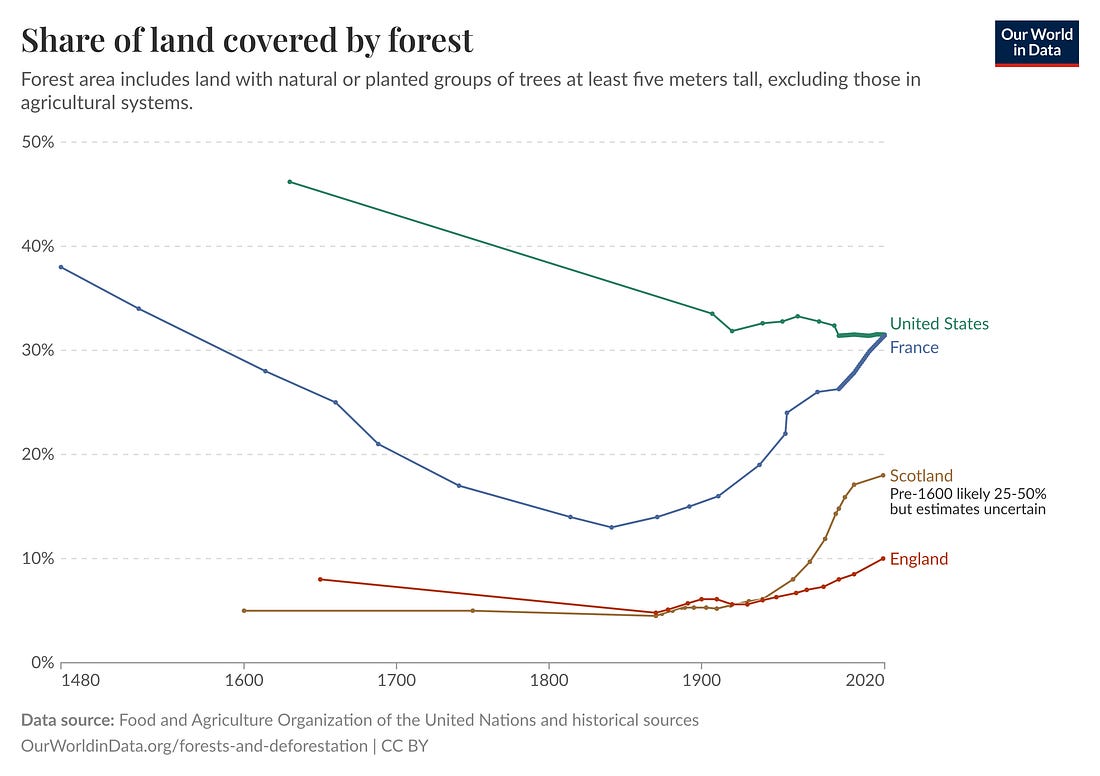
But trees also save lives in ways other than shade. Healthy trees trap air pollutants, which helps avoid 670,000 incidences of acute respiratory symptoms each year. Some studies have even found that a well-maintained tree canopy may even reduce several types of crime and create economic opportunities. One study in Baltimore found that neighborhoods with 10% more tree canopy cover experienced 11.8% less crime than their comparable counterparts after adjusting for numerous socioeconomic and housing factors. One theory for this is that trees create more “eyes on the street’ i.e. more people are around in public spaces that can minimize the likelihood that crime occurs. The U.S. is also an outlier globally. Many other nations like France, Scotland, and England have managed to increase their share of land covered by forest even as they developed economically. Trees and economic progress do not need to be at odds with each other. France in particularly was able to double the share of its land covered by forest from 16% in 1911 to to 32% today.
So on this Christmas Eve, when so many people across the country are running towards the trees in their living room and are feeling grateful for the gifts that rest underneath it, let’s remember that there is a story of inequality hidden in almost every facet of our American lives. The slow disappearance of America’s forests, and the stark inequities in where trees still stand, reflect policy choices as much as climate forces. If shade, clean air, and safer streets increasingly belong only to those who can afford them, inequality quite literally takes root. Reversing this trend will not be simple, but the cost of inaction is far higher, like hotter neighborhoods, worse air, and communities left exposed. A few organizations below are helping re-tree America. 5 Great Organizations to Connect with:
INTERESTING ON THE WEB
I also want to say thank you for such an incredible year. American Inequality has grown 50% in 2025 and we’re now at 22,000 email subscribers and 40,000 followers. People shared stories of their rising electricity bills, about local policies that made life unaffordable, about the loss of benefits, and the ways that they were worried about the future of America. 2026 will be full of more stories that highlight injustice, that use data to make strong claims that give people could evidence for their arguments, and about novel insights about economic opportunity that you may not have thought about. I’m committed to this work for the long haul and so I’m grateful to have you here on the journey. Here is also the most-read articles from 2025 if you’re feeling nostalgic like me. You’re on the free list for American Inequality. Consider upgrading to support this work, get access to the community chat, and doing your part to reduce inequality in America. If you are interested in partnering on projects, reach out at helloamericaninequality@gmail.com
|
среда, 24 декабря 2025 г.
Trees and Inequality




Подписаться на:
Комментарии к сообщению (Atom)
Комментариев нет:
Отправить комментарий
Примечание. Отправлять комментарии могут только участники этого блога.