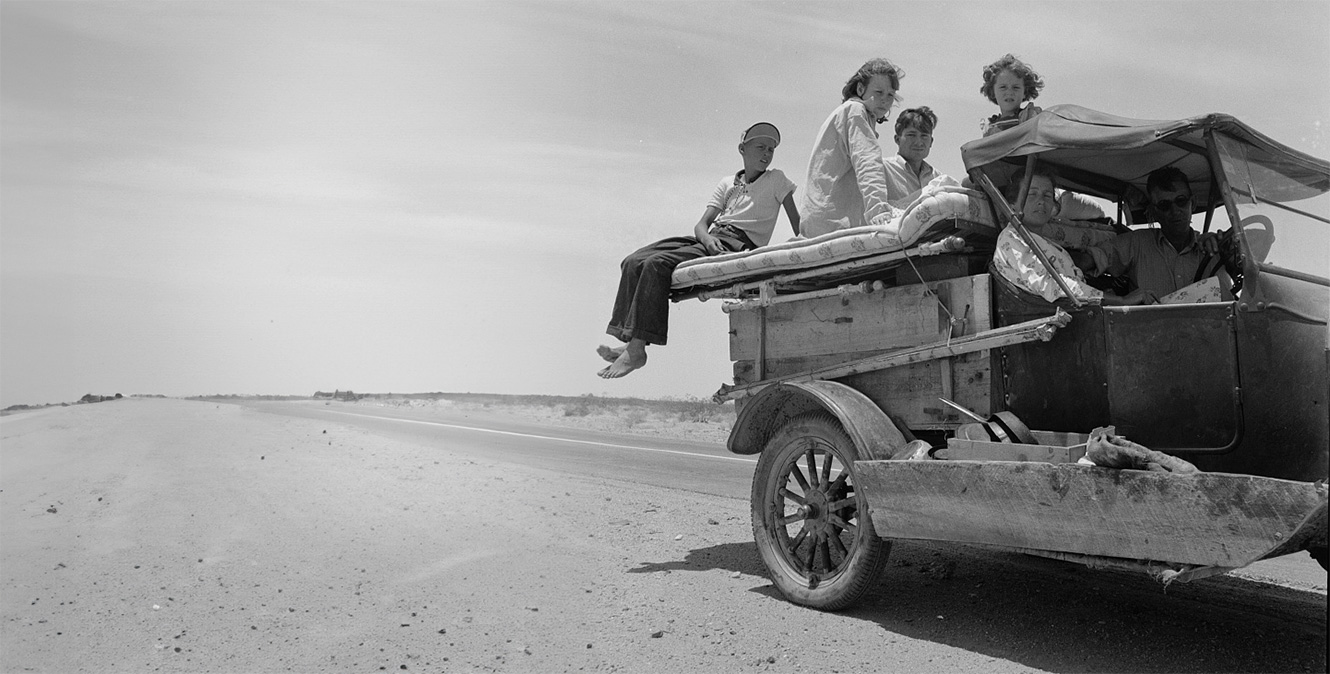
| | The future won't be like the past. So let's plan for it now. This year, more than half the population of the world will head to the polls to decide elections that will have far-reaching consequences. We're facing a passel of climate tipping points, and it will take coordinated action from all our governments to mitigate the worst of the harms. Unfortunately, some are already stepping back from their climate pledges . But ignoring the problem—or worse, making light of it to feed an anti-science political base—won't make it disappear, and the impacts will be felt everywhere (albeit unequally). As we learned with COVID, we should be wary of those pushing for a return to normal. We need to accept that "the future will not be like the past," as I argued at the beginning of the pandemic. The only way forward is to plan for the crises that it seems clear we'll face. | | | | | Private home insurance may not be worth the risk We've touched on the turmoil in the insurance industry before, but this article from Bloomberg's Leslie Kaufman, Saijel Kishan, and Nadia Lopez vividly explains why the math behind private homeowners insurance no longer adds up and what's at stake—for states and for homeowners—when insurance companies fail. With no available private options, homeowners have to turn to underfunded state and federal programs that, as Kaufman, Kishan, and Lopez note, have no game plan on how to "cover claims in the wake of a truly major catastrophe." "Hardening" homes against climate risk can help, but the only fail-safe solution will be moving to a safer location. But with a large share of Americans' wealth tied up in real estate , this isn't an easily workable solution. As Robert Hartwig, a director at the Risk and Uncertainty Management Center at the University of South Carolina, points out in the article, "We've been incentivizing people to locate properties in hazard-prone areas for many decades. . . .It's a legacy that we're going to have to deal with." + More from Bloomberg: "US, Philippines Pay Highest Economic Price for Climate-Fueled Weather." | | | | | How government can manage climate migration As homes become uninsurable and certain areas less hospitable to human life, leaving will be the only recourse, triggering widespread migration. In Noema, Justin Vassallo takes a deep dive into the public policies we'll need to implement to pull off a planned climate migration , including revitalizing areas in the Midwest and Northeast that are likely to receive migrants and investing in social programs that will support those whose lives are upended (which may turn out to be most of us). There are lots of moving parts to consider, but Vassallo is optimistic that it can be done—and in a way that boosts the country's outlook. Daunting as it sounds, migration policy can be implemented in a manner that appeals to, and revives, what is at present a dormant tradition of civic mobilization. There is a surfeit of towns and small cities desperate for a new raison d'être—an impetus to produce critical goods, attract creative people and play some positive role in the national imagination. The reciprocity between migration policy and the country's long-term industrial strategy has enormous potential to provide this and thereby emulate the virtuous cycle of productivity, innovation and rising living standards that drove the second industrial revolution and postwar growth. + Grist's Kate Yoder offers a complementary view, arguing, "Climate havens may not be something nature hands us, but something we have to build ourselves. And finding refuge doesn't necessarily entail moving across the country; given the right preparations, it could be closer to home than you think." + From Gizmodo: "These US Cities May Depopulate by 2100, Researchers Say." + From the Guardian: "Financial Toll of Climate Crisis Hitting Women Harder, UN Says." | | | | | | —Tim O’Reilly and Peyton Joyce | | | |




Комментариев нет:
Отправить комментарий
Примечание. Отправлять комментарии могут только участники этого блога.