Where exercise, income, and life expectancy are linkedOur built environments can dramatically decrease opportunities for healthy living, producing persistent inequalities
🚨 OPPORTUNITY ALERT🚨 I’m looking to bring someone onto our American Inequality team to help with marketing, brand, and outreach. If you’re looking to build more experience and want to join our incredible team fill out this form! I’m also hosting an event for paid subscribers of American Inequality on February 27 from 6-7pm ET to dig into some of the most important topics we’ve covered - inequality in life expectancy, childcare, health insurance, housing, mental health, and more, with plenty of time for Q&A. If you want to join, then upgrade your subscription and I’ll send you the Zoom information and calendar hold.
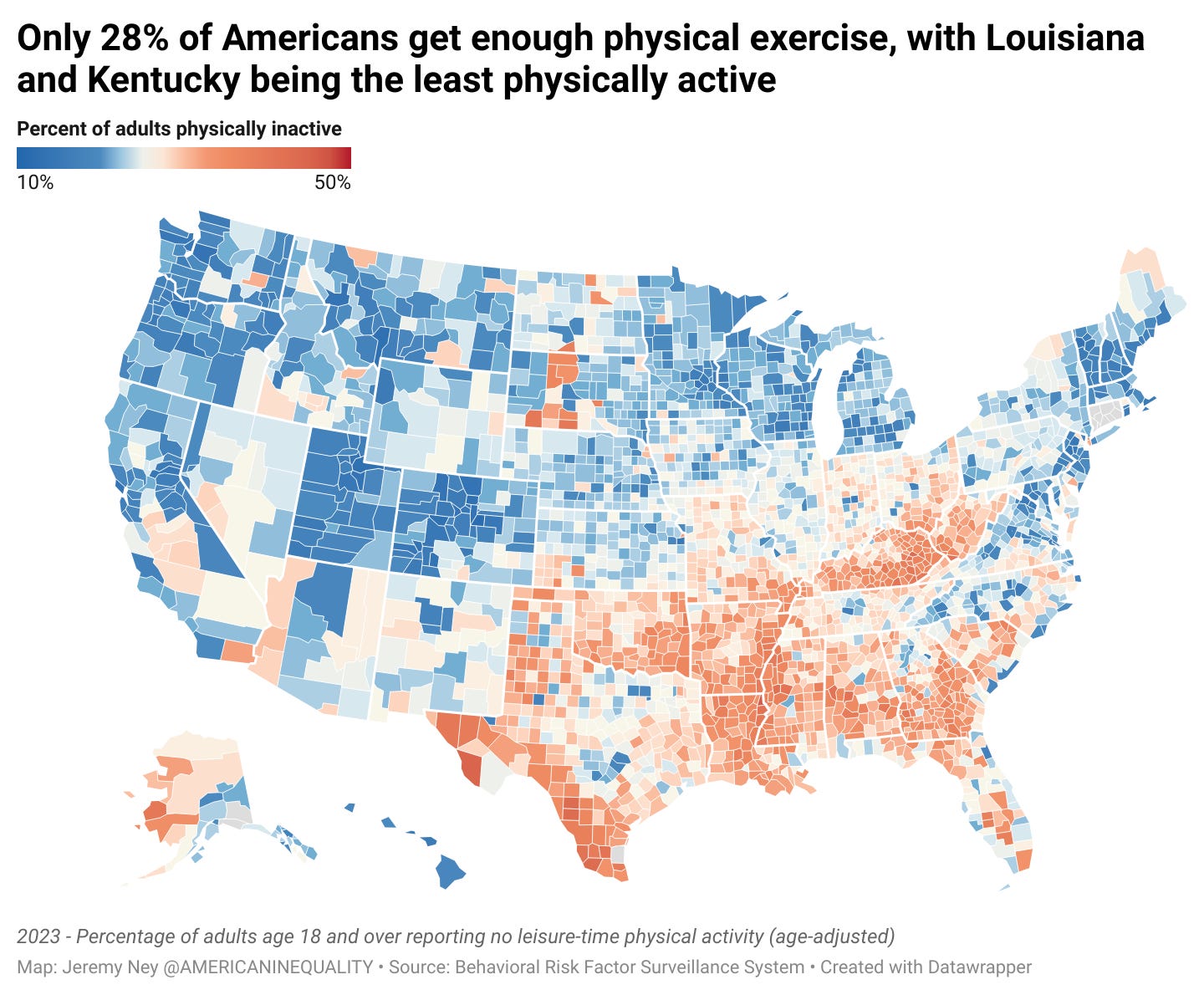
Exercise isn’t just important for your New Years’ resolution; it may be the difference between life and death. 72% of Americans do not get enough exercise for a healthy lifestyle according to the CDC, but depending on your income and where you live, these numbers are dramatically different. Life expectancy and inequality is a hugely important topic for us here. We’ve written about it continuously over the years, and in many ways it may be one of the most serious inequalities out there. This piece helps explain some of the underlying factors that contributes to America’s life expectancy divide, which is at one of its worse places in decades as I recently covered in TIME Magazine. According to the CDC, physical inactivity contributes to 1 in 10 premature deaths in the US. Inadequate levels of physical activity are associated with $117 billion in annual healthcare costs. This loss of life disproportionately impacts low-income Americans who typically lack access to sports, exercise, and nearby parks. 70% of children from families with incomes above $100,000 participated in sports in 2020. But for families living below the poverty line, the sports participation rate was less than half that at 31%.
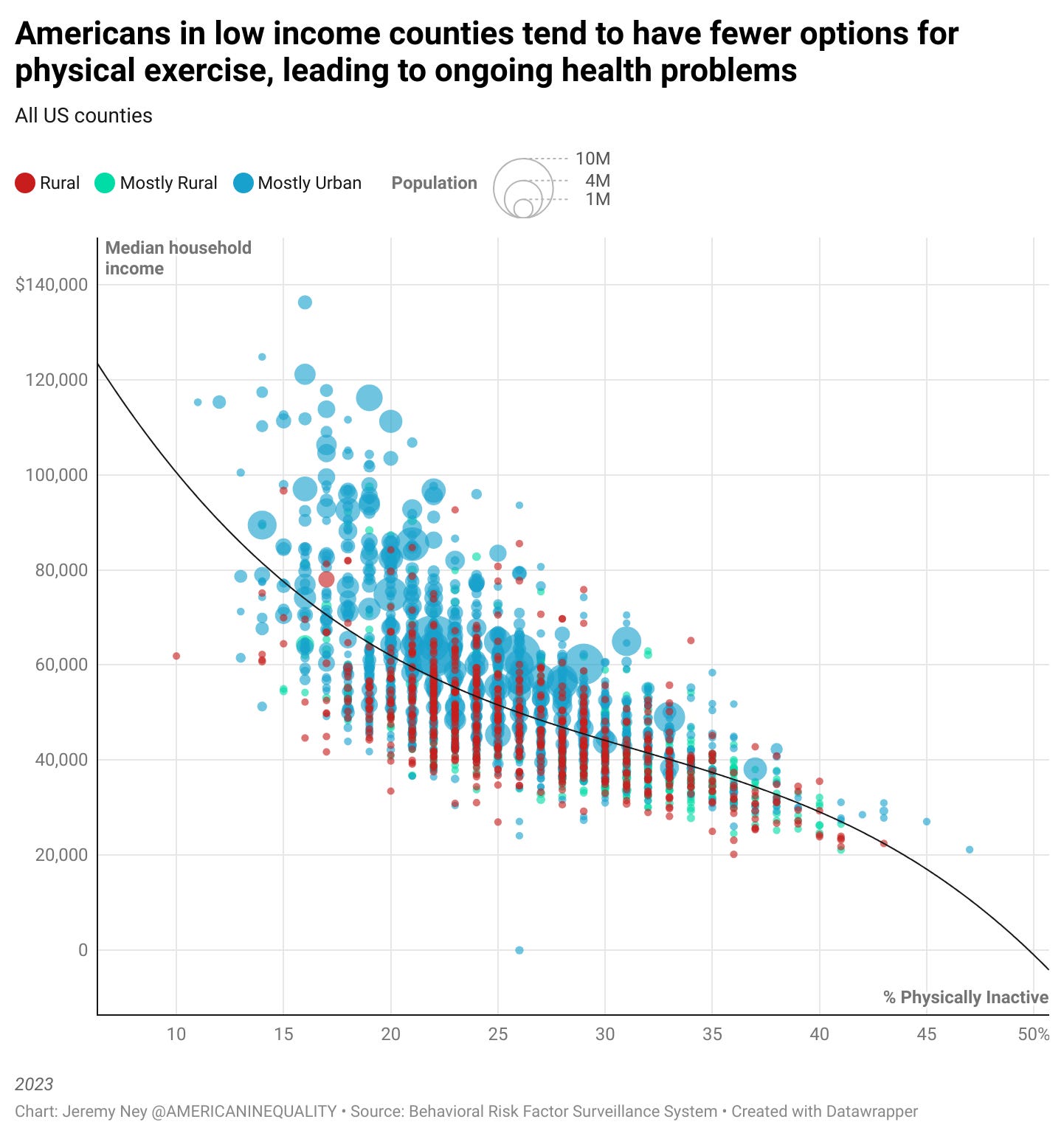
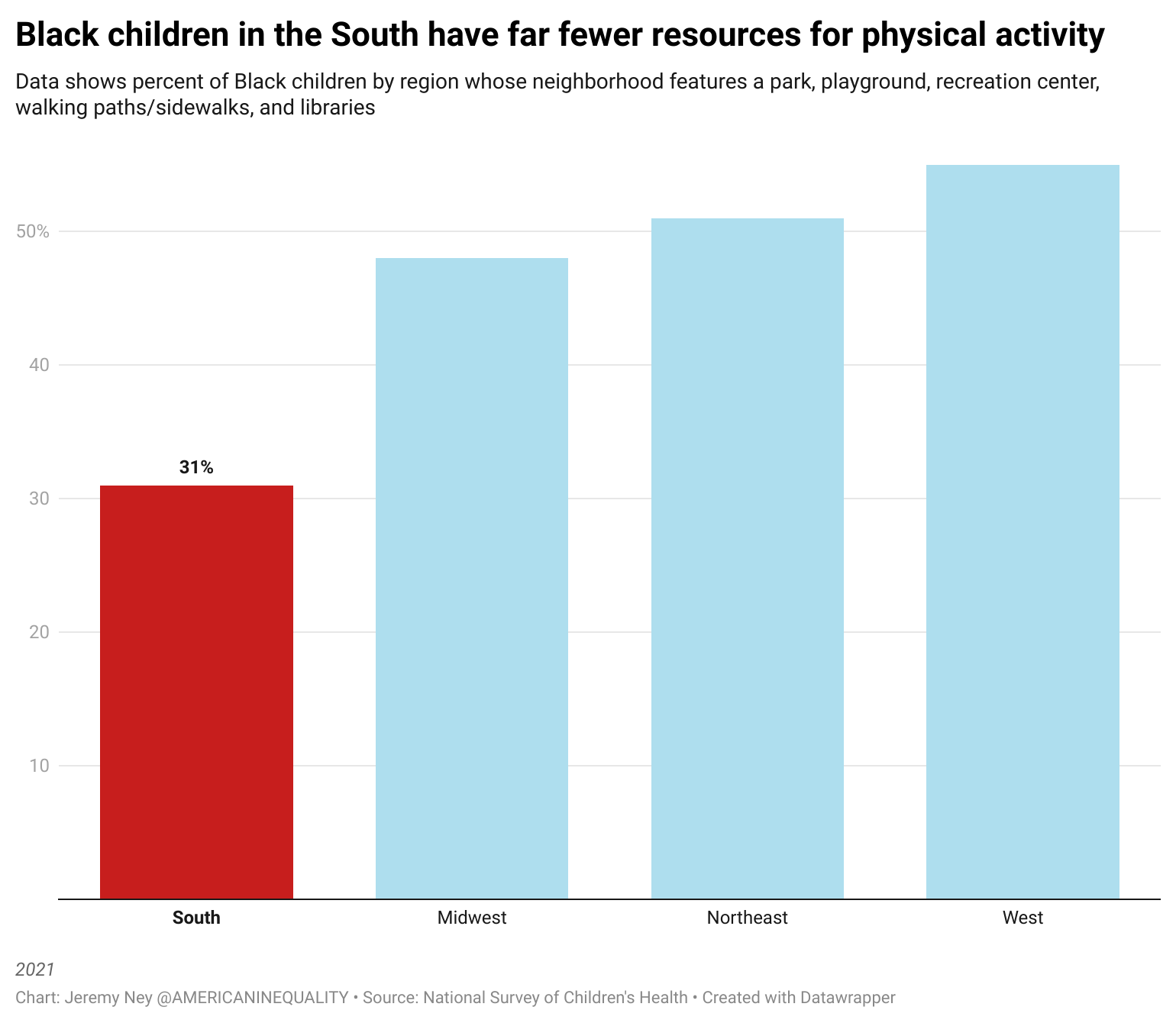
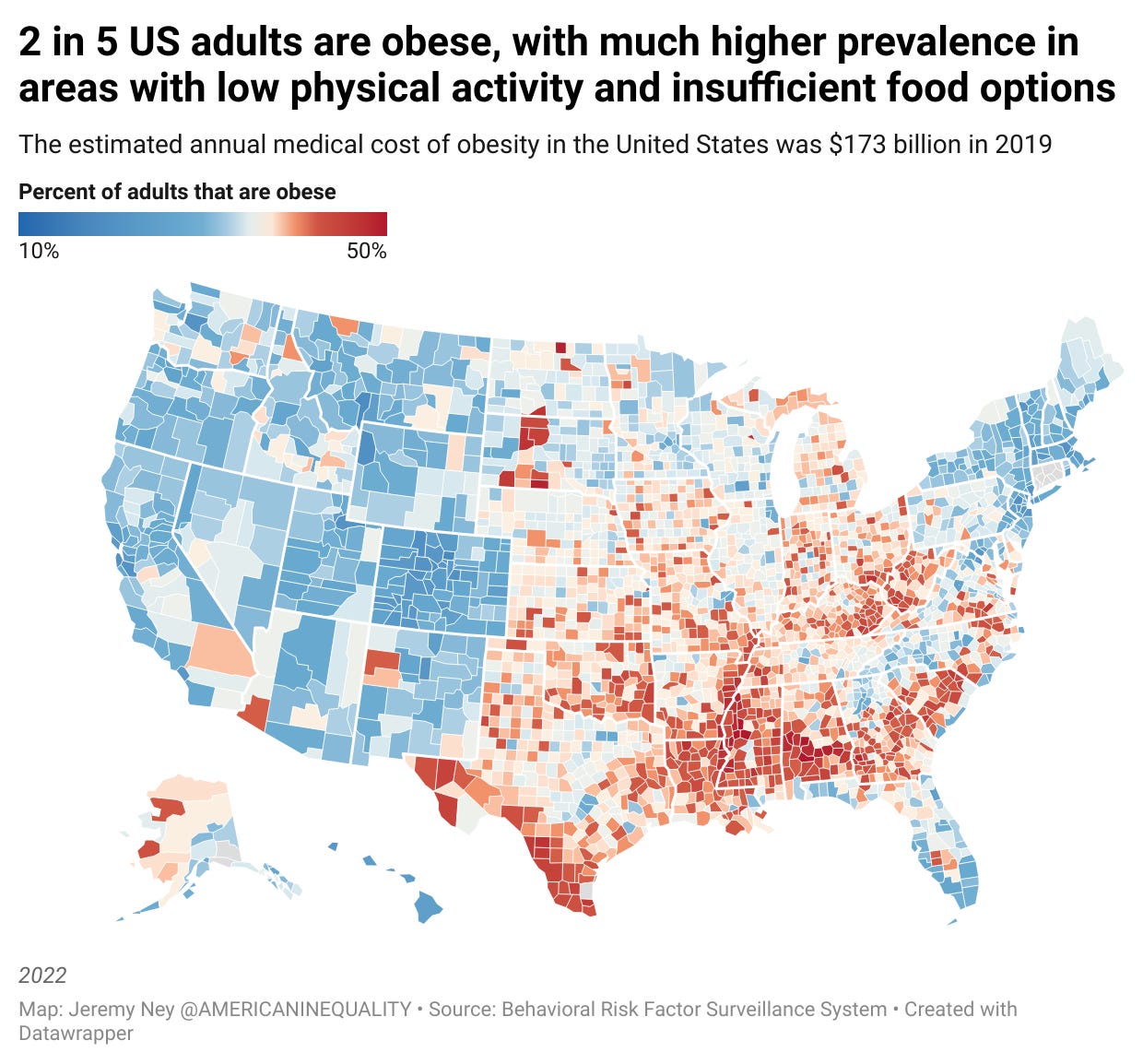
This trend is only getting worse. Recent Aspen Institute research found that participation in a healthy level of physical activity for families making less than $25,000 decreased from 34.1% in 2013 to 26.6% in 2021. But for families making more than $100,000 the trend was the exact opposite - physical activity increased over that period from 43.9% to 46%. This increase is even more notable since that range includes the first two years of the pandemic. In our analysis, we found a 70% correlation between the number of physically unhealthy days and median household income. Hispanic Americans had the highest prevalence of physical inactivity at 31.7%, followed by Black Americans at 30.3%. Physical inactivity for White Americans was far lower at 23.4%. Inequality in life expectancy from physical activityDoing a moderate-intensity workout for 3-5 hours per week can reduce the risk of early death by 21%. Doubling that amount of time can decrease your chance or early death by 31%. In other words, beginning moderate exercise in one’s 30’s can increase life expectancy by 7 years. The CDC estimates that 8.3% of deaths every year can be attributed to a lack of sufficient physical activity throughout one’s life. This prevalence was highest for adults aged 40-69. Similarly, being sedentary for at least 9.5 hours per day was also associated with higher risk of mortality earlier in life. While getting 10,000 steps per day has certainly become much more popular, the general idea that people need to move to stay healthy is deeply important. A recent groundbreaking study has found that 4,000 steps can meaningfully improve one’s life expectancy and that mortality risk decreased by 15% with every additional 1,000 steps participants took. However, if you live in a neighborhood with no sidewalks or few parks, this can be very challenging. A product of our built environmentThe #1 factor contributing to physical inactivity is our built environment - streets, parks, buildings, sidewalks, and trails. Low-income neighborhoods are far less likely to have parks. In NYC for example, low-income neighborhoods have 21% less park space than their higher income counterparts. This holds true across the country. Children get their physical activity largely from sports and gym class in school. However, Black children begin playing youth sports at age 8, a year later on average than their White peers. Overall, 100 million Americans, including 27 million children, live without access to a park close to home. But even simpler solutions like sidewalks can also make a meaningful contribution towards physical health. Several studies have found that sidewalk access alone is associated with higher rates of physical activity and lower risks of childhood obesity, not to mention providing children with safer routes to schools. Public parks in majority Black neighborhoods are half the size and almost 5x as crowded, according to new research by the Trust for Public Land. The study of 14,000 towns and cities around America found that parks serving majority low-income households are on average four times smaller and four times more crowded than parks that serve mostly high-income households.
Spending cuts at public schools is another strongly contributing factor for limiting physical activities, particularly in public schools in lower income neighborhoods. Data from Massachusetts public, charter, and parochial high schools across the state shows that in the state’s 10 poorest communities, sports participation is 43% below the Massachusetts statewide average. This isn’t only bad for health outcomes, it can also be demoralizing. In Connecticut over the past 10 years, teams from the state's 5 wealthiest towns garnered 159 championships across all sports, while those teams from the state’s 5 poorest towns and cities combined for just 44.
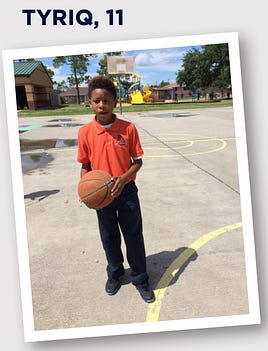
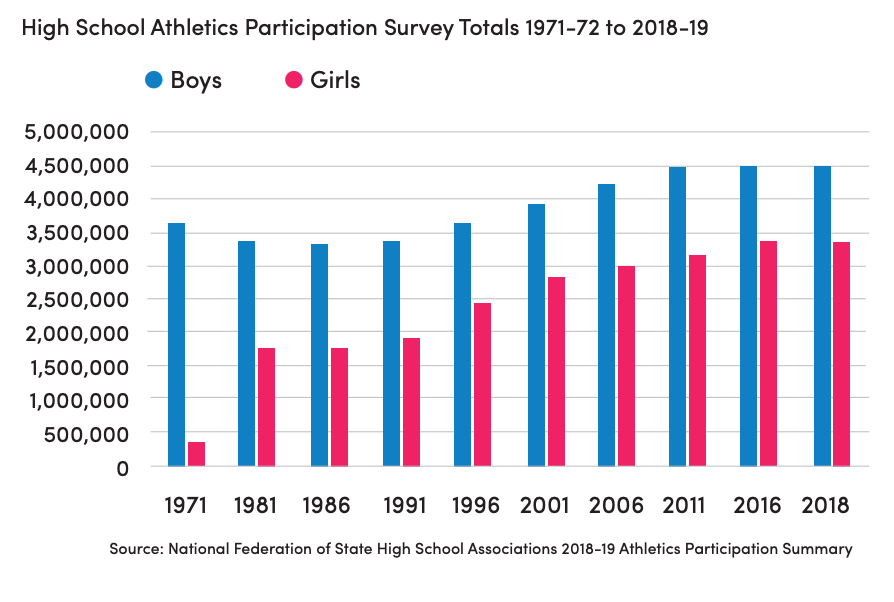
Did you enjoy your little league team? Children living in low-income households are 6x more likely to quit sports due to costs. Tyriq, a sixth-grader at Schaumburg Elementary – a charter school on the east end of New Orleans - loved his neighborhood basketball team. But his mother couldn’t afford the cost of new shoes and jerseys, and Tyriq knew it was putting a strain on the family and decided to quit. Impact for women: sports, health, and beyondJamie Mittleman, the founder of Flame Bearers, has this to say about the inequalities that still persist for women in sports and exercise.
The Path Forward
Physical activity, sports, and exercise can lead both to longer lives and fewer health complications throughout one’s life. However, low-income communities, black communities, and women are consistently deprived of such opportunities. Our built environments are strong factors influencing this divide, but the choices we make about who gets these resources seems to be the underlying cause. By focusing on low-activity regions and supporting youth before they develop health problems, communities may be able to give strength to those in need. When Michael Jordan first signed with the Bulls, he included a clause in his contract titled “For the love of the game” which allowed him to play basketball anywhere, anytime, against anyone. We can take a page out of Jordan’s book and give communities this same opportunity to exercise and play whenever we want. This sadly is far from the case, and Jordan was one of the only NBA players in history to ever get such a clause signed.
You’re on the free list for American Inequality. Thanks so much for being part of our community! Most sincerely, Jeremy
|
среда, 31 января 2024 г.
Where exercise, income, and life expectancy are linked






Подписаться на:
Комментарии к сообщению (Atom)
Комментариев нет:
Отправить комментарий
Примечание. Отправлять комментарии могут только участники этого блога.